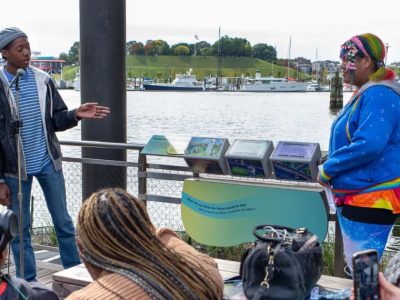
The Tennessee Aquarium is building a $5 million animal hospital inside its River Journey building and pairing it with a training program meant to send veterinarians who have handled freshwater fish, turtles and salamanders out into the wider profession. The Aquarium announced both at a news conference in Chattanooga on October 27.
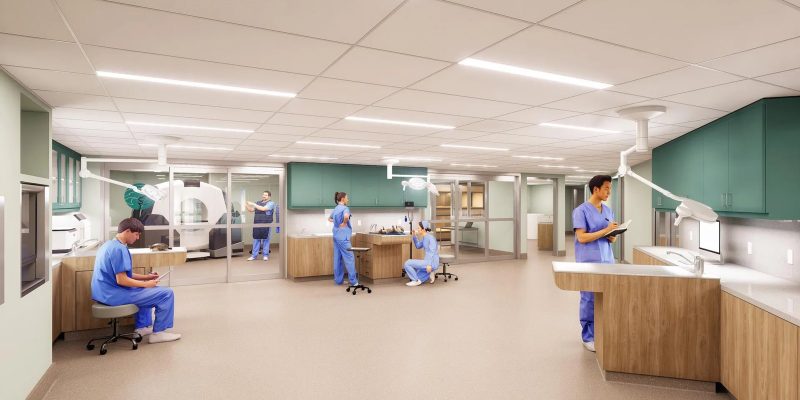
The hospital will occupy the entire mezzanine level of River Journey, 3,100 square feet of it, and is slated to open in June 2027. Until now, animals needing serious diagnostic work have had to be handled with equipment and space that were never purpose-built for them. The new facility centralizes that care on site, which for an aquatic animal is not a small distinction: every trip out of the water is a cost paid in stress, and a shorter trip is a cheaper one.
What is actually going into it?
The layout is organized around a single large treatment room with imaging, surgical and recovery suites opening off it, so a patient can move from diagnosis to surgery to recuperation without leaving the floor. The equipment list includes an updated X-ray, a computed tomography scanner, a range of endoscopes and dental tools made for veterinary work. There is also an isolated necropsy area, a necropsy being the examination performed on an animal after death to establish what happened, which is how a collection learns from the losses it cannot prevent, plus laboratory space, a reference library and offices.
The part worth noticing is that many of the new tools are mobile-capable. An aquarium holds animals that cannot reasonably be carried to a treatment room at all, whether because of size or because the move itself would be the dangerous part of the procedure. Being able to push an imaging cart to the exhibit instead means those animals get looked at rather than guessed about.
Who will work there?
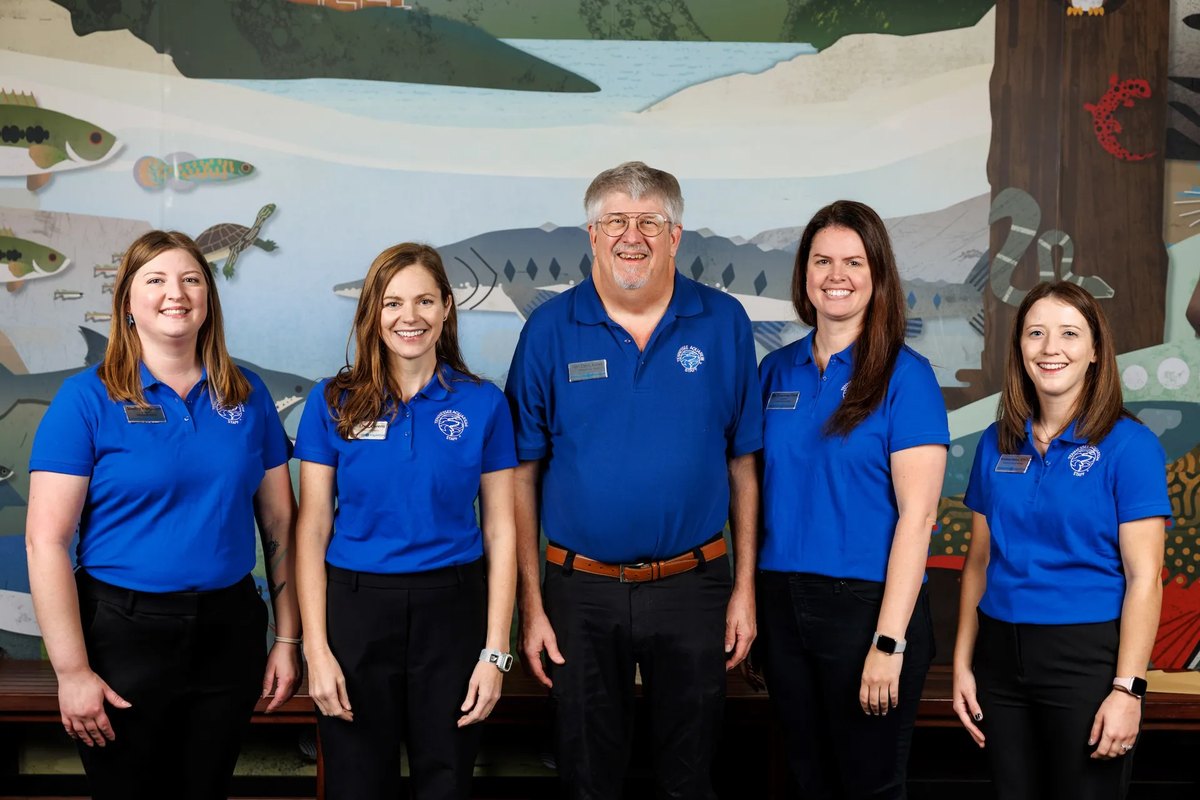
The Aquarium has spent the run-up to this announcement building the team that will staff it. Five animal health professionals were introduced on October 27: Director of Animal Health Dr. Chris Keller, Conservation Veterinarian Dr. Leah Owens, Collections Veterinarian Dr. Courtney Pace, Hospital Manager Kristen Hales and Veterinary Assistant Shelby Ferguson.
A sixth position is already spoken for in principle. The Aquarium plans to offer full-time employment to one of the first group of veterinary technician externs from Chattanooga State Community College once that person finishes an associate of applied science degree.
Why build a training pipeline instead of just a hospital?
Because aquatic animal medicine is a small field, and the Aquarium’s argument is that the shortage is one it can do something about. The program commits to recurring externships, fellowships and internships through a partnership with the University of Tennessee College of Veterinary Medicine in Knoxville and the Chattanooga State veterinary technology program. Half of all future Aquarium externships are reserved for fourth-year UT veterinary students, and the partnership extends to one-year internships, fellowships of one to three years and residencies of three to four, which is the full ladder a veterinarian climbs from graduation to specialist.
Students who come through will work with a collection that includes a great many freshwater species almost nobody else exhibits, which is exactly the gap. A veterinarian can finish training having seen plenty of dogs and no darters at all.
“In the next 10 years, through this program, we could have 50, 75, 100 veterinarians that have spent time at the Tennessee Aquarium,” says Director of Animal Health Dr. Chris Keller. “If they harken back to what they learned when they were here and develop it even more into their area of expertise, it’s going to advance the whole profession.”
Aquarium President and CEO Andy Wood put the ambition more bluntly. “This is about us putting a flag in the ground that aquatic animal medicine should be shared with all,” Wood says. “If we can advance that aspect of care, we will affect the health of millions of animals.”
UT College of Veterinary Medicine Dean Dr. Paul Plummer said the arrangement gives students and faculty “an extraordinary setting in which to advance animal health through both clinical training and discovery,” with graduate students and faculty able to pursue collaborative research alongside the clinical work. Chattanooga State President Dr. Rebecca Ashford said her veterinary technology students would gain experience focused on aquatic and exotic species that would “set them apart from graduates of other programs.”
What does this mean for the animals in the building?
The Aquarium holds about 13,000 animals, and it has been doing aquatic animal health work for 34 years. The immediate effect of the new hospital is that those animals get diagnosed faster, treated closer to home and recovered in a space designed for it. The longer effect is the one the Aquarium is actually reaching for: a veterinarian trained in Chattanooga who spends the next thirty years treating fish somewhere else.
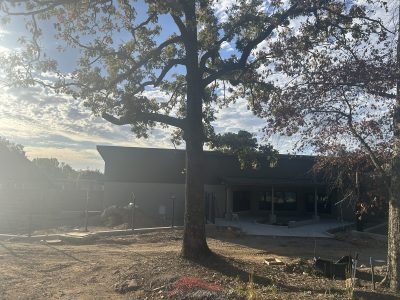
Construction is under way on the mezzanine now. Guests visiting River Journey between now and next June will be walking underneath it.
The Tennessee Aquarium announced the program and the hospital on October 27. We have covered the Aquarium’s animal care before, including the first lemur born at the facility, and the same question of where aquatic and exotic veterinary capacity comes from turned up this month in a clinic in Cameroon getting its first X-ray machine.
Quick answers
- How much is the Tennessee Aquarium’s new animal hospital costing?
$5 million. It will take up the entire mezzanine level of the River Journey building, 3,100 square feet, and is slated to open in June 2027.
- What equipment will the hospital have?
An updated X-ray, a computed tomography scanner, a range of endoscopes and veterinary dental equipment, arranged around a large central treatment room with imaging, surgical and recovery suites off it. There is also an isolated necropsy area, laboratory space, a reference library and offices. Many of the tools are mobile-capable so animals too large to move can be examined at the exhibit instead.
- Who is on the Tennessee Aquarium’s animal health team?
Five people as of the October 27 announcement: Director of Animal Health Dr. Chris Keller, Conservation Veterinarian Dr. Leah Owens, Collections Veterinarian Dr. Courtney Pace, Hospital Manager Kristen Hales and Veterinary Assistant Shelby Ferguson. A sixth position is planned for a Chattanooga State veterinary technician extern.
- Which schools is the Aquarium partnering with?
The University of Tennessee College of Veterinary Medicine in Knoxville and Chattanooga State Community College’s Veterinary Technology Program. Half of all future Aquarium externships are reserved for fourth-year UT veterinary students.
- What training will students get?
Recurring externships, fellowships and internships, plus post-doctoral training: one-year veterinary internships, fellowships of one to three years and residencies of three to four years.
- How many animals does the Tennessee Aquarium care for?
About 13,000. The Aquarium has been doing aquatic animal health work for 34 years.