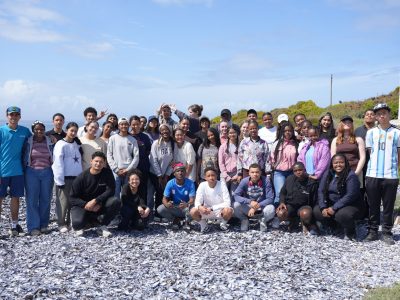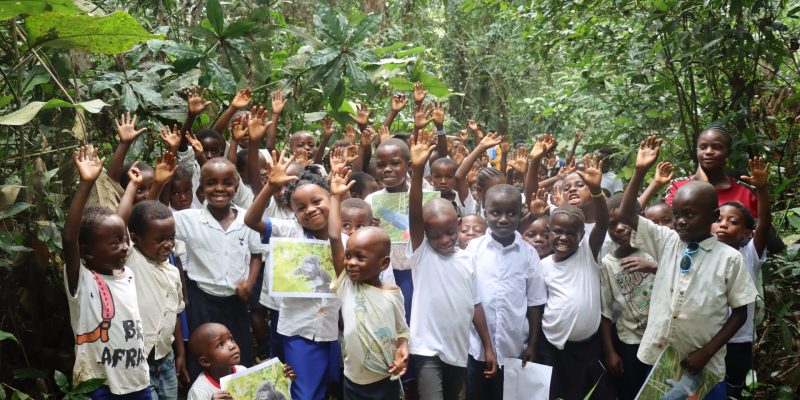
Through August, 140 children from two villages in eastern Democratic Republic of the Congo spent three mornings a week learning what lives in the forest at the end of their road. The Dian Fossey Gorilla Fund published an account of the camp on October 12.
The villages are Nkuba and Biruwe, which sit alongside the Nkuba Conservation Area, the stretch of forest where the Fossey Fund works to protect Grauer’s gorillas. The children came from the two villages’ primary schools. The sessions ran on Monday, Wednesday and Friday mornings and covered biodiversity, gorilla conservation and what a healthy forest does, with cultural and recreational activities alongside the lessons and a field trip into the forest near the end.
What a conservation summer camp in Nkuba looks like
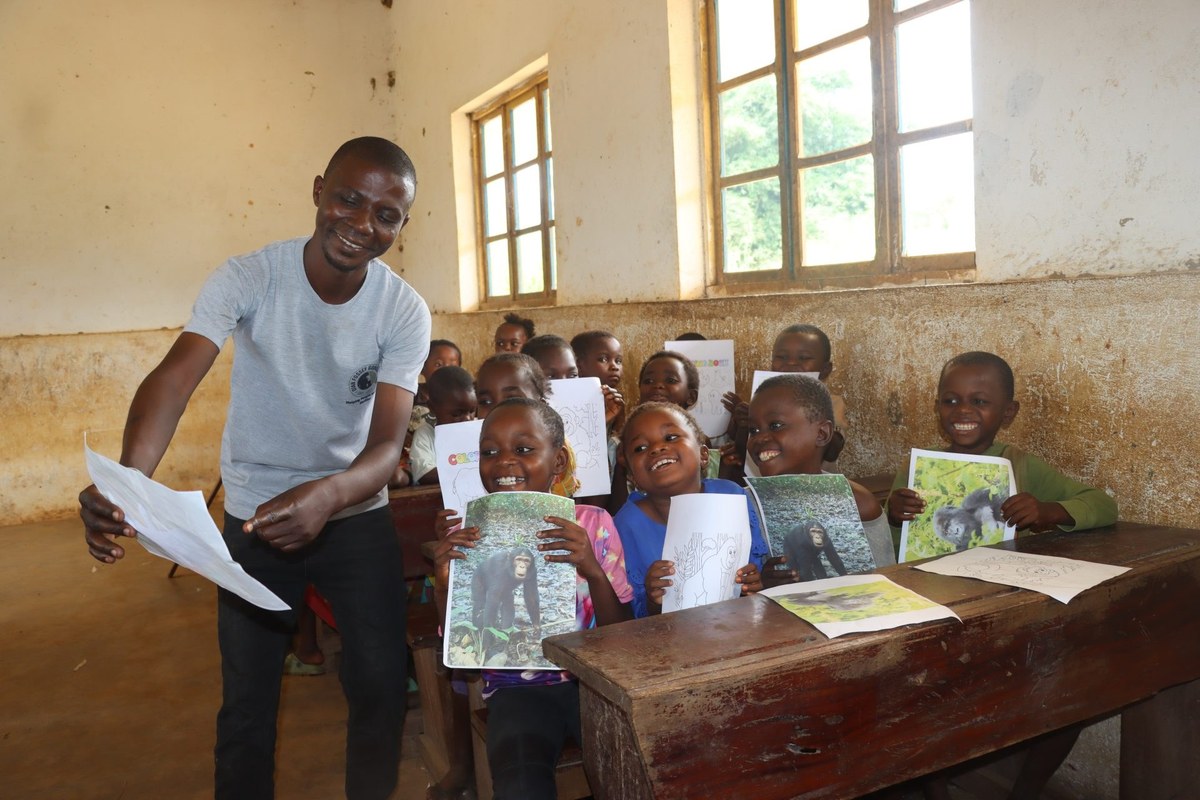
Less like a lecture series than the phrase suggests. The organization describes interactive lessons on the species that share the children’s environment, how ecosystems work and why the forest matters to Grauer’s gorillas and the other wildlife in it. Singing and dancing were part of the program, on the reasoning that they encourage creativity and strengthen the group.
Mutarumbu Munongo, one of the camp teachers, gives the practical version.
“The Dian Fossey Gorilla Fund provides us with educational materials and also offers the students a small meal after each class. The children are very motivated and really enjoy the activities. They learn things that they can then share with their families and communities.”
The meal is not a detail to skip past. A conservation education program that runs for a month in August, outside term time, in a rural part of eastern DRC, is competing with everything else a child’s morning could be spent on.
The forest is more than gorilla habitat
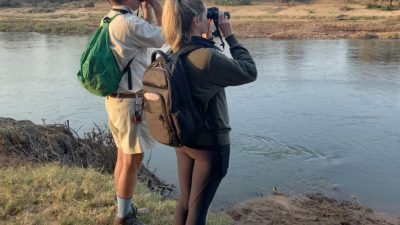
The field trip came near the end, when the children went into the forest around the Fossey Fund’s Nkuba base. A staff member with expertise in birds guided a birdwatching session, and the organization is explicit about the lesson it wanted that to carry: that the forest supports a wide range of animals and plants connected in an ecosystem that also benefits the communities living around it, rather than being gorilla habitat with other species in it.
Masalabo Kanyama, environmental education officer in the Fossey Fund’s Congo Community Conservation Program, frames it as a knowledge argument: “These activities allow children to directly discover the richness of their environment. By giving them the opportunity to observe the forest and the species that live there, we help strengthen their knowledge and commitment to biodiversity conservation.”
Batalibendji Mongero, another of the camp’s teachers, reports it worked: “The forest excursion particularly interested the students. They were able to see firsthand what we explained to them in the classroom. They understood that the forest is important for gorillas, birds, plants and also for the communities living around it.”
Josephine Kapepa, one of the students, put it more simply. She enjoyed visiting the forest, she said, and learned that trees need protecting because so many animals live among them. She also enjoyed watching the birds.
Why this sits beside the gorilla work rather than under it
Nkuba is one of the places where the argument for community conservation is not theoretical. The Fossey Fund’s position is that protecting the forest requires sustained effort, scientific research and meaningful engagement with the people living alongside it, and that the third of those is not a courtesy. Children who understand their forest talk about it at home.
The same conservation area produced a harder result last month, when 445 square kilometers of it were placed under formal community title. The camp and the land title are two halves of the same approach: one secures the forest legally, the other gives the next generation in Nkuba and Biruwe a reason to want it secured.
Which zoos are behind this
The camp announcement names no funder at all, which is the first thing to say.
The Fossey Fund’s work in the Nkuba Conservation Area does have named zoo money behind it. When the community forest was recognized last month the organization credited AZA Gorilla SAFE members including Cleveland Metroparks Zoo, the Detroit Zoo and the Houston Zoo, alongside the Arcus Foundation, the Daniel K. Thorne Foundation, the Disney Conservation Fund, Planet Women and the Weeden Foundation. SAFE, Saving Animals From Extinction, is the Association of Zoos and Aquariums program that pools member institutions behind one species recovery plan instead of leaving each zoo to fund its own project, and the gorilla program is led in part from Cleveland Metroparks Zoo and the North Carolina Zoo. Those three zoos fund the Grauer’s gorilla program this camp belongs to, which is why they carry this story.
What we cannot tell you is whether any of that money paid for these particular mornings. No document we could open names a funder of the summer camp itself, and we are not going to assume one from the program it sits inside. The Fossey Fund’s longest-running zoo relationship, with Partners In Conservation at the Columbus Zoo and Aquarium since 1991, is a Rwandan one: Karisoke, the trackers’ salaries, the school at Bisate. It does not reach across the border into this.
For scale, the AZA reports that its 235 accredited and certified members spent approximately $372.4 million on conservation across 139 countries in 2025. No published breakdown isolates an African share, and we are not going to estimate one.
Source: Dian Fossey Gorilla Fund, report of 12 October 2026. The Columbus relationship is described on the fund’s own partners page.
Quick answers
- What was the Nkuba summer camp?
A conservation education program the Dian Fossey Gorilla Fund ran through August for 140 children from primary schools in Nkuba and Biruwe, two villages beside the Nkuba Conservation Area in the Democratic Republic of the Congo. Sessions ran on Monday, Wednesday and Friday mornings.
- What did the children do?
Interactive lessons on biodiversity, gorilla conservation and how forests work, cultural and recreational activities including singing and dancing, and a field trip into the forest around the Fossey Fund’s Nkuba base, where a staff member with bird expertise led a birdwatching session.
- Why does the Fossey Fund run education camps?
Its stated position is that protecting the Nkuba forest requires sustained conservation effort, scientific research and meaningful engagement with the communities living alongside it. Children who understand the forest take that knowledge home to families and neighbors.
- What lives in the Nkuba Conservation Area?
It is critical habitat for Grauer’s gorillas, which the Fossey Fund describes as critically endangered, along with a wide range of other animals and plants. One point of the forest field trip was that the area is more than gorilla habitat.
- Which zoos fund the Fossey Fund’s Nkuba work?
When the Nkuba community forest was formally recognized last month, the Fossey Fund credited AZA Gorilla SAFE members including Cleveland Metroparks Zoo, the Detroit Zoo and the Houston Zoo, alongside several private foundations. The summer camp announcement itself names no funder.
- Does the Columbus Zoo fund this camp?
No evidence of that. Partners In Conservation at the Columbus Zoo and Aquarium has worked with the Fossey Fund since 1991, but that relationship is Rwandan: the Karisoke Research Center, tracker salaries and the school at Bisate. It does not extend to the Congo program.