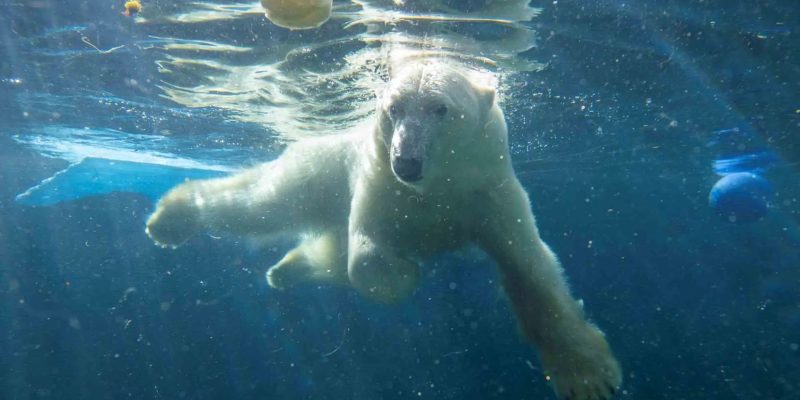
A five-year-old polar bear named Laerke is moving from the Point Defiance Zoo and Aquarium in Tacoma, Washington, to the Saint Louis Zoo this fall, where she will be paired with an almost four-year-old male named Kallu. The Saint Louis Zoo announced the move on October 15, 2026.
The two bears were matched on a breeding recommendation, which is a term worth unpacking, because it is doing all the work in that sentence. A breeding recommendation is not a hope that two animals will get along. It is an instruction, issued by the people who keep the studbook for a species, naming which individuals should be paired and when, so that the small population living in human care holds on to as much of its genetic variety as it can. Laerke and Kallu are not a couple. They are a pairing on a list.
Who issues a polar bear’s marching orders
What is new here is who wrote the list. The recommendation came from the Polar Bear Population Alliance, a consortium of institutions accredited by the Association of Zoos and Aquariums that is itself only recently formed, and whose stated job is to keep the United States polar bear population sustainable and genetically diverse.
“Every move like this represents an important step toward securing the future of polar bears,” said Matt Thompson, a spokesperson for the Polar Bear Population Alliance. “PBPA brings institutions together around a shared responsibility to build a healthy, genetically diverse and sustainable population for generations to come. Laerke’s move to Saint Louis, and the opportunity to pair her with Kallu, is exactly the kind of strategic, coordinated action that will be essential to achieving that goal.”
The alliance has been visible in the moves rather than in the announcements. A year ago it recommended that Laerke’s twin sister, Astra, leave Point Defiance for the Como Park Zoo and Conservatory in St. Paul, Minnesota, where she made her public debut in October 2025 and was to be paired with a male named Kulu. In its account of that move, the AZA noted that its North American studbook keeper maintains the records for 56 polar bears in accredited zoos across the United States and Canada. Fifty-six is not many animals to build a century of genetic planning on, which is the whole reason a body like the alliance exists.
Laerke had a hard start, and it is part of the story
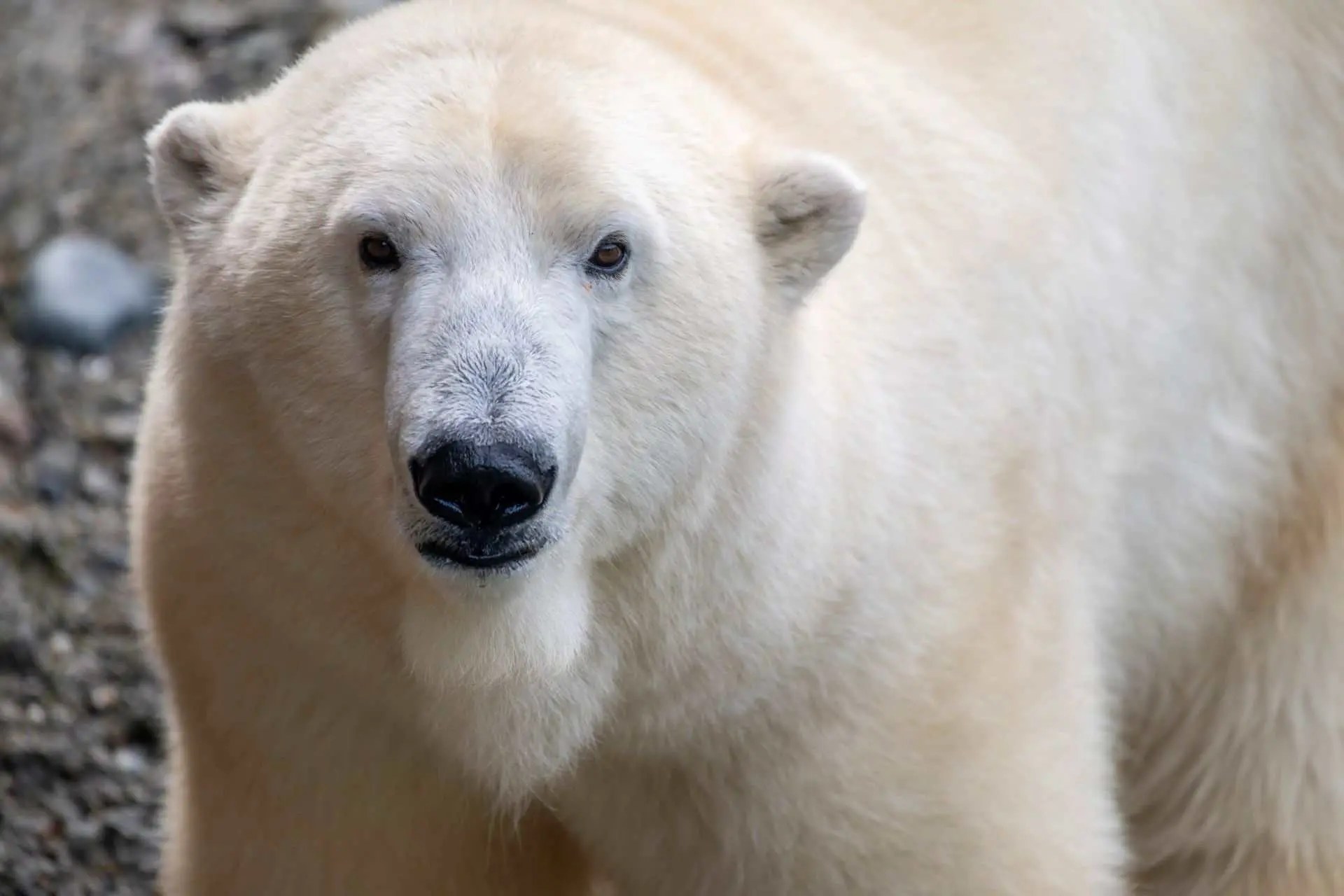
Laerke was born at the Detroit Zoo in November 2020. A medical emergency shortly after her birth, and the health problems that followed it, meant she needed intensive hands-on treatment, and she was ultimately hand-reared by people rather than by her mother. At about nine months old she was put with an orphaned grizzly bear cub so that each of them had company and a chance to learn how to be a bear around another bear. She and her twin sister Astra were reunited at age two and moved together to Point Defiance in 2023.
That history is why the pairing is interesting rather than routine. A hand-reared animal has missed the apprenticeship that a cub normally serves at its mother’s side, and nobody can promise that the instincts arrive on schedule. Her care team hopes her route to motherhood will be instinctual. What they can measure, they have measured: Point Defiance veterinarians have tracked her hormone levels for the past year, and those levels show she has begun estrus cycling. Female polar bears generally become reproductively mature between four and six years old, so she is arriving at Saint Louis right on time.
Kallu’s path was more conventional. He and his twin brother Kallik were born at the Toledo Zoo & Aquarium on November 11, 2022, and he moved to Saint Louis in March 2025. He now weighs more than 920 pounds, and his keepers describe him as smart, calm, curious and playful. When the brothers reached the age at which young males would naturally start looking for their own space, Kallik left for the Oregon Zoo in January 2026, another move with the alliance’s fingerprints on it.
“We look forward to welcoming Laerke in St. Louis,” said Julie Hartell-DeNardo, the Saint Louis Zoo’s Kevin Beckmann Curator of Carnivores. “Polar bears are facing serious challenges to their survival. Polar bears in zoos not only inspire connection and conservation action, they also play a valuable role in helping experts understand their species’ biology and behaviors.”
Why the genetics are worth this much trouble
The U.S. Fish and Wildlife Service listed the polar bear as threatened throughout its range on May 15, 2008, finding that the species “is likely to become an endangered species within the foreseeable future.” The final rule, published at 73 FR 28212, rests on sea ice: polar bears hunt, breed and travel on it, the ice is declining across the species’ range, and the Service concluded that the decline is expected to continue. The Saint Louis Zoo notes that research projects up to two thirds of the world’s polar bears could be gone by the end of the century.
Animals in zoos do not fix that. What they can do is give researchers a population they can actually watch. Nutrition, metabolism, how a bear budgets its fat through a fast, whether a new tracking collar survives a winter: these are questions that are close to impossible to answer in a place where the dark lasts for months and the temperature reaches 50 degrees below zero Fahrenheit, and they are answerable in Tacoma and St. Louis. The Saint Louis Zoo opened its WildCare Institute Center for Polar Bear Conservation in 2024, which helps fund ecological and population research through Polar Bears International and supports programs in Alaska Native villages aimed at reducing conflict between people and bears.
The zoo has had a busy year of arrivals and departures. In September it brought lions back after a gap, and later that month it sent ten sihek, a bird extinct in the wild, to Palmyra Atoll. Two days before the polar bear announcement, the Oregon Zoo said that Samudra, an 18-year-old bull Asian elephant, will relocate to Saint Louis in 2027. A zoo that is moving this many large animals at once is a zoo being told to by several programs at the same time.
When can you actually see her?
Not immediately. Laerke goes into quarantine and an acclimation period first, and the zoo expects her public debut at McDonnell Polar Bear Point this fall or winter. Introducing two adult polar bears to each other takes as long as it takes, and the zoo is telling visitors not to expect to see the pair sharing the habitat until early next year. In the meantime there is a 920-pound male to watch, and a new neighbor settling in behind the scenes, learning a new pool.
Source: Saint Louis Zoo.
Quick answers
- What is a breeding recommendation?
An instruction issued by the people who keep the studbook for a species, naming which individuals should be paired and when, so that the population living in human care holds on to as much of its genetic variety as it can. It is not a prediction that two animals will like each other.
- Who recommended this pairing?
The Polar Bear Population Alliance, a recently formed consortium of institutions accredited by the Association of Zoos and Aquariums, whose stated job is keeping the United States polar bear population sustainable and genetically diverse.
- Why was Laerke hand-reared?
A medical emergency shortly after her birth at the Detroit Zoo in November 2020, and the health problems that followed it, meant she needed intensive hands-on treatment and was raised by people rather than by her mother.
- Why was she put with a grizzly bear cub?
At about nine months old she was paired with an orphaned grizzly cub so that each of them had company and a chance to learn how to behave around another bear.
- Is she old enough to breed?
Female polar bears generally become reproductively mature between four and six years old. Laerke is five, and Point Defiance veterinarians who have tracked her hormone levels for the past year say she has begun estrus cycling.
- Who is Kallu?
An almost four-year-old male born at the Toledo Zoo and Aquarium on November 11, 2022, who moved to Saint Louis in March 2025. He weighs more than 920 pounds.
- When can visitors see Laerke?
After quarantine and an acclimation period. The Saint Louis Zoo expects her public debut at McDonnell Polar Bear Point this fall or winter, and says visitors should not expect to see her and Kallu sharing the habitat until early next year.
- What protection do polar bears have in the United States?
The U.S. Fish and Wildlife Service listed the species as threatened throughout its range on May 15, 2008, at 73 FR 28212, finding it likely to become endangered within the foreseeable future. The listing rests on the decline of sea ice.