
In October 2021 a wildfire burned roughly 650 square kilometers of savanna in Namibia’s Omaheke region and ran straight through the middle of a Cheetah Conservation Fund camera trap survey. The study that came out of that accident has now been published, and its finding is blunt: in the five months after the fire the mammals did not redistribute, they left. They left the burned ground, and they also thinned out on the unburned ground next door.
The paper, Early post-fire declines of mammals in a tree-and-shrub savanna, appeared in the ecology journal Oecologia on July 23, 2026, and is open access. The Cheetah Conservation Fund, which runs the survey, wrote it up for its own readers on September 14.
What did the cameras actually record?
The survey was never designed to study fire. Sixty-four camera trap stations went out across roughly 2,048 square kilometers of privately owned farmland in the Central Kalahari savanna system of eastern Namibia, two cameras per station, each station paired with a data logger recording temperature and humidity every five minutes. The original question was how the carnivore community used the landscape. Then, between October 1 and 4, 2021, a fire burned through about a third of the study area and took six camera traps with it.
That turned a survey into a natural experiment, because the cameras had already been running for a month before the fire and kept running for five months after it. The authors sorted their stations into three zones: the burned area, a proximal zone reaching eight kilometers out from the burn, and a control area beyond that. Seventeen stations fell in the burn, seventeen in the proximal zone and twenty-six in the control, purely by where the fire happened to stop.
They then ran a multi-season, multi-species occupancy model across 31 species. Occupancy is a measure of how much of a landscape a species is using, expressed as a probability between zero and one, and it is the right tool here because a camera trap tells you an animal was present without telling you how many of them there were.
Across the community, occupancy in the burned area fell from 0.53 to 0.33 over the five months. In the control area it barely moved, 0.45 to 0.43. The burned ground also stayed measurably hotter and drier, with less vegetation regrowth, which is the mechanism those numbers are describing.
Why did the unburned edge empty out too?
This is the part that makes the paper worth reading. The obvious prediction is that animals pushed out of a burn crowd into the ground immediately around it, so the proximal zone should have filled up. It did the opposite. Occupancy in the proximal zone slipped from 0.58 to 0.52, a small decline rather than a gain, which means the eight-kilometer band around the fire was not working as a refuge.
The practical consequence is a mapping problem. A fire scar drawn on a satellite image gives you the area that burned. The habitat a landscape actually lost is larger than that, and a conservation plan built on the scar alone will overestimate how much usable ground is left.
The declines were not evenly shared. Small carnivores and burrow-associated species fell hardest, followed by large carnivores, then browsers, then grazers. That ordering is itself a finding, because the intuition runs the other way: grazers lose their food first when the grass goes, so they were the group expected to crash hardest. The specialists with narrow habitat requirements and small home ranges turned out to have less room to maneuver than the animals that eat grass.
The authors are careful about one confound and say so in the paper. Cattle were pulled off the burned farms after the fire and not returned during the study window, so some of what the cameras recorded may be a response to the absence of livestock rather than to the fire itself.
What does this mean for cheetahs?
Cheetahs are savanna specialists, animals of open country that fire helps keep open. They also range further than almost anything else they share that country with, and the Cheetah Conservation Fund’s reading of its own data is that the wide ranging is the whole point: a cheetah copes with a bad year by going somewhere else, and that only works if somewhere else exists and is reachable.
The Namibian context sharpens it. Privately owned farms make up 44 percent of the country’s land, and roughly 80 percent of Namibia’s larger wildlife lives on them, outside protected areas. The landscape in this study is working farmland, and the farmers’ permission is what made the research possible at all. Connectivity in Namibia is therefore not mainly a question of linking reserves. It is a question of what happens across fence lines on land that people are making a living from.
Which zoo paid for this?
The field research that comes out of Namibia usually carries a funding line at the foot of the page, and this one does. The Cheetah Conservation Fund names a single supporter for the study: the Indianapolis Zoo, through its Global Conservation Grant. The zoo publishes several grant channels of its own, among them the Wild Futures small conservation grants and a field support program, alongside the $1 million Saving Species Challenge it awards to a single organization.
That is a clean trace, and it is worth stating plainly because it often does not work out this way. A great deal of African field conservation runs on money whose origin is never published, and where we cannot verify a zoological funder we say so rather than implying one. Here the funder is named by the organization that received the money.
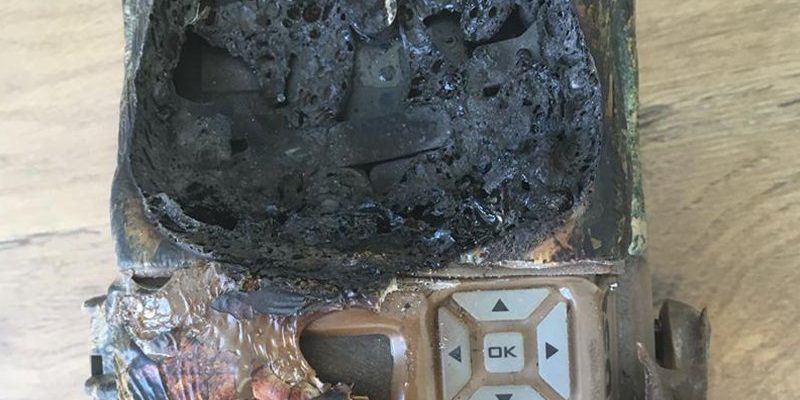
For scale, the Association of Zoos and Aquariums reports that in 2025 its 235 accredited and certified facilities spent approximately $372.4 million on conservation across 139 countries. No published breakdown isolates how much of that went to Africa, so we are not going to guess at one. What a study like this one shows is the shape of the spending rather than its size: a zoo in Indiana buys camera traps for a Namibian cattle farm, some of them burn, and five years later there is a number in a journal that tells a rancher, a park planner and the next fire management committee something they did not know.
Cheetahs are back in parts of southern Africa where they had gone, including Zambia’s Luangwa Valley. Keeping them there is going to depend on the unglamorous work of knowing what a fire really costs.
Quick answers
- What did the wildfire do to the study?
It burned through about a third of the camera trap survey area in Namibia's Omaheke region between October 1 and 4, 2021, and destroyed six camera traps. Because the cameras had been running for a month beforehand and kept running for five months after, the accident turned the survey into a natural experiment.
- What did the researchers find?
Community-level occupancy in the burned area fell from 0.53 to 0.33 over five months, while the control area barely moved, from 0.45 to 0.43. The proximal zone reaching eight kilometers out from the burn also declined slightly, from 0.58 to 0.52, so it was not acting as a refuge.
- Which animals were hit hardest?
Small carnivores and burrow-associated species, followed by large carnivores, then browsers, then grazers. That ordering was not what the authors predicted, since grazers lose their food supply first when the grass burns.
- Which zoo funded the research?
The Indianapolis Zoo, through its Global Conservation Grant. The Cheetah Conservation Fund names it as the study's supporter at the foot of its own write-up, and the work was carried out in partnership with the Namibian farming community whose land the cameras sit on.