
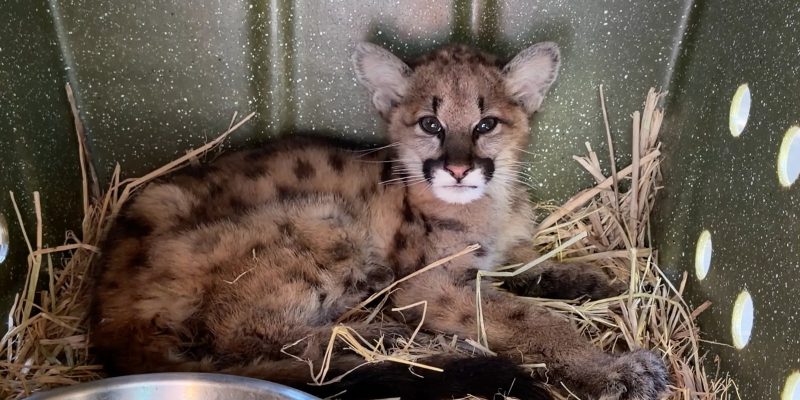
A mountain lion cub arrived at the Oakland Zoo’s veterinary hospital in March 2026 weighing less than half what she should have, too weak to be left alone for an hour. She is the 32nd mountain lion cub the zoo has taken in. Days later she was alive because another rescued mountain lion gave her blood.
The cub, later named Clover, was found in El Dorado County, in the Sierra Nevada foothills east of Sacramento. Veterinarians from the California Department of Fish and Wildlife examined her first. She was severely emaciated and infested with ticks, with gastrointestinal problems and no sign of any injury. Nothing had attacked her. She was starving.
What a blood transfusion between mountain lions actually involves
After CDFW treated her for dehydration and the tick burden, Clover went to the Oakland Zoo’s veterinary hospital, where staff confirmed how fragile she was and moved her into the intensive care unit. Veterinary and animal care teams stayed with her around the clock.
On the Monday morning after she arrived, she got worse. The response was a blood transfusion, and the donor was Briar, a mountain lion already living at the zoo. Briar was herself rescued in El Dorado County in August 2024 and lives in the California Trail habitat alongside two other rescued lions, Coloma and Silverado.
That detail is worth sitting with, because it is the part of a rescue program that is invisible from the public path. A resident animal is not only a resident. She is a compatible donor of the right species, already conditioned to cooperate with her own health care, which is what makes a same-day transfusion possible at all. Clover was better within 24 hours, though still critical.
“Oakland Zoo has made major advances in medical care and treatment of critically ill orphaned mountain lion cubs. We are grateful for the continued partnership with Oakland Zoo that can give these cubs a better chance at survival.” Dr. Deana Clifford, CDFW Senior Wildlife Veterinarian
Thirty-two cubs, and what happens to them afterward
Clover came in through the zoo’s Rescue and Recovery program, which works with CDFW and is part of the Bay Area Cougar Action Team. A cub that arrives this young and in this condition has no route back to the wild, because it has not learned to hunt. So the zoo stabilizes the animal and then a permanent home is found, sometimes its own and often somewhere else.
The pattern is visible in the zoo’s own record. Two earlier cubs from the same program, Fern and Thistle, went on to the Phoenix Zoo. Briar, Coloma and Silverado stayed. Which outcome an individual cub gets depends on where space exists in the accredited network, not on how the rescue itself went.
“This is a journey we are always committed to undertaking. Our teams dedicate their hearts, skills, and resources to every rescue we handle. Regardless of the outcome, we remain here to assist and aim to leave a lasting positive impact on their lives.” Dr. Lauren Pudenz, Associate Veterinarian, Oakland Zoo
How did Clover do?
She recovered. On March 27, 2026, the zoo took in a three-week-old male cub from Southern California, its 33rd, and named him Crimson. Announcing that rescue, the zoo reported that Clover “has been recovering well, is currently stable, and is getting close to her ideal body weight for her age,” and said it hoped to introduce the two cubs to each other once Crimson had finished rehabilitating, because mountain lion kittens do better with a companion.
What to do if you find an animal like Clover
The zoo attached a practical request to the announcement, and it is the most useful paragraph in it. If you find injured or sick wildlife, contact CDFW or a permitted wildlife rehabilitator immediately. Keep your distance, both for your own safety and to avoid adding stress to an animal already in trouble. Do not feed it and do not try to treat it yourself.
The reasoning is not only about the individual animal. Feeding and handling wild animals spreads disease, raises the risk of injury to people, and teaches animals to move toward houses and roads, which is how a sick cub becomes a displaced adult. Clover reached a veterinary hospital within hours of being found, and that is the single variable most under a bystander’s control.
Sources: Oakland Zoo, Oakland Zoo Helps Rescue 32nd Mountain Lion Cub in Critical Condition From El Dorado County, March 13, 2026, and Oakland Zoo Provides Care for Rescued Three-Week-Old Male Mountain Lion Kitten from Southern California, April 2, 2026.
Quick answers
- What happened to the mountain lion cub Oakland Zoo rescued in March 2026?
She was named Clover and she recovered. She arrived severely emaciated at under half her ideal weight, needed a blood transfusion, and by late March the zoo reported her stable and close to her ideal body weight for her age.
- Where did the blood for the transfusion come from?
From Briar, a mountain lion living at the zoo who was herself rescued in El Dorado County in August 2024. Briar lives in the California Trail habitat with two other rescued lions, Coloma and Silverado.
- Why are rescued mountain lion cubs not released back into the wild?
A cub rescued at this age has not learned to hunt from its mother, so it cannot feed itself. Oakland Zoo stabilizes them and then places them permanently, either in its own California Trail habitat or at another accredited facility.
- What should I do if I find injured or sick wildlife?
Contact the California Department of Fish and Wildlife or a permitted wildlife rehabilitator right away. Stay at a safe distance, do not feed the animal and do not try to rehabilitate it yourself, which spreads disease and raises the risk of harm.