
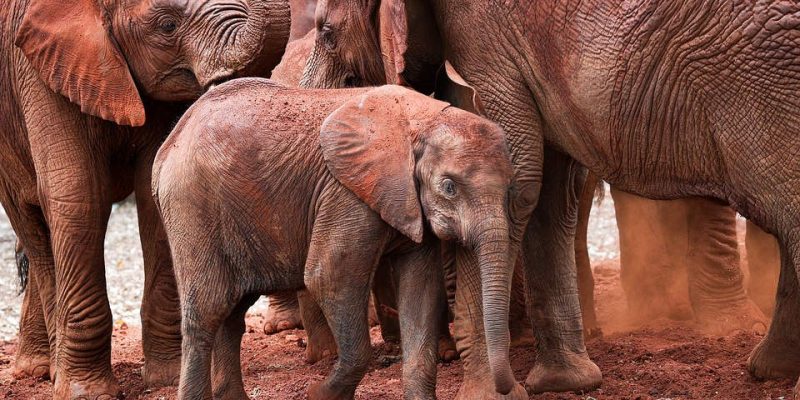
A one-year-old African elephant calf is being raised at the Sheldrick Wildlife Trust’s Nairobi Nursery under a name almost identical to her mother’s. She is Poppi. Her mother was Poppy, a matriarch in Kenya’s Amboseli ecosystem whose entire life, all fifty-three years of it, was written down.
That is the unusual part. Most orphaned elephants arrive with no history at all. The trust published its account of the rescue on October 22, 2026.
Fifty-three years on the record
Poppy was born in January 1973, a year after Dr Cynthia Moss began what became the Amboseli Trust for Elephants and started following the elephant families of the Amboseli basin one animal at a time. Poppy led the family the researchers call PA2 through droughts and through the poaching years. She had nine calves, six of whom are alive today. The last of them, a daughter, was born in May 2025, when Poppy was fifty-two.
https://zooreviews.org/wp-content/uploads/2026/10/poppi_poppi-16.jpg
A wild elephant who reaches her fifties has had a long life by any measure. Earlier this year the Amboseli researchers noticed that Poppy was losing weight and moving without much energy. The SWT and Kenya Wildlife Service mobile veterinary unit based in Amboseli examined her, and Dr Kariuki could not reach a definitive diagnosis: at her age there was no single thing to find. The team kept watching her, and kept watching the youngest calf, who was still entirely dependent on her milk.
On September 24, 2026, Poppy collapsed. The veterinary team could not revive her and she died.
The calf who would not move
The rest of PA2 did what elephant families do, which is to absorb the loss and keep walking. The youngest daughter did not. She stayed with her mother’s body, and at one year old she had neither the milk nor the protection she needed to last on her own.
The Kenya Wildlife Service lifted her out and delivered her to the Nairobi Nursery the next day. The keepers named her Poppi.
What the trust describes since then is not a grieving animal. Poppi declined to be mothered. The nursery’s senior females, Muridjo and Nyambeni among them, queued up to look after her and were turned down flat, which the keepers report has caused a certain amount of offense. She prefers the company of the younger females, Talek, Wamata, Alia and Maisor. She has learned the nursery routine, worked out where the best greens are, and started pushing matches with animals considerably larger than she is. In the evenings she insists on leading the whole herd back, at speed, on very short legs.
She is, for all that, a one-year-old entirely dependent on people. Her milk ration has already been increased because she drinks it so fast, and when a bottle runs out she shoves the nearest keeper, apparently on the theory that this produces more. She sleeps in a stable with a keeper beside her and Maisor next door.
Which zoo is behind this
Three organizations appear in this rescue: the Amboseli Trust for Elephants, which knew the animal and raised the alarm, the Kenya Wildlife Service, which carried out the rescue and runs the Amboseli veterinary unit jointly with the trust, and the Sheldrick Wildlife Trust, which has her now.
One accredited American zoo funds two of the three. Oakland Zoo makes an annual partnership grant that it says helps the Amboseli Trust for Elephants and the Big Life Foundation combat ivory poaching, and it describes the Amboseli project as the longest-running African elephant field research study in the world, which is a fair description of a dataset that has followed individual African elephants since 1972. Oakland also sends supplies and resources to the Sheldrick orphanage through the conservation trips it runs. Over thirty years the zoo says it has donated and raised more than 1.3 million dollars for elephant conservation, though it does not break that figure down by partner, and none of it is earmarked for this calf.
So the honest version is a grant to the monitoring program that produced fifty-three years of knowledge about Poppy, not a check written for Poppi’s milk. We looked for an accredited zoo or aquarium funding the Sheldrick orphans’ project itself and did not find one named. The trust is funded principally by public adoptions.
For scale, the Association of Zoos and Aquariums reports that 235 accredited and certified facilities spent approximately 372.4 million dollars on conservation across 139 countries in 2025. No published breakdown isolates what share of that reaches Africa, so we are not going to print one.
Oakland Zoo’s own acoustic work in Amboseli, which we covered earlier this week, runs on the same long dataset that recorded Poppy from birth.
What happens to PA2
A family does not replace a matriarch quickly. The Amboseli researchers think Poppy’s younger sister Pate, now thirty-nine, is the likely successor, and they are still following the family to find out.
Poppi’s own path runs the other way, from a stable in Nairobi back out to the wild over something like a decade. The trust says it intends to document the whole of it. Whether she ends up leading a family of her own is a question nobody can answer for about twenty years.
The rescue account is published on the Sheldrick Wildlife Trust’s site.
Quick answers
- Who is Poppi the elephant?
A one-year-old African elephant calf being raised at the Sheldrick Wildlife Trust Nairobi Nursery in Kenya. She was orphaned when her mother, the Amboseli matriarch Poppy, died on September 24, 2026, and the Kenya Wildlife Service brought her in the following day.
- Who was Poppy the Amboseli matriarch?
An elephant born in January 1973 and followed by the Amboseli Trust for Elephants for her whole life. She led the family the researchers call PA2 through droughts and the poaching years, had nine calves of whom six are alive today, and died at 53.
- What did Poppy die of?
No definitive diagnosis was reached. Researchers noticed her losing weight and energy earlier in 2026, and the Sheldrick and Kenya Wildlife Service mobile veterinary unit in Amboseli examined her, but her age made a single cause impossible to identify. She collapsed on September 24, 2026 and could not be revived.
- How is Poppi doing at the nursery?
The trust describes a notably independent calf. She has refused the attentions of the senior nanny elephants, prefers the younger females Talek, Wamata, Alia and Maisor, leads the herd home in the evenings, and drinks her milk fast enough that her ration has been increased.
- Which zoo funds the organizations behind this rescue?
Oakland Zoo makes an annual partnership grant that it says helps the Amboseli Trust for Elephants and the Big Life Foundation combat ivory poaching, and sends supplies to the Sheldrick orphanage through its conservation trips. That grant pays for monitoring and anti-poaching work, not for this calf. We looked for an accredited zoo or aquarium funding the Sheldrick orphans project itself and did not find one named.
- Who will lead the PA2 family now?
The Amboseli researchers think Poppy’s younger sister Pate, now 39, is the likely successor. It can take time for a family to settle on a new matriarch and they are still following it.