

Two Oceans Aquarium’s Turtle Conservation Centre releases 85 percent of the turtles it rescues. Pearl, a loggerhead, is in the other category, and the aquarium said so publicly.
The center published her case on September 5, 2026: a hematocrit of five percent, osteomyelitis of the skull and jaw, lung and middle ear infection, and a feeding tube. Prognosis guarded.
Why publish a guarded prognosis
Most rehabilitation stories are told after the outcome is known. This one was not, and the choice is worth noting.
A hematocrit of five percent means almost no red blood cells. Osteomyelitis in a turtle’s skull is a bone infection in a structure that heals slowly at the best of times. These are not details an organization includes if the story is meant to be reassuring.
The aquarium’s own framing of why its animals arrive this way is direct: the nature of the work as a rehabilitation space means the turtles are rescued in poor health, struggling with traumatic injuries, entanglements, chronic debilitation, severe lung disease or neurological damage.
The 85 percent
An 85 percent release rate for animals arriving in that condition is a serious number, and it is the argument for the facility existing.
The center runs a Turtle Rescue Network of trained partner organizations, which is how a stranded animal on a beach three hours away gets to Cape Town alive. Pearl was recovered by the Lower Breede River Conservancy Trust. Her CT scans were done by Winelands Radiology.
Neither of those is a turtle organization. That is what a network is: an aquarium with a veterinary program, a river conservancy that can reach the coast, and a human radiology practice willing to put a sea turtle through a scanner.
What happens after release
The center satellite-tags what it puts back. A green turtle named Nori has covered nearly 12,000 kilometers since her release. Another, Kai, is also being tracked. An olive ridley called Sage is in rehabilitation.
None of the eggs Pearl dropped were viable, which is its own piece of information about the state she arrived in.
Where the funding sits
The center is run under the Two Oceans Aquarium Foundation and its published appeals are direct to the public rather than institutional. We asked the obvious question and could not find a named list of institutional funders for the Turtle Conservation Centre.
What is on the record is that Two Oceans is itself the accredited institution here, a WAZA member since 2019, and that it appears on SANCCOB’s supporter wall while SANCCOB directs all turtle calls to Two Oceans. Two accredited conservation programs on the same coast referring work to each other, each funding the other’s specialism.
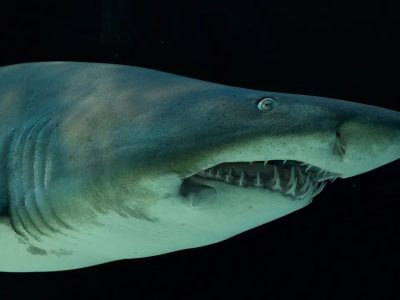
The same aquarium spent eight years holding two trafficked ragged-tooth sharks as evidence in a case that was never prosecuted.
Source: Two Oceans Aquarium.