
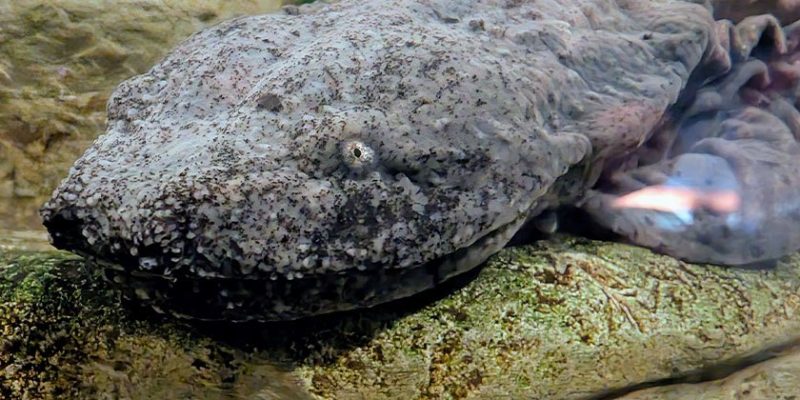
There are fifteen young eastern hellbenders growing up in a lab at the Louisville Zoo, collected as eggs from Kentucky streams last fall. On September 17 the zoo and Mayor Craig Greenberg announced that the zoo has formally joined the Eastern Hellbender Restoration Program, the recovery effort run by the Kentucky Department of Fish and Wildlife Resources.
The zoo’s job in it is head-starting: raise the animals through the stage at which almost everything eats them, then release them at a size that gives them a chance.
What a head-start program does
A hellbender hatches into a stream as a larva a couple of inches long, in water full of things that will eat it, and the great majority never reach adulthood. Head-starting takes that bottleneck out of the equation. Eggs are collected, the larvae are reared in controlled conditions for a few years, and the animals go back into the water large enough to skip the deadliest part of their own life cycle.
It is the same model the Louisville Zoo already runs for the black-footed ferret through the national recovery program for that species, and the reason zoos are useful for it is unglamorous: the work needs tanks, water chemistry, veterinary staff and several years of patience.
Modern Zoos serve as conservation centers, and our new work with eastern hellbenders and, of course, our longtime work with black-footed ferrets, are perfect examples of that mission in action. We are proud to work alongside the Kentucky Department of Fish and Wildlife Resources to help protect a species that is both ecologically important as well as Kentucky’s official state amphibian. Every animal successfully released into the wild brings us one step closer to a healthier future for our rivers and streams.
Dan Maloney, Director, Louisville Zoo
Why Kentucky needs it
Because the adults are still there and the young are not. That is the specific shape of the problem, and it is worse than a simple decline, because a stream can look occupied right up until the last old animal in it dies.
Partnering with the Louisville Zoo to expand the capacity for rearing young eastern hellbenders is an important milestone in Kentucky’s Eastern Hellbender Restoration Program. Although adult hellbenders can still be found, reproducing populations have disappeared from many streams throughout the state. Without young hellbenders to replace the aging adults, eastern hellbenders will disappear from Kentucky.
Courtney Hayes, wildlife biologist, Kentucky Department of Fish and Wildlife Resources
What is a hellbender?
North America’s largest salamander, reaching nearly two feet long, with loose folds of skin along its flanks that it uses to take oxygen directly from the water. That respiratory arrangement is why it has the nicknames, snot otter and mud devil, and it is also why the animal is so useful: a salamander that breathes through its skin cannot tolerate silt, warm water or low oxygen, so its presence in a stream is a direct readout of that stream’s health. They are harmless to people.
Their decline tracks what happened to the water. Many Kentucky and Indiana streams were dammed decades ago, which slowed the current and lowered dissolved oxygen, and agricultural runoff added sediment that fills the spaces under rocks where hellbenders live and lay eggs.
Where the species stands on the lists
Two different lists are in play here and they use different vocabularies, so it is worth naming each one.
The IUCN Red List assesses the hellbender as a single species, Cryptobranchus alleganiensis, and lists it as Vulnerable, in an assessment published in 2022, on a suspected decline of 30 to 50 percent over the past three generations, about 30 years. That assessment publishes no global population figure, so any worldwide hellbender number attributed to IUCN is coming from somewhere else.
The federal picture is separate. The zoo’s announcement says the U.S. Fish and Wildlife Service proposed listing the eastern hellbender as endangered “in 2025.” The proposed rule was in fact published on December 13, 2024, at 89 FR 100934, with the comment period closing in February 2025, which is the likeliest source of the slip. As of today the proposal has not been finalized. The only eastern hellbender currently listed under the Endangered Species Act is the Missouri distinct population segment, listed in 2021. We are flagging this only because dates on a pending listing matter to anyone trying to follow it.
Kentucky’s state amphibian, and a regional pattern
The eastern hellbender is Kentucky’s official state amphibian, which gives the partnership a civic dimension that the mayor’s office was happy to name.
The Louisville Zoo continues to demonstrate that their commitment to conservation is more than caring for animals on the Zoo’s campus. Through partnerships like this one, the Zoo is helping preserve Kentucky’s natural heritage and inspire future generations to value and protect our environment.
Mayor Craig Greenberg, Louisville
Louisville joins a cluster of institutions working the same species across the Ohio and Tennessee valleys. The Chattanooga Zoo has been releasing head-started hellbenders into the Cherokee National Forest, and the Saint Louis Zoo’s hellbender program was recognized by Partners in Amphibian and Reptile Conservation this summer. Stream by stream, this is one of the better-organized amphibian recovery efforts in the country.
The fifteen animals in the Louisville lab are, in the zoo’s words, growing up strong and healthy. They will go back into Kentucky water, which is the only measure of this that finally counts.
Quick answers
- What is a hellbender?
North America's largest salamander, reaching nearly two feet long. Folds of skin along its flanks let it take oxygen directly from the water, which is why it needs clean, cool, well oxygenated streams. It is harmless to people.
- What is head-starting?
Raising young animals in controlled conditions through the life stage at which most of them would die in the wild, then releasing them at a size that improves their odds. The Louisville Zoo currently holds fifteen young hellbenders collected as eggs from Kentucky streams.
- Is the eastern hellbender a federally endangered species?
Not rangewide. The U.S. Fish and Wildlife Service published a proposed rule on December 13, 2024 to list it as endangered, and that proposal has not been finalized. The Missouri distinct population segment was listed separately in 2021.
- Why is the hellbender Kentucky's state amphibian?
It is native to Kentucky streams and is an indicator of stream health, since it cannot tolerate silt, warm water or low oxygen.