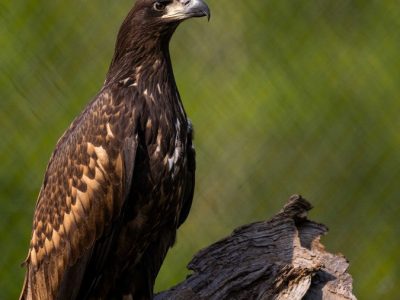

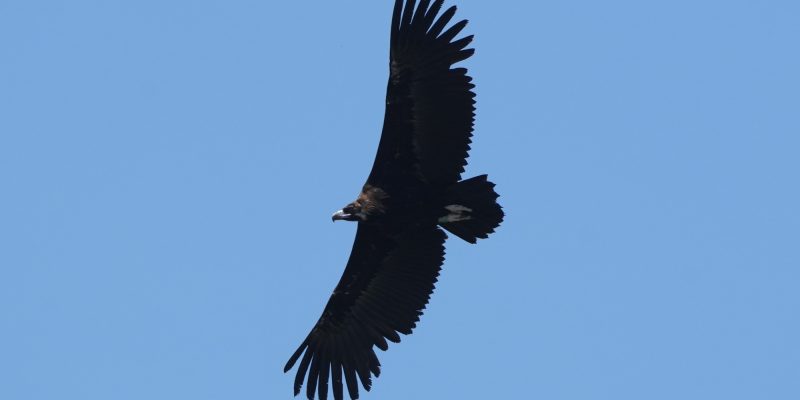
A cinereous vulture hatched at ZOO Planckendael in Belgium is now flying free in Bulgaria. The bird, a male named Aleksi, is the fourth young vulture the Mechelen zoo has sent into the Bulgarian reintroduction effort, and the zoo announced his release on July 31, 2026.
Planckendael coordinates the European Endangered Species Programme for the cinereous vulture and keeps its studbook, which makes it one of the small number of institutions deciding where every bird of this species in a European zoo goes and which ones breed together.
What makes this an outcome rather than a plan
Aleksi is not a bird that was released and hoped for. He is the product of a breeding operation that has been running at Planckendael since 1996 and has produced 26 cinereous vultures in that time, and of a European program that has put roughly fifty birds into the wild over the past 35 years.
“Zodra er voldoende vogels geboren worden binnen het Europese soortbehoudsprogramma om de genetische back-uppopulatie gezond te houden, kunnen jonge dieren ingezet worden voor herintroductieprojecten. Aleksi is daar een mooi voorbeeld van. Hij krijgt de kans om bij te dragen aan het herstel van de wilde populatie in Bulgarije.”
In English: “As soon as enough birds are born within the European species conservation program to keep the genetic backup population healthy, young animals can be used for reintroduction projects. Aleksi is a fine example of that. He gets the chance to contribute to the recovery of the wild population in Bulgaria.” That is Frederic Verstappen, curator of birds at ZOO Planckendael and coordinator of the program, in a statement translated from Dutch.
The logic is worth sitting with. A breeding program only starts exporting animals once it can spare them. Aleksi leaving Belgium is the signal that the reserve population is in good enough shape to give birds away.
The dating aviary
Cinereous vultures are difficult to breed, for a reason that is easy to describe and hard to engineer around: they are extremely particular about who they pair with. Planckendael’s answer is a dating aviary, where birds sent from zoos across Europe choose their own partners. Pairs that click move to a screened breeding facility behind the scenes at the park.
It is a rare case of a breeding program handing the choice back to the animals, and the 26 chicks since 1996 suggest it works better than assigning partners on paper.
From Mechelen to the Balkans
Aleksi was about five and a half months old when he left for Bulgaria. Before he went he was microchipped and given a veterinary examination, and park scientists confirmed by DNA analysis that he was male. His genetic data went into the program’s database.
In Bulgaria he spent several months in an acclimatization aviary with other young cinereous vultures, which is standard practice: birds that have had time to learn a landscape are more likely to settle in it, find a mate and breed, rather than drifting away after release. He was let out after that period, carrying a satellite transmitter that lets researchers follow his movements.
Why Bulgaria
The cinereous vulture has a wingspan of nearly three meters, close to ten feet, which makes it one of the largest birds in Europe. It once ranged from the Iberian Peninsula across the Balkans and deep into Asia. Poisoning, habitat loss and disturbance cut it back hard over the last century, and what remains is a set of populations isolated from one another.
Reintroductions in the Balkans are aimed squarely at that fragmentation: the goal is to reconnect the eastern and western populations and build a self-sustaining population in southeastern Europe. Planckendael did not cite an IUCN Red List category for the species in its announcement, and described it only as threatened.
European zoos have been unusually productive on this kind of work this year. Tiergarten Nurnberg released European pond turtles in Hesse and Tierpark Hellabrunn put Alpine ibex back into the Solktal, both through the same EAZA program structure that produced Aleksi.
Source: ZOO Planckendael, July 31, 2026.
Quick answers
- What did ZOO Planckendael release in Bulgaria?
Aleksi, a male cinereous vulture hatched at the Belgian zoo. He is the fourth bird Planckendael has sent into the Bulgarian reintroduction effort, announced on July 31, 2026.
- How many vultures has the program released?
Roughly fifty over the past 35 years across the European Endangered Species Programme, which Planckendael coordinates. The zoo itself has hatched 26 cinereous vultures since 1996.
- What is the dating aviary?
An enclosure at Planckendael where cinereous vultures sent from zoos across Europe choose their own partners. Pairs that form move to the zoo's off-exhibit breeding facility.
- How is Aleksi being tracked?
By satellite transmitter. Before leaving Belgium at about five and a half months old he was microchipped, given a veterinary examination and sexed by DNA analysis, and he spent several months in a Bulgarian acclimatization aviary before release.