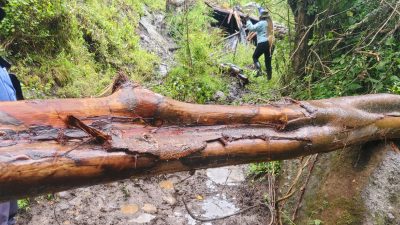

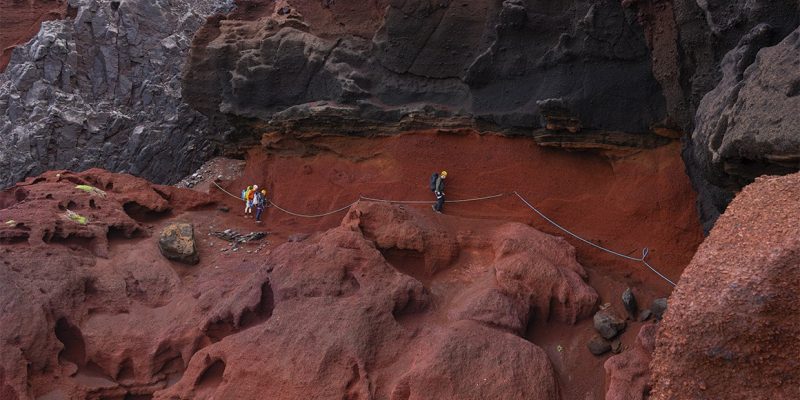
It took two hours to walk three kilometers, carrying snails.
On April 19, 2026, teams from ZooParc de Beauval and Chester Zoo released 570 Critically Endangered land snails onto Bugio, an uninhabited island in the Desertas archipelago off Madeira. Beauval brought 270 Discula lyelliana. Chester brought 300 Geomitra coronula. Beauval published the account in July.
From about fifty animals to more than a thousand
Both captive populations were built from roughly fifty founder individuals each, and both now exceed a thousand animals bred in human care.
Since 2024 the program has released 1,200 Geomitra coronula and 919 Discula lyelliana. A third species, Geomitra grabhami, saw 870 animals released in April 2025.
Post-release survival is estimated at 40 to 50 percent, and the teams have documented reproduction and juvenile snails in the wild. That second fact is the one that counts. A released animal that survives is a statistic; a released animal that breeds is a population.
Why anyone should care about a snail
Land snails recycle nutrients, aerate soil and support the regeneration of vegetation. On a small oceanic island, where the whole ecosystem sits on a thin layer of soil that took millennia to form, the invertebrates doing that work are not a detail. They are the floor everything else stands on.
Beauval’s Anaelle Loiseau, who manages animal species at the park, made the point that even the smallest species deserve attention, because without them an entire foundation disappears. Tamas Papp, deputy head of the invertebrate team at Chester Zoo, described it as possibly the most complex reintroduction they have carried out, and it is his team that logged the two hours over three kilometers.
We have paraphrased both rather than quoting them directly, because we worked from a summary of the French original rather than the full text.
Who is involved
The work is run with the Instituto das Florestas e Conservacao da Natureza, Madeira’s forestry and nature conservation institute, alongside ZooParc de Beauval, its conservation foundation Beauval Nature, and Chester Zoo.
Two European zoos breeding invertebrates nobody has heard of, for release onto an island nobody lives on, in partnership with a regional forestry agency. There is no visitor attraction in this and no ticket revenue attached to it. It is the part of the job that only gets done because somebody decided it should.
Source: ZooParc de Beauval. Reported from the French.