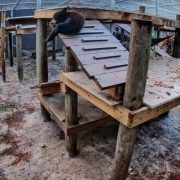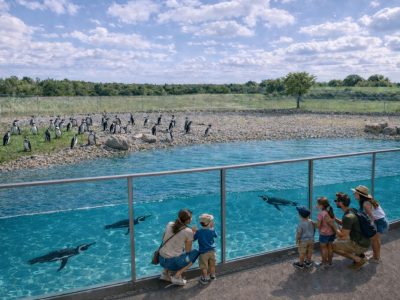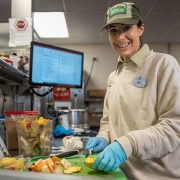


Two Sedgwick County Zoo bird keepers spent two weeks on the coast of Peru this year installing nearly 200 artificial nests for wild Humboldt penguins. Ana and JP, who between them have a decade of experience with the Humboldt penguins at the Wichita zoo’s Cessna Penguin Cove, went out in February as part of an eight-person team working with the Punta San Juan Program.
Why a wild penguin needs a prefab house
Humboldt penguins nest in burrows they dig themselves. When food is scarce, the birds travel farther to find it, burn more energy getting home, and arrive without enough left to dig properly, breed, or feed chicks.
“This takes the leg work out for them and just kind of gives them an open, move-in-ready home to give them more energy and focus to spend on egg laying and chick rearing instead of building the nest to begin with,” Ana said.
The alternative is a surface scrape, an uncovered nest that leaves eggs and chicks exposed. The Punta San Juan Program has documented significant egg and chick loss to overheating in those nests. The new structures are designed to hold a steadier temperature, and they also close off the other problem: “Rats are actually a big problem for chicks and eggs,” JP said.
The current, the anchovies and the penguins
The Humboldt Current is an upwelling of cold, nutrient-dense water that runs north along the western coast of South America, and it is the reason that stretch of coast supports so much life: multiple fish species, fur seals, sea lions and guano birds alongside the penguins.
“Typically the colder the water the more nutrients it holds,” JP explained. “That really cold, nutrient-rich water is vital to the fish population, so when that water is warmer, a lot of those fish die off or move elsewhere. When this happens, penguins and other coastal birds have a hard time hunting and thus don’t have the resources they need to breed.”
Penguins sit in the middle of that food chain, hunting fish and being hunted in turn. “If you were to take penguins out of this ecosystem there would be a lot of fall out as far as affecting the other non-penguin populations,” Ana said.
Field work by keepers is becoming a bigger part of how accredited zoos spend their conservation money; SeaWorld moved the only emperor penguins in the Americas this year, and the National Aquarium returned nine rehabilitated sea turtles to the Atlantic.
The guano economy
The most surprising part of the Punta San Juan Program’s work has nothing to do with nests. Humboldt penguins are guano birds, and their waste is harvested as fertilizer, and has been a serious part of Peruvian agriculture for centuries.
“Their fecal matter is actually harvested for use as fertilizer. It’s a really key part of the agricultural system in Peru,” JP said.
The zoo describes bad harvest practice as stripping away nesting material, which understates it. Humboldt penguins do not build nests, they dig burrows, and what they dig into is the accumulated guano itself. The IUCN assessment for the species is explicit: removal of guano reduces the preferred substrate penguins use to excavate burrows, and miners also raise adult and egg mortality through direct harvest, trampling, disturbance and the introduction of dogs and rats. Industrial mining that began in the mid-1800s took the substrate away, and birds left with surface scrapes lose eggs and chicks to heat and predators. That is the gap the boxes fill. Bad practice also scares off birds that spook easily. Done well, it is good for everyone: guano displaces chemical fertilizer, and clearing excess buildup keeps nesting areas healthy. Since 2001 the program has run an annual harvest timed outside the penguins’ breeding season, keeping workers 20 yards back from the coast and putting up tarps so the birds cannot see them.
What the keepers brought home
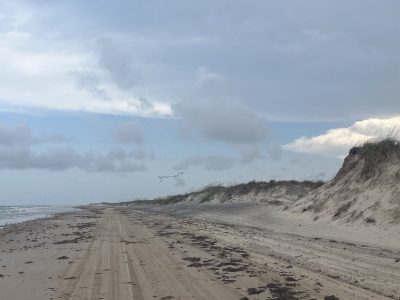
The nest installation went faster than the team expected, so they also joined a beach cleanup and helped tag sea lions.
Ana and JP both say the trip changed how they talk about their own work in Wichita. “We get into zookeeping because we love animals and we want to conserve species, but a lot of our focus is on caring for the individual animals we have here at the Zoo,” they said. “Physically being there, experiencing what they are doing, and learning from those researchers; their dedication and passion for this project inspires us.”
Which is worth knowing next time you stand at Cessna Penguin Cove and a keeper starts talking. There is a decent chance the person explaining Humboldt penguins to you has knelt on that Peruvian hillside setting the houses down.