
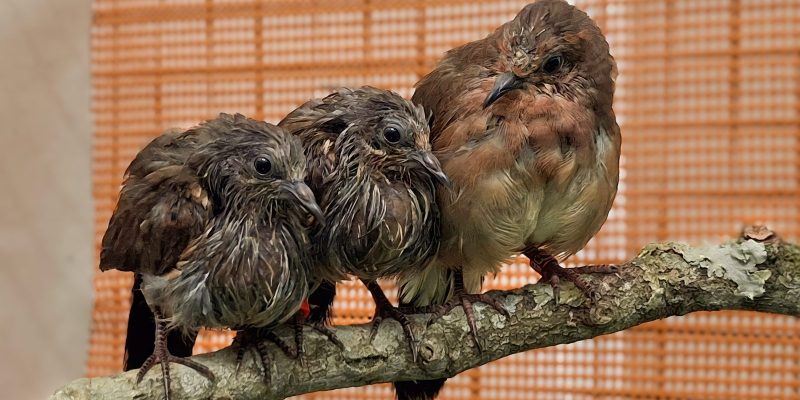
Three chicks of one of the rarest birds on earth have hatched in Brazil, using a hand-rearing method developed at the Toledo Zoo.
The blue-eyed ground dove was missing for 75 years before it was rediscovered in Brazil’s Cerrado in 2015. The most recent count put 11 adults in the wild.
A protocol worked out in an Australian aviary
Joe Wood, manager of international conservation programs at the Toledo Zoo and co-chair of the IUCN SSC Pigeon and Dove Specialist Group, developed the hand-rearing protocol behind the hatchings. He joined the early field work in Brazil in 2019, and during the pandemic built an aviary in Australia to test and refine artificial incubation for small dove species.
“Our team at the Toledo Zoo provided guidance and technical leadership that helped make this success possible,” Wood said. “The hatching of these chicks gives us hope that the species still has a chance, and it shows what’s possible when international partners come together with the right tools and expertise.”
The groundwork came from the zoo’s own bird house. Staff there had already worked out how to hand-rear fruit doves, and that experience shaped the techniques applied to a far rarer relative.
“Our team developed a successful hand-rearing protocol for fruit doves, which helped shape the techniques now used with blue-eyed ground doves,” said Staci Bekker, area manager of the bird department. “It’s rewarding to see our work in Toledo directly support efforts to save this highly threatened species.”
An international network
Wood returned to Brazil in 2023 to help with the first successful attempt to hand-rear the species. The Brazilian team has been applying and refining the methods since.
The recovery effort runs through a network that includes Parque das Aves, SAVE Brasil, Chester Zoo in the United Kingdom, the Bronx Zoo and the Toledo Zoo, working to build a managed population alongside protection of the wild birds.