
Europe has plenty of places that can take a stranded animal in for a few weeks. It has very little that is built to assess a large marine mammal properly, treat it, and still be the right place for it eighteen months later. A small French association is trying to build one, in the province of Alicante in Spain, and it has just put the first 5,000 euros of a multi-million-euro plan on a crowdfunding page.
The association is CETASEA, a French loi 1901 nonprofit that has existed since 2018 and has until now done education and awareness work: school programs, beach and forest cleanups, a festival, stands in Paris, Bordeaux and Brussels. The project it launched on Ulule on August 28, 2026 is a considerably larger idea, and an unusual one.
What they are actually proposing
CETASEA describes a professional marine wildlife rehabilitation facility built primarily for marine mammals, with a separate veterinary and rehabilitation area for marine turtles. The technical program it lists includes rehabilitation pools, quarantine areas, veterinary facilities, water treatment, scientific space and the back-of-house infrastructure a care team needs, with animal, staff and public circulation kept separate.
The line that stands out is what it says the building is not. “The future CETASEA centre is not conceived as an aquarium or entertainment facility,” the campaign says. Education work may happen there, but it “must never compromise rehabilitation objectives or the welfare of animals undergoing care.”
Two kinds of animal are in scope. A wild marine mammal after a stranding, an injury or an accidental capture, where the aim is assessment, treatment and release where the animal’s condition allows. And, separately, a marine mammal already living under human care, in a situation the campaign describes in plain institutional terms: “A facility may close or change its activities, the regulatory framework may evolve, an individual animal’s health, behavioural or welfare needs may change, or an appropriate relocation option may simply not be immediately available.”
The part that makes it interesting
That second category is usually where a project like this picks a side. CETASEA declines to. “The objective is not to favour a predetermined outcome, but to provide several professional options so that the most appropriate solution can be selected for each situation,” the campaign says, and it lists what should drive the decision: veterinary assessment, behavioral observation, scientific data, the animal’s individual and social history, welfare assessment, and its capacity to adapt to a new environment.
It goes further than neutrality. The campaign has a section headed “A complementary resource for zoos, aquariums and institutions,” and it says the center is meant to work alongside zoological institutions, aquariums, veterinary teams, scientists and competent authorities. “Our goal is not to replace existing structures. It is to add another professional option.”
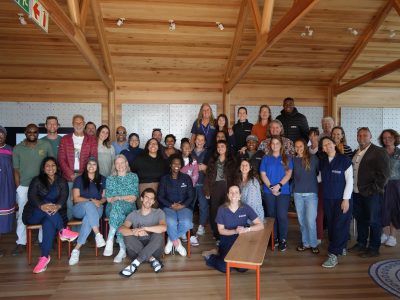
That is a genuinely different posture from most European marine mammal campaigns, and it is reflected in who is doing it. Frédérica Gilbert, the founder, is described as having more than 20 years of professional experience with marine mammals across different institutions. Annemie Carlier brings more than 40 years. Dr Benjamin Schulz is a zoological curator and reproductive biologist who has worked with marine mammals since 2007, with expertise the campaign lists as welfare, population management, reproductive biology and cooperation with zoological institutions and aquariums. Nuria Delgado Pérez coordinates the scientific and environmental side and works on marine turtle rehabilitation. The association’s own team page adds a veterinarian, Stella Villanueva, and a former Red Cross maritime rescue coordinator, Manuel Edouard Galipienso Fabregón, and spells the founder’s first name Frédérique.
These are zoo and aquarium people building a rehabilitation center, rather than a campaign group building an alternative to zoos. Whatever else it is, that combination is not common, and it is the reason this is worth watching.
Where it honestly stands
Early. That is the fair description and CETASEA does not hide it.
As of September 12, 2026, the Ulule campaign had raised 520 euros of its 5,000 euro target from 25 backers, with 29 followers and no project updates posted since it opened on August 28. The campaign is explicit that this is not construction money: “The future European Marine Rehabilitation Centre will ultimately require several million euros in investment,” it says, and the 5,000 euros pays for architectural and technical development, veterinary planning, regulatory procedures and coordination with authorities. “€5,000 will not build the centre. It will help us take the next step.” Stretch targets run to 50,000 euros, at which point the association says it would start a reserve toward the site itself.
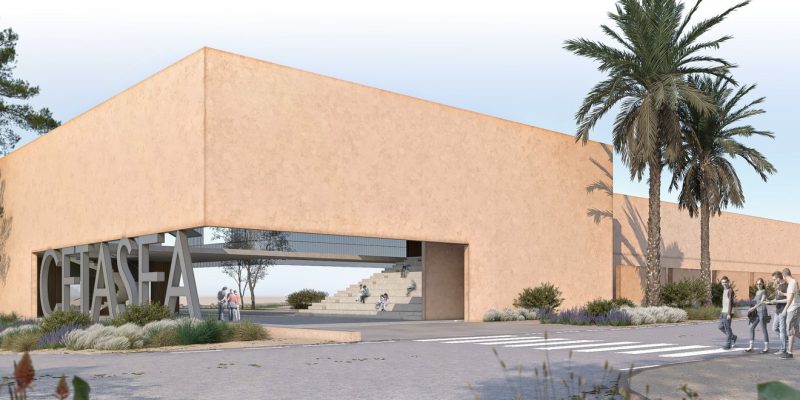
The site is the other open question. Feasibility, urban planning and architectural work has begun in the province of Alicante with two architectural practices, one French and one Spanish, but the campaign says that “for confidentiality reasons, detailed information concerning the future site and ongoing discussions cannot yet be made public.” There is no land, no permit and no opening date on the record. The image at the top of this article is an architect’s render of a building that does not exist.
We also looked for the thing we look for on every conservation project, which is which accredited zoos and aquariums are paying for it. On CETASEA we could not verify any. The campaign names zoological institutions and aquariums repeatedly as intended partners and future funding sources, and its team includes people who came out of them, but no zoo or aquarium is named as a current funder, and we found none independently. That is a finding rather than a failing at this stage of a project, and it is the sort of thing that changes when a project gets past the drawing board.
Why the gap is worth caring about
Rehabilitation capacity is the least glamorous thing in this field and the first thing that is missing when something goes wrong. The pattern is familiar from the turtle side of the work, where an aquarium that has built the pools, the quarantine and the veterinary bench can put animals back in the ocean at a scale that would be impossible to improvise. For large marine mammals in Europe, that bench is thin, and a facility built for assessment and care rather than display would be a new kind of thing on the continent.
Whether CETASEA is the organization that builds it is not something 520 euros can tell anyone. But the zoological world does not get better by only doing what it already does well, and a project that starts from veterinary capacity and refuses to prejudge where an animal should end up is an idea worth more attention than it is currently getting.
The campaign is open at Ulule, with a delivery date on the current stage of December 2026, and the association is at cetasea.eu. Figures in this article were read from Ulule’s project data on September 12, 2026 and will have moved since.
Quick answers
- What is CETASEA Europe trying to build?
A professional marine wildlife rehabilitation center in the province of Alicante, Spain, built primarily for marine mammals, with a separate veterinary and rehabilitation area for marine turtles. The listed technical program includes rehabilitation pools, quarantine areas, veterinary facilities, water treatment and scientific space. The campaign says it is not conceived as an aquarium or entertainment facility.
- How far along is the project?
Early. Feasibility, urban planning and architectural work has begun in the province of Alicante with two architectural practices, one French and one Spanish, but no site has been announced and the campaign says details of the future location cannot yet be made public. As of September 12, 2026 the crowdfunding campaign had raised 520 euros of a 5,000 euro target from 25 backers.
- What does the 5,000 euros pay for?
Not construction. CETASEA says the full center will require several million euros and multiple funding sources, and that this first target covers architectural and technical development, veterinary planning, regulatory procedures, professional documentation and coordination with authorities. Stretch targets run to 50,000 euros, at which point the association says it would begin a reserve toward the site.
- Is CETASEA opposed to zoos and aquariums?
Its campaign says the opposite. It describes the center as a complementary resource for zoos, aquariums and institutions, says its goal is not to replace existing structures but to add another professional option, and says the objective is not to favour a predetermined outcome for any individual animal. Separately, the association's own site states that it does not run trips to see dolphins at sea, swimming with marine mammals, or animal interactions.
- Which zoos or aquariums fund it?
None that we could verify. The campaign names zoological institutions and aquariums repeatedly as intended partners and future funding sources, and members of its team came out of them, but no zoo or aquarium is named as a current funder and we found none independently.