
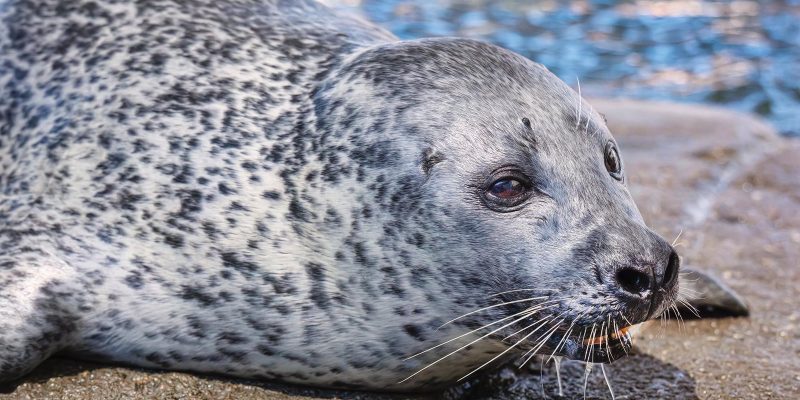
Ellie, a harbor seal at the Aquarium of the Pacific, has come through surgery to relieve inflammation in one of her eyes. She is thirty-seven years old, which is well past what harbor seals normally manage.
Geriatric care, done properly
Harbor seals typically live twenty-five to thirty years. Ellie is thirty-seven and has been at the aquarium since she was ten.
That gap between typical and actual is the whole story. Animals in professional care routinely outlive their wild life expectancy, and what follows is a set of problems wild animals rarely live long enough to develop: arthritis, dental disease, cataracts, chronic inflammation. Treating them requires the same geriatric medicine people receive, adapted to a patient who cannot describe the symptom.
Ellie recovered behind the scenes after the operation and was due to rejoin the other seals and sea lions in her habitat.
What the aquarium says it does
As an AZA-accredited institution, the aquarium describes its standard as compassionate animal care: habitats matched to individual needs, proper nutrition, daily monitoring for behaviors that might indicate a problem, and enrichment. Animals and habitats are assessed on a regular schedule, with follow-up protocols wherever something is flagged.
Daily behavioral monitoring is the part that made this surgery possible. A seal with a sore eye does not report it. Somebody noticed a change in how she was behaving, and everything after that followed from the noticing.
Veterinary work is where a lot of the field’s expertise actually lives; In-Sync Exotics ran a two-day dental clinic on eight rescued big cats this summer.
About harbor seals
Harbor seals (Phoca vitulina) live off the coasts of North America, Europe and Asia. Along the U.S. West Coast they range from Baja California up to the Bering Sea, including all five islands of Channel Islands National Park. They are identifiable by their fusiform shape, rounded in the middle and tapered at both ends.
Visiting
Ellie shares her habitat with the aquarium’s other seals and sea lions. Worth pausing there for a moment longer than usual: the oldest animal in the pool is a decade past what her species is supposed to get, and she can see out of both eyes.