
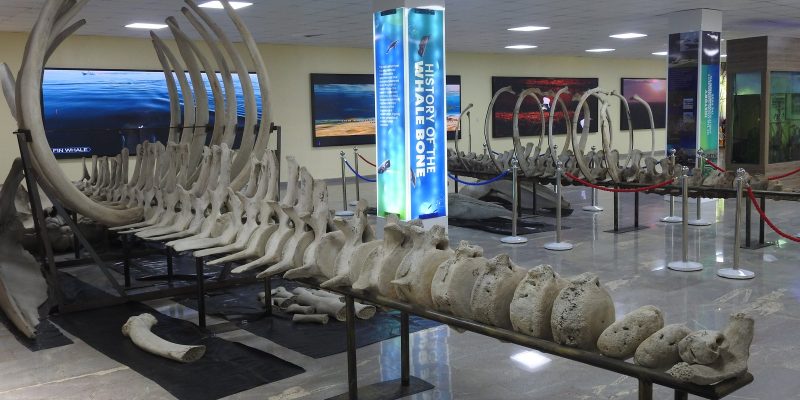
Finima Nature Park on Bonny Island has put up a whale bone exhibition, and it has been teaching its visitors and its neighbors to stop killing snakes. Both come out of the same idea, which is that a park’s conservation record is measured partly in what the people around it decide to do.
The park sits on Bonny Island in Rivers State, in the Niger Delta, and is managed by the Nigerian Conservation Foundation with support from Nigeria LNG Limited. The account of its current work comes from Oluwadamilare Ajayi, the park’s technical manager, writing on the Foundation’s site.
A hall of whale bones
The newly established whale bone exhibition facility is the park’s way into marine biodiversity, which is otherwise a hard subject to make concrete for visitors who arrive to walk a forest trail. Skeletons are good at this. They give an island audience a physical sense of the animals in the water off their own coast, and the park uses the hall to talk about why whales matter ecologically rather than only how big they are.
The park’s other visitor infrastructure runs along the same lines: nature trails, guided walks, educational visits and a Bio-Conservation Hub, all built to work as experiential learning rather than only as a day out. The audience the park names first is students and young people.
Not killing the snakes
The more unusual item is the park’s growing culture of protecting snakes instead of killing them. Snakes are widely feared and widely misunderstood, and they do real ecological work, particularly in keeping prey populations in check. The park promotes safe, non-lethal responses when someone encounters one, and where it is appropriate the animal is released into suitable natural habitat. Ajayi is specific that these interventions put human safety first and are carried out by trained personnel, which is the part that makes a no-kill policy workable rather than merely well meant.
This is a harder sell than a whale skeleton and a better measure of whether the park’s education work has landed. A visitor can enjoy an exhibition without changing anything they do. Deciding not to kill the snake in your compound is a change in behavior, which is what the park says it is actually after.
Who paid for this
We trace the accredited zoos and aquariums behind conservation work in this region, because a field organization’s funding is often the only part of the story that gets published. Here the answer is that there is no zoo in it.
Finima Nature Park is managed by the Nigerian Conservation Foundation with support from Nigeria LNG Limited, a gas company, and that is the funding relationship the Foundation itself names. We looked for an accredited zoological institution funding this park or this work and did not find one. The Foundation has no verifiable zoo funder on our records either, which has been the consistent finding across its projects. That is not a criticism of the Foundation and it is not a gap in the reporting. Some conservation work is paid for by industry and government, and saying so is more useful than implying a connection that is not there.
For context on the sector’s scale, the Association of Zoos and Aquariums reports that 235 accredited and certified facilities spent roughly $372.4 million on conservation across 139 countries in 2025. There is no published breakdown of what any single region receives, so we do not estimate one.
What is missing from this account
The park’s own write-up carries no figures: no visitor numbers, no count of snakes relocated, no date for when the whale bone facility opened or how many specimens it holds. It is a statement of approach by the person who manages the place, not a report. We have written it up as that, and the specifics would make a better story if the Foundation publishes them.
The Foundation runs a comparable visitor site at the other end of the country, and in October we wrote about the Lekki Conservation Centre’s urban ecotourism award, which is the same argument about public engagement made in a city.
Quick answers
- Where is Finima Nature Park?
On Bonny Island in Rivers State, in the Niger Delta. It is managed by the Nigerian Conservation Foundation with support from Nigeria LNG Limited.
- What is the whale bone exhibition?
A newly established facility at the park displaying whale skeletons, used to introduce visitors to marine biodiversity and the ecological role of whales. The park has not published an opening date or the number of specimens it holds.
- What is the park doing about snakes?
It promotes safe, non-lethal responses to snake encounters and, where appropriate, release of the animal into suitable natural habitat. The park says these interventions prioritize human safety and are carried out by trained personnel.
- Does an accredited zoo fund this work?
Not that we could verify. The funding relationship the Foundation names is with Nigeria LNG Limited, a gas company. We looked for an accredited zoological institution behind this park and did not find one.