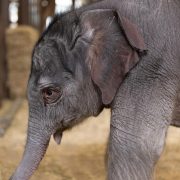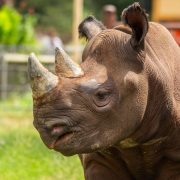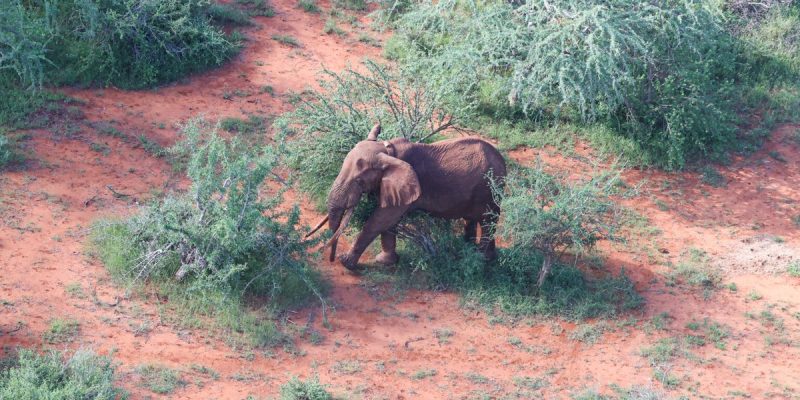
In November 2021 a group of elephants that had been raiding farms around Isiolo was captured, loaded and driven to Tsavo East National Park, several hundred kilometers south. The immediate objective worked: the elephants stopped being Isiolo’s problem. The rest of it did not. The group broke up after release, some animals traveled far outside the area they had been put in, and two of the elephants wearing satellite collars left Tsavo East altogether, one of them within a week and the other inside seven.
That is the finding of a management paper published in Pachyderm, the journal of the IUCN species specialist groups for African and Asian elephants and rhinos, and Tsavo Trust has built an unusually frank piece of writing around it, published on November 19. The Kenyan field organization works in the ecosystem those elephants were released into, and its argument is that the conservation sector keeps measuring translocations at the wrong moment.
What the collars showed
The researchers’ own conclusion is narrow and damaging at the same time. Removing the conflict elephants from Isiolo succeeded. Resettling them in Tsavo was not achieved, in the paper’s words, because the group fragmented and some animals swiftly moved far outside the release site. Two elephants the team could follow by satellite collar exhibited homing behavior, and both left Tsavo East National Park within one to seven weeks of release.
Homing is the detail worth sitting with, because it is the thing that separates an elephant from most of the animals conservation moves around. An elephant that walks back toward the place it was taken from is not lost. It is navigating, using a memory of a landscape it has spent decades learning, and it is doing so through farmland and settlements that lie between the two points. The animal is fine. The people on that route are the ones who find out.
The study’s recommendations follow from that: more post-release monitoring, individual tracking collars, trained people to run them, and enough money to pay for conflict management after the trucks have gone. Tsavo Trust adds the longer-term half, which is land-use planning, wildlife corridors and measures aimed at the crop-raiding behavior itself rather than at the individual animal doing it.
Why elephants get moved anyway
Because the alternative is often worse. Tsavo Trust is careful not to argue that translocation is a bad tool, and points to Kenya Wildlife Service’s October 2024 operation at Mwea National Reserve as the ordinary case for it. Mwea’s elephant population had grown from 49 animals in 1979 to 156, in a reserve that could not absorb them, and KWS moved them to Aberdare National Park.
KWS’s own retrospective account of that operation, which Tsavo Trust cites, puts the final number at 54 elephants. Reporting published while the operation was still running gave lower running totals, between 43 and 50, because the animals went in batches. The 54 is the service’s own closing figure.
The other standard reason is the individual habitual crop raider, very often an adult bull, moved away from farms to stop property damage and protect people. Tsavo Trust’s objection there is precise rather than sweeping: moving the elephant removes the elephant, and does nothing about the behavior that made it a problem. We have covered the same operation type from the other end, when Sheldrick Wildlife Trust and KWS moved two fence-breaking bulls into Tsavo, and when the aerial unit ran translocations through August.
When the move exports the problem
The hardest case in the piece is not Kenyan. In 2022, 263 elephants were moved roughly 350 kilometers from Liwonde National Park to Kasungu National Park in Malawi, to rebuild a population that poaching had emptied out. Serious human-elephant conflict followed around Kasungu. Communities reported crop damage, destroyed property, injuries and deaths, and in 2025 lawyers acting for residents began preparing a group claim against the International Fund for Animal Welfare, one of the organizations behind the move.
Tsavo Trust does not use that as a verdict, and neither will we. IFAW disputes the allegations, conflict around Kasungu predates the translocation, and not every incident attributed to it involved a relocated animal. What followed is also part of the record: a 133 kilometer electric fence, elephant monitoring and rapid-response capacity, and IFAW’s report that recorded conflict incidents fell substantially between 2022 and 2025.
The point Tsavo Trust draws from it is about budgeting rather than blame. Restoring a wildlife population into a landscape where people live costs far more than the capture and the convoy, and the bill arrives afterward.
What a successful translocation would have to mean
Tsavo Trust’s test has four parts, and only one of them is about logistics. Do the animals survive. Do they stay and establish themselves in suitable habitat. Do they reproduce. Do they keep workable social relationships, which for elephants means moving family groups together rather than individuals. Add to that an honest assessment of the receiving habitat’s food, water and capacity, community consultation before rather than after, and monitoring long enough to catch the problems that surface in year two.
Against that standard, the number of elephants successfully captured, transported and released is not a result. It is the first line of one.
A note on the listing
The African savanna elephant, Loxodonta africana, is listed as Endangered on the IUCN Red List under criterion A2bd, from an assessment dated November 2020 and published in amended form in 2022. Tsavo Trust states no category in this piece, so there is nothing to correct, which is worth recording as often as the reverse. The African forest elephant is assessed separately and carries a different category, so the list is worth naming rather than writing about African elephants as one listed entity.
Which zoos or aquariums paid for this?
This particular article is Tsavo Trust’s own commentary, and no institution funded it. The organization behind it is a different matter, and there the trace lands.
Cheyenne Mountain Zoo in Colorado Springs has partnered with Tsavo Trust since 2016, and announced in October 2024 that it had passed one million dollars given to the organization, raised through its Quarters for Conservation program and through daily elephant and rhino feeding experiences. By the zoo’s own account that money has paid for protection of African elephants, including Tsavo’s large tuskers, and of eastern black rhinos, for the maintenance of anti-poaching aircraft and ground vehicles, for an anti-poaching helicopter and an aircraft hangar, for boreholes and sand dams, and for staff housing, salaries, pilot hours and operating costs.
That is the apparatus this article is arguing for. The study’s central recommendation is post-release monitoring with collars, aircraft and trained people, and aerial monitoring of elephants in Tsavo is the first line item on the zoo’s published list. We have drawn this line in the other direction before, when the subject was the Trust’s wild cat research and no zoo money was attached to it, and we said so then.
For scale on the sector, the Association of Zoos and Aquariums reports that in 2025 its 235 accredited and certified facilities spent approximately $372.4 million on conservation across 139 countries. No published breakdown isolates the African share of that, and we are not going to estimate one.
Quick answers
- What happened to the elephants moved from Isiolo to Tsavo East?
The 2021 operation removed them from the area where they were raiding farms, which was its first aim. Its second aim failed. The group fragmented after release, some animals moved far outside the release site, and the two elephants fitted with satellite collars both left Tsavo East National Park within one to seven weeks.
- What is homing behavior in elephants?
Moving back toward the place the animal was taken from. Elephants range over large areas and remember landscapes across decades, so a translocated animal is capable of navigating home rather than settling where it was released. The route back usually runs through the farmland and settlements between the two sites.
- Does this mean elephants should not be translocated?
No, and Tsavo Trust does not argue that. It points to Kenya Wildlife Service's October 2024 move of elephants from Mwea National Reserve to Aberdare National Park as the ordinary case for it, where a population had grown from 49 animals in 1979 to 156 in a reserve that could not hold them. The argument is about how translocations are planned, funded and measured afterward.
- What happened at Kasungu in Malawi?
In 2022, 263 elephants were moved about 350 kilometers from Liwonde National Park to Kasungu to rebuild a population depleted by poaching. Serious human-elephant conflict followed, and in 2025 lawyers acting for residents began preparing a claim against the International Fund for Animal Welfare, which disputes the allegations. A 133 kilometer electric fence, monitoring and rapid-response capacity followed, and IFAW reports that recorded incidents fell substantially between 2022 and 2025.
- Is the African elephant endangered?
The African savanna elephant, Loxodonta africana, is listed as Endangered on the IUCN Red List under criterion A2bd, from an assessment dated November 2020 and published in amended form in 2022. The African forest elephant is assessed separately and carries a different category.
- Do any zoos fund Tsavo Trust?
Yes. Cheyenne Mountain Zoo in Colorado Springs has partnered with Tsavo Trust since 2016 and announced in October 2024 that it had passed one million dollars given to the organization, funding anti-poaching aircraft and vehicles, a helicopter, a hangar, boreholes and sand dams, staff housing and salaries. That money is not what paid for this particular article, which is the Trust's own commentary.