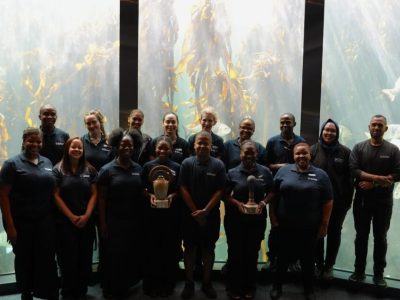
Woodland Park Zoo has won two Significant Achievement Awards from the Association of Zoos and Aquariums, one of them for a pollinator campaign that helped put a pesticide restriction into Washington state law. The awards were announced at AZA’s Honors and Awards Lunch at the association’s annual conference in Portland, Oregon, from a field of 96 nominations.
The first, the Significant Achievement Advocacy Impact Award, went to the zoo’s “Hello Pollinators, Goodbye Pests!” campaign and its part in the passage of Washington Senate Bill 5972. The second, the Significant Achievement Education Award, went to the Advancing Conservation through Empathy for Wildlife Network, a program the zoo runs for the rest of the field rather than for its own guests.
What does the law actually do?
SB 5972 gave the Washington State Department of Agriculture the authority to regulate neonicotinoid pesticides. Neonicotinoids are systemic insecticides, which is the detail that matters: rather than sitting on the surface of a leaf where they can be washed off, they are taken up into the plant’s own tissues, and that includes the pollen and the nectar. A bee visiting the flower of a treated ornamental is therefore not avoiding the pesticide by avoiding the leaves.
The bill was signed into law as Chapter 338 of the 2024 Laws and took effect on June 6, 2024. Its most visible provision arrived later: since January 1, 2026, neonicotinoids may no longer be used by home gardeners on outdoor ornamental plants in Washington.
“These achievements demonstrate Woodland Park Zoo’s power of collaboration, creativity and community action to advance conservation,” said zoo president and chief executive Alejandro Grajal. “From helping drive meaningful policy change for pollinators across Washington state to discovering new ways for zoos and aquariums to engage people with animals, strengthen empathy and deepen connections to the natural world, this work advances and brings to life our mission of making conservation a priority in everyone’s lives.”
It is becoming a recognizable shape. The Maritime Aquarium at Norwalk took AZA’s top advocacy honor in the same cycle for its work behind a Connecticut horseshoe crab law, which we covered here. Two aquariums and zoos, two state capitols, two statutes.

What is the ACE for Wildlife Network?
The education award recognizes something less visible than a law. ACE for Wildlife is a free community of practice that gives zoos and aquariums of any size a shared set of tools for designing animal encounters, delivering them, and then actually measuring whether they moved anybody to do anything. It pulls together research synthesis, professional training and common evaluation methods, and it is deliberately built so a small institution can pick it up and use it.
That is the part worth sitting with. A zoo can only put so many people in front of so many animals. A method that other institutions adopt travels further than any one zoo’s gate ever will, and this award is the field saying the method works.
“Congratulations to the team at Woodland Park Zoo for their hard work and dedication in achieving this remarkable recognition,” said Dan Ashe, president and chief executive of the Association of Zoos and Aquariums. “These awards recognize the best of the best in the global aquarium and zoo community.”
The practical upshot for anyone in Washington with a garden: the bees in the zoo’s photographs and the bees on your alliums are drawing from the same supply, and as of this year the plants you buy for the border are not supposed to be dosed with the thing that reaches them through the flower. Woodland Park Zoo’s own announcement is here, and the bill’s legislative history is on the Washington Legislature’s site.
Quick answers
- What awards did Woodland Park Zoo win?
Two Significant Achievement Awards from the Association of Zoos and Aquariums: the Advocacy Impact Award for its "Hello Pollinators, Goodbye Pests!" campaign, and the Education Award for the Advancing Conservation through Empathy for Wildlife Network.
- What is a neonicotinoid?
A class of systemic insecticide. Unlike a surface spray, a neonicotinoid is taken up into the plant’s own tissues, including its pollen and nectar, so a bee visiting the flower is exposed even though it never touches a treated leaf.
- What does Washington Senate Bill 5972 do?
It gave the Washington State Department of Agriculture authority to regulate neonicotinoid pesticides. It was signed as Chapter 338 of the 2024 Laws and took effect on June 6, 2024.
- Can home gardeners in Washington still use neonicotinoids?
Not on outdoor ornamental plants. That restriction took effect on January 1, 2026.
- What is the ACE for Wildlife Network?
Advancing Conservation through Empathy for Wildlife is a free community of practice for zoos and aquariums. It provides shared tools for designing animal encounters, delivering them and evaluating whether they actually prompt conservation action, built so institutions of any size can adopt it.