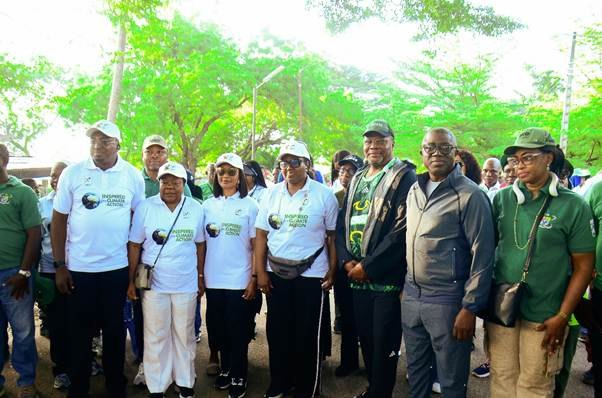
Lagos throws away about 13,000 tonnes of waste a day. Roughly 15 percent of it is plastic, and a good deal of that ends up in the drains and canals of a coastal city that floods. The Nigerian Conservation Foundation walked its twentieth Walk for Nature into that problem and left a recycling bin behind.
The twentieth edition was held on Saturday 17 October 2026 at Makanjuola Hall, Lagos State University in Ojo, under the theme “Inspired for Climate Action”. It is the foundation’s flagship advocacy event, and twenty editions is long enough that the thing has a history of its own.
Twenty years of changing the subject
The walk has not stayed on one topic. Over two decades it has been pointed at wildlife and biodiversity, plastic pollution, land restoration, desertification, drought resilience and climate change in turn. This year it was climate, and specifically the argument that a megacity’s best flood defenses are the ones already growing in it.
That is the case the foundation made at length: wetlands, mangroves, forests, waterways and urban green space regulate water, store carbon and buffer the coast, and Lagos loses that protection every time a stretch of it is filled in or built over. Flooding, rising temperatures, coastal erosion and habitat loss all land on the same communities.
What was said from the podium
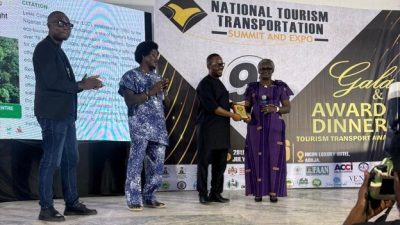
Hon. Justice (Mrs.) R.I.B. Adebiyi, who chairs the foundation’s National Executive Council, framed twenty editions as two decades of advocacy and then pressed past it, telling the hall that awareness has to turn into action. She set out what that means for each group in the room: citizens reducing waste, keeping refuse out of drains and waterways, and nurturing trees; government strengthening how climate policy is actually implemented, protecting wetlands, enforcing environmental impact assessment requirements, and investing in green infrastructure, public transport and renewable energy; the private sector moving past pledges into ecosystem restoration, emissions cuts and circular economy practice.
Her pitch to the students was that climate work is not one department’s problem. Engineering, agriculture, business, law, medicine and communications all have a part in building solutions, shifting behavior and holding institutions to account.
Lagos State Governor Babajide Sanwo-Olu’s address was delivered on his behalf by Mr. Tajudeen Omobolaji Gaji, Permanent Secretary in the Office of Environmental Services. It supplied the waste figures above and set out state work in three areas: cutting plastic pollution, protecting wetlands, and strengthening drainage and green infrastructure.
The bin
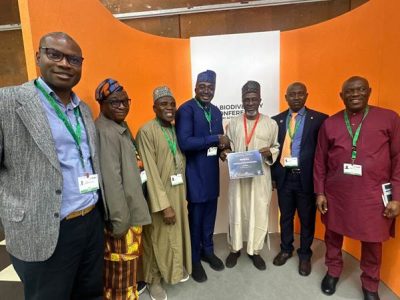
The concrete moment of the day was small and deliberately so. The foundation donated a giant recycling bin to the LASU campus in Ojo, received on the university’s behalf by its Center for Environmental Studies and Sustainable Development.
A bin is not a policy. The foundation’s own framing is that infrastructure only works if it is used consistently and backed by education, responsible disposal and a collection system that actually comes, and that is the honest version. What it does do is put the day’s argument somewhere students walk past, on a campus that can model the behavior it teaches.
Who is behind it
We looked for an accredited zoo or aquarium funding the Nigerian Conservation Foundation’s work and did not find one, which is consistent with what we have found on previous passes through this organization. The foundation is Nigeria’s leading conservation NGO, it runs the Lekki Conservation Centre, and its partners on this event were a state government and a university.
For context on the sector, the Association of Zoos and Aquariums reports that 235 accredited and certified facilities spent roughly $372.4 million on conservation across 139 countries in 2025. No published breakdown isolates an African share, so we will not print one. Where a zoo is behind African conservation work we name it; here the money and the convening power are Nigerian.
The foundation has had an active month beyond the walk. In October it also secured a $50,000 grant at COP17 to count the conservation happening outside Nigeria’s formal parks.
Source: Nigerian Conservation Foundation, “Walk for Nature 2026: NCF and Lagos Renew Call for Climate Action as Landmark 20th Edition Holds at LASU”, published 29 October 2026.
Quick answers
- When and where was the 20th Walk for Nature held?
On Saturday 17 October 2026, at Makanjuola Hall, Lagos State University in Ojo, under the theme "Inspired for Climate Action". The Nigerian Conservation Foundation published its account of the event on 29 October.
- How much waste does Lagos produce?
About 13,000 tonnes a day, with plastics accounting for roughly 15 percent, according to the address delivered on behalf of Governor Babajide Sanwo-Olu. Plastic waste entering drains, canals and waterways contributes to drainage blockages and compounds the city's flooding.
- What was donated to the university?
A giant recycling bin, received on the university's behalf by its Centre for Environmental Studies and Sustainable Development, intended to support waste reduction on the Ojo campus.
- What has the Walk for Nature covered over 20 editions?
Its focus has moved across wildlife and biodiversity conservation, plastic pollution, land restoration, desertification, drought resilience and climate change. The 20th edition put climate action at the center.
- Who spoke at the event?
Hon. Justice (Mrs.) R.I.B. Adebiyi, Chair of the foundation's National Executive Council, and an address from Lagos State Governor Babajide Sanwo-Olu delivered on his behalf by Mr. Tajudeen Omobolaji Gaji, Permanent Secretary in the Office of Environmental Services.
- Which zoo or aquarium funds the Nigerian Conservation Foundation?
None that we have been able to verify, across several passes through this organization. The partners on this event were the Lagos State Government and Lagos State University. The foundation runs the Lekki Conservation Centre and is Nigeria's leading conservation NGO.