A white rhino calf about two months old was rescued in South Africa on September 21, too weak to stand and too weak to hold up her own head. On October 27 Care for Wild Rhino Sanctuary published an account of what the five weeks since have taken. The clearest marker in it is a number: she walked onto a scale under her own power and recorded 99.2 kg.
She has no name in the sanctuary’s account, and the reserve she came from is not identified. What is set out in detail is why she needed rescuing, and it was not poaching.
Why was this rhino calf orphaned?
Her mother became severely malnourished in dry conditions and could no longer produce enough milk to sustain her. Rangers and reserve management watched the calf’s condition fall with her mother’s and stepped in. By the time they reached her she was extremely thin, severely dehydrated and had, in the sanctuary’s phrase, almost no reserves left.
That matters because the rhino stories that reach most readers begin with a poacher. This one begins with a dry season. A calf that age cannot feed itself, and the outcome of a mother who cannot feed it is the same either way.
She was given emergency treatment in the field, then moved by helicopter and vehicle to Care for Wild’s Rhino and Wildlife Clinic in Mpumalanga.
The first days
On arrival she could not stand, could not hold her head up and could not suckle properly. She also had thorns embedded in all four feet, several of which had turned into painful abscesses.
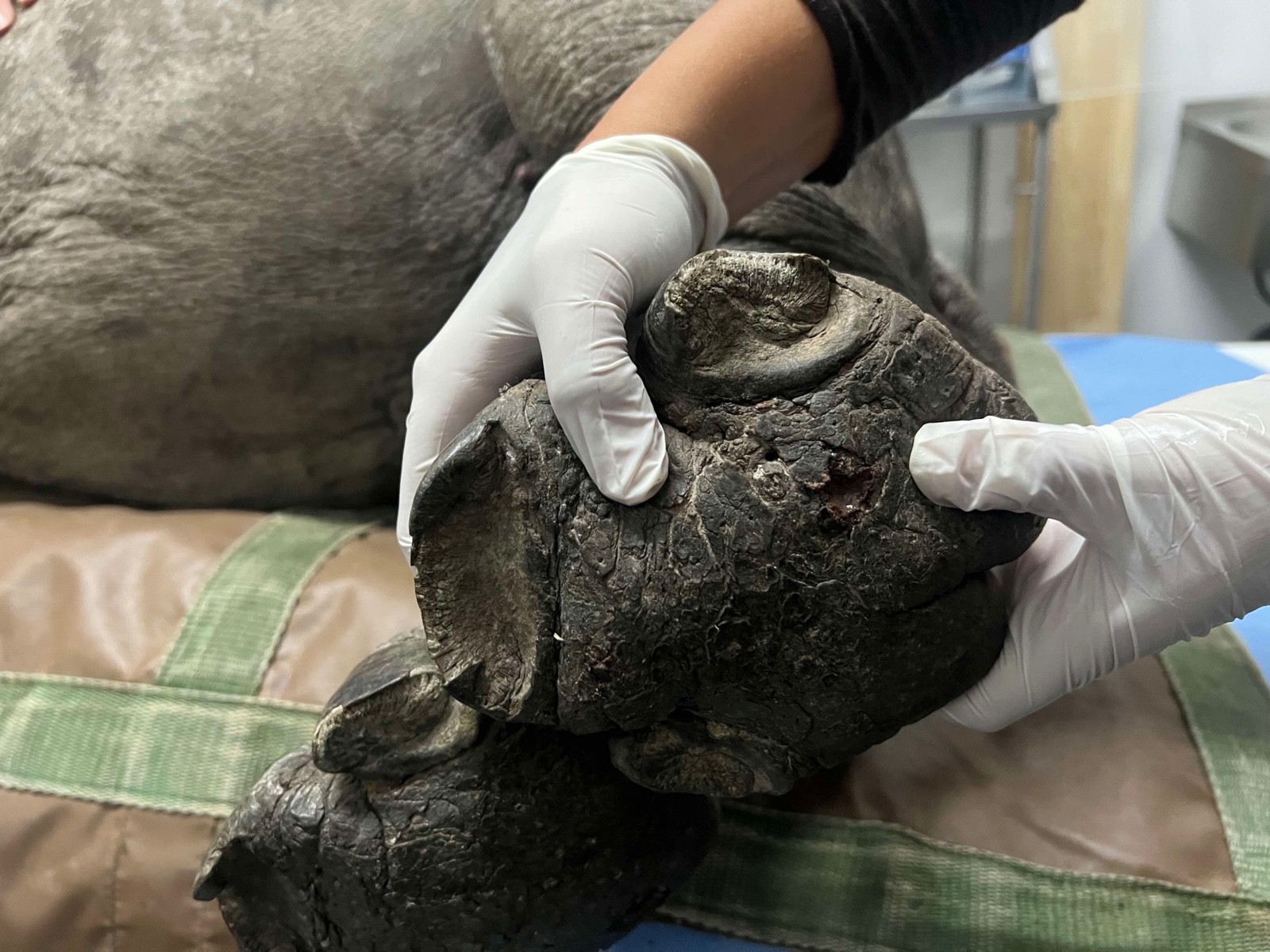
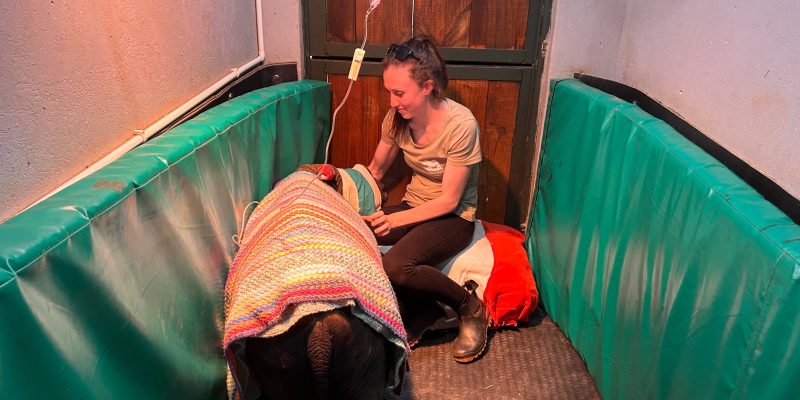
Treatment began immediately: intravenous fluids for the dehydration, rhino plasma to support her condition, and specialized intravenous nutrition, because she was too weak to get what she needed from milk alone. Her feet were treated, she was given pain relief, and she was monitored around the clock.
Feeding was its own problem. She could manage only small amounts at a time and had to be syringe fed with her head supported while she relearned how to swallow. She progressed to a bottle, at first still needing her head held, then suckling with what the sanctuary calls strength and purpose. As her milk feeds began carrying her hydration and nutrition, her bloodwork came back into range, her electrolytes balanced, and the intravenous line came out.
We have written before about what actually goes into one of those bottles, and the short answer is that there is no standard rhino bottle. The plan is written for the individual animal and revised every time it is weighed. Which is exactly why the weigh-in is the news here.
Why a blindfold and earplugs?
Because a critically compromised calf needs the volume turned down. Care for Wild used both to limit stimulation while she was at her most vulnerable, and then handled the removal as carefully as the treatment. The blindfold came off at night, under red light, while she was drinking milk, so that the first experience of seeing her caregivers was attached to something she already found reassuring.
It worked in the direction they wanted. She took her first steps outside into the sun, and more recently followed her caregiver from the boma into the night pen for a feed, blindfold off and earplugs out.
What 99.2 kg tells the vets
Weighing is not ceremony. Accurate weight records are what tell the veterinary team whether a calf is gaining as expected, and they drive the decisions on milk volume, nutrition, medication and supplements as she grows. For an animal that arrived unable to hold her head up, being steady enough to walk onto the scale is itself part of the reading.
Her recovery is not finished. The sanctuary is explicit that she has a long way to go and will need monitoring, nutrition and specialist care for a long time yet.
Who pays for this?
We look for the accredited zoo or aquarium behind every conservation and rescue story in this region, because that connection is often there and usually unreported. On this one we did not find it.
Care for Wild’s own Partners and Sponsors page, checked on the day this was written, names no zoo and no aquarium anywhere in its text. Nothing in the sanctuary’s account of this calf names a zoological institution either. The verifiable institutional relationship behind the work is governmental rather than zoological: South African National Parks signed a memorandum of agreement with the sanctuary covering the rehabilitation, rewilding and long-term protection of Kruger’s orphaned and injured rhinos, which is the agreement Satara came in under in 2014.
That is a finding, not a gap. Accredited zoos and aquariums do fund an enormous amount of this work: the Association of Zoos and Aquariums reports that 235 accredited and certified facilities spent roughly $372.4 million on conservation across 139 countries in 2025. No published breakdown isolates how much of that reached Africa, and we are not going to estimate one. On this calf, the honest answer is that we looked and found no zoo money to name.
Where the white rhino actually stands
Care for Wild did not attach a conservation status to this story, so there is nothing to correct. For readers who want the number, the IUCN Red List assesses the white rhino as Near Threatened, with 10,080 mature individuals and a decreasing trend. That assessment is dated January 2020, so it is six years old, and it is the most recent one published.
Near Threatened is also the gentlest category any rhino carries. The black rhino, which Care for Wild also raises, is Critically Endangered.
Care for Wild’s full account of the rescue and recovery was published on October 27, 2026.
Quick answers
- Why was the rhino calf orphaned?
Not by poaching. Her mother became severely malnourished in dry conditions and could no longer produce enough milk. By the time rangers and reserve management rescued her on September 21, 2026, the calf was extremely thin, severely dehydrated and too weak to stand.
- How was she treated?
She was given emergency treatment in the field and moved by helicopter and vehicle to Care for Wild’s Rhino and Wildlife Clinic. There she received intravenous fluids, rhino plasma and specialized intravenous nutrition, plus treatment and pain relief for thorn abscesses in all four feet. She was syringe fed until she was strong enough for a bottle.
- Why do rescued rhino calves wear a blindfold and earplugs?
To limit stimulation while the calf is at its most vulnerable. This calf’s blindfold was taken off at night, under red light, while she was drinking milk, so that seeing her caregivers was linked to something she already found reassuring.
- Why does the weigh-in matter?
Because weight records drive the care plan. They tell the veterinary team whether she is gaining as expected and set the milk volumes, nutrition, medication and supplements. Her first official weigh-in at Care for Wild recorded 99.2 kg.
- Is the white rhino endangered?
The IUCN Red List assesses the white rhino as Near Threatened, with 10,080 mature individuals and a decreasing trend. That assessment dates from January 2020. The black rhino, which Care for Wild also raises, is Critically Endangered.
- Which zoos fund Care for Wild?
We looked and could not verify any. The sanctuary’s Partners and Sponsors page names no zoo or aquarium in its text, and no zoological institution appears in its account of this calf. The verifiable institutional agreement behind the work is with South African National Parks.