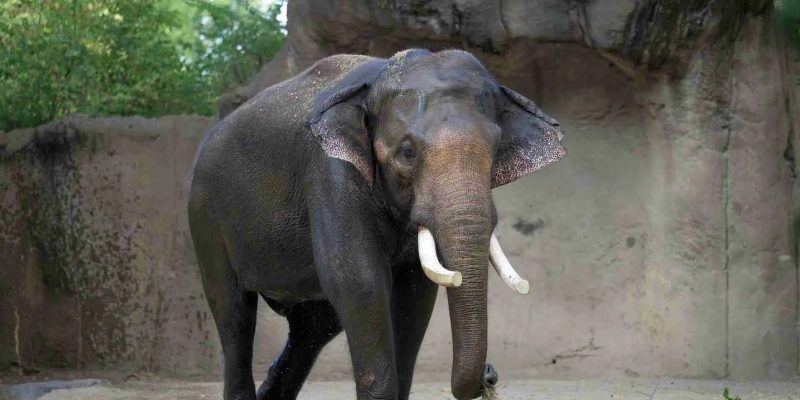
Raja, the first elephant ever born at the Saint Louis Zoo, is leaving it. The zoo announced on October 23, 2026 that the 33-year-old male Asian elephant will move this fall to another zoo accredited by the Association of Zoos and Aquariums, on a new breeding recommendation. His destination has not been named yet and will be announced together with the receiving zoo.
Before he goes, the zoo is giving St. Louis a weekend to say goodbye. Guests can sign an oversized farewell card at River’s Edge from 9 a.m. to 3 p.m. on Saturday and Sunday, October 24 and 25, and visit Raja and the rest of the elephant family while they are there. The gift shops are stocking elephant souvenirs and the River Camp Cafe is selling an elephant-themed treat while supplies last.
Why does a zoo send away an elephant it raised?
Because the recommendation came from the Asian Elephant Species Survival Plan, and because that is roughly what would happen anyway. A Species Survival Plan is the cooperative program that treats every Asian elephant at every AZA-accredited institution as one managed population rather than as a set of separate collections, and decides which animal should live where. It is solving for two things at once: stable social groups, and enough genetic diversity for the population to sustain itself without taking animals from the wild.
Raja is a bull, and bulls move. Adult male elephants in the wild generally live alone or travel in small bachelor groups, while females raise calves in multi-generational family groups that males are not part of. The sexes come together to breed and then separate again. A transfer like this one tracks that pattern rather than working against it.
“Raja is beloved in St. Louis and leaves a legacy that lives on in our multigenerational elephant family,” said Katie Pilgram-Kloppe, Curator of Mammals/Ungulates and River’s Edge at the Saint Louis Zoo. “While we’re sad to see him leave, we’re thrilled that he and Samudra have the chance to start new families and contribute to their endangered species. After years of preparation, our top priority today is ensuring a safe and smooth transition for both males.”
The plan changed once already
This is the second destination Raja has had on paper. In December 2023 the zoo announced a preliminary recommendation sending him to the Columbus Zoo and Aquarium. That plan was reconsidered after a further look at Columbus’s own herd dynamics, where there are now two calves, and at facility considerations there. Raja received an updated recommendation this year to pair with females at a different accredited zoo. Three years is a long runway for one animal’s move, which is a fair measure of how much of this work is logistics.
What he leaves behind, and who arrives
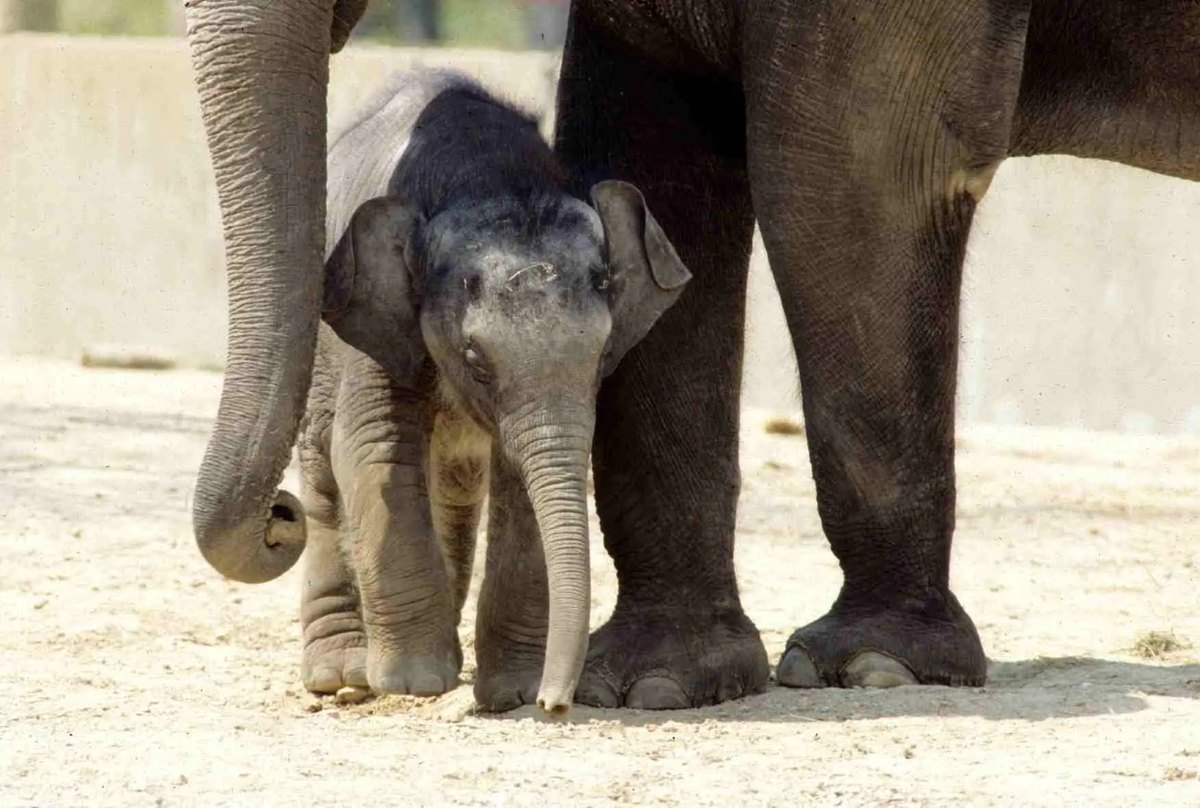
River’s Edge holds an eight-member, four-generation family of Asian elephants, and most of it is Raja’s. He is the father of Maliha, 20, Jade, 19, and Priya, 13, and the grandfather of Jet, who was born in November 2024. Pearl, 55, is his mother. Ellie, 55, is the mother of Maliha and Priya. Sri, 46, is the unrelated auntie of the group. When Raja goes, seven of them stay, and the line he started stays with them.
Someone else is coming in. The zoo plans to welcome Samudra, an 18-year-old male from the Oregon Zoo, in 2027, also on an SSP recommendation and specifically as a match for the Saint Louis female herd. We covered that transfer from the Portland end last week: Oregon’s bull elephant is leaving the herd he grew up in. The two moves are one decision seen from opposite sides of the country.
Why this matters for the species
Asian elephants (Elephas maximus) are listed as Endangered on the IUCN Red List, and the breeding program exists because the population in accredited North American zoos is small enough that individual pairings move the needle. The AZA’s Species Survival Plan programs are what turn a few dozen scattered animals into something that can be managed as a whole. Raja has already contributed three daughters and a grandson to that population. The recommendation now asks him to do it somewhere else.
Saint Louis has had a busy year in elephant news for a different reason. Earlier this month the zoo reported on an mRNA vaccine trial against EEHV, the herpesvirus that is the leading killer of young Asian elephants in human care, given to Raja’s grandson Jet.
Go this weekend
Raja is still at River’s Edge, and the farewell card is out Saturday and Sunday. He is a big, tusked, 33-year-old bull in a habitat of waterfalls and pools, and for two more days he is in the city he was born in. After that the next news about him will come from somewhere else, and it will probably be about calves.
Quick answers
- When can I say goodbye to Raja at the Saint Louis Zoo?
Guests can sign an oversized farewell card at River’s Edge from 9 a.m. to 3 p.m. on Saturday and Sunday, October 24 and 25, 2026, and visit Raja and the rest of the elephant family.
- Where is Raja the elephant going?
The zoo has not said. Raja will move to another AZA-accredited zoo and the destination will be announced later, in coordination with the receiving zoo.
- Why is the Saint Louis Zoo sending Raja away?
A new breeding recommendation from the AZA Asian Elephant Species Survival Plan, the cooperative program that manages Asian elephants across accredited North American zoos as one population and decides where each animal lives.
- Was Raja supposed to go to the Columbus Zoo?
Yes, originally. The Saint Louis Zoo announced a preliminary recommendation to Columbus in December 2023. That plan was reconsidered after a further look at the Columbus herd, which now includes two calves, and at facility considerations. Raja received an updated recommendation this year.
- How old is Raja and where was he born?
Raja is 33. He was born at the Saint Louis Zoo on December 27, 1992, the first elephant ever born there. He is the father of Maliha, Jade and Priya and the grandfather of Jet.
- Will the Saint Louis Zoo still have a male elephant?
Yes, from 2027. The zoo plans to welcome Samudra, an 18-year-old male from the Oregon Zoo, who the Asian Elephant SSP identified as a match for the Saint Louis female herd.