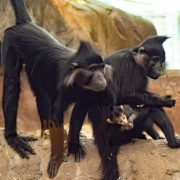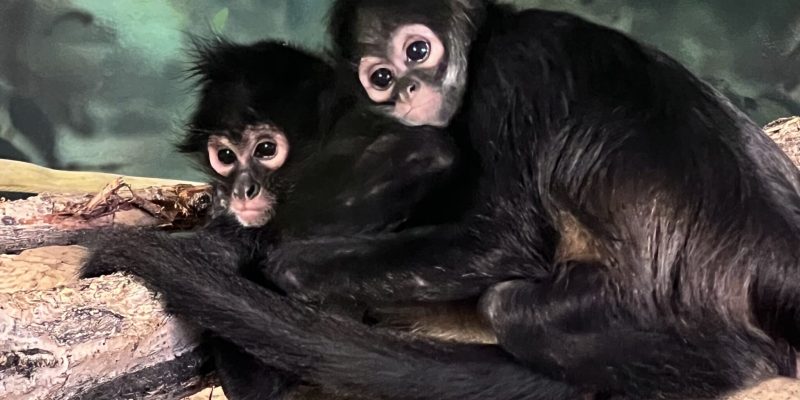
Two young spider monkeys who were taken from the wild and seized from traffickers at the United States border are now climbing in Primate Forest at Utah’s Hogle Zoo. The zoo introduced them on October 12, 2026: Romina, estimated at about two years old, and Eve, estimated at about one.
They came to Salt Lake City from the Gladys Porter Zoo in Brownsville, Texas, placed through the Association of Zoos and Aquariums Spider Monkey Species Survival Plan and the Wildlife Confiscation Network, which matches confiscated animals with organizations able to meet their care needs. A Species Survival Plan is the cooperative program that decides, across accredited institutions, where an individual animal of a given species should live. Usually it moves animals for breeding. Here it was placing two orphans who are never going home.
Who are Romina and Eve?
Romina is the larger of the two and the bolder one. She is generally first to investigate something new, and she works through enrichment with what her keepers describe as curiosity and a little mischief. Eve is smaller and more reserved. Fruit is her favorite, though she eats a wide variety of foods.
The difference between them is partly personality and partly a year of childhood.
What happened before Salt Lake City
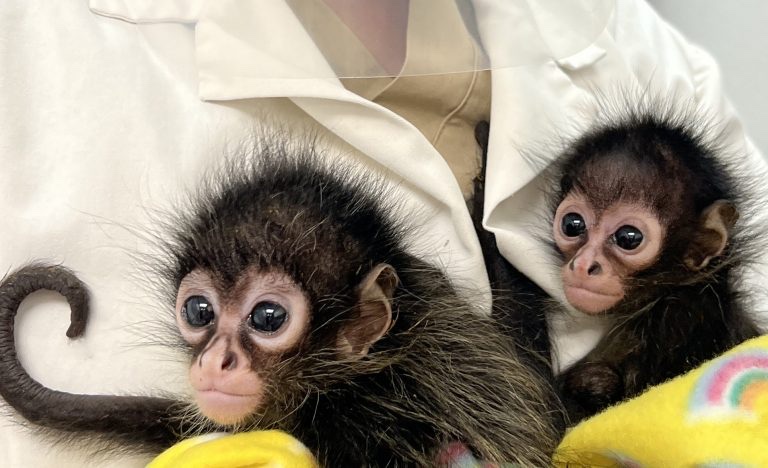
Both monkeys were confiscated at the border after being taken from their natural habitat. The Gladys Porter Zoo took them in first and did the part of this story that does not photograph well.
“Our colleagues at the Gladys Porter Zoo performed the initial round-the-clock work required to save these infants immediately following their confiscation at the border, treating their initial trauma, medical needs, and hand-rearing them. Our role now is to welcome them into their permanent home, integrate them into an appropriate social troop, and ensure they continue to thrive,” said Clair Hallyburton, Associate Director of Animal Care at Hogle Zoo.
Hallyburton also serves the Spider Monkey Species Survival Plan as studbook keeper and Vice Coordinator for the robust black spider monkey population. A studbook keeper maintains the pedigree and location record for every individual of that species in the program, which is how a placement like this one gets made at all: somebody has to know which troop has room and which animals would suit it.
Young spider monkeys are especially vulnerable to the trade because demand for babies is growing. From birth to about two years old an infant relies on its mother and is rarely separated from her, riding piggyback as the troop moves through the forest. To reach an infant, poachers may kill the mother, or harm other members of the troop who try to defend the young. The journey out is its own hazard: animals concealed in bags or in cars face disease, dehydration, malnutrition and injury. Spider monkeys give birth to one infant at a time, so every removal is subtracted from an already endangered population one animal at a time.
Hogle Zoo is blunt about what that costs an individual.
“I have been struck by how clear it is that Eve should still be with her mother. She learns slower than Romina and needs to be shown new things and situations. She will often hold onto Romina’s back for comfort, as she would with her mother,” Hallyburton said. “While they get along well and Eve is learning to adjust, it’s obvious these monkeys should have been with their mothers. What a mother provides isn’t easily replicable with just any other monkey.”
How do you move a traumatized monkey into a new troop?
Slowly, and in an order that lets the animals set the pace.
When the pair first arrived in Primate Forest, the care team’s priority was trust rather than introductions. Keepers worked until Romina and Eve would take food from their hands comfortably, and guided them as they learned the route between their new spaces. Only once that was established did the two begin exploring indoors on their own. The team added perching so the monkeys could climb higher, and more vines, which encourage the kind of movement the species actually uses.
Then came the resident spider monkeys, Lemon and Ebony.
“They were able to see and smell the girls as soon as they came to Primate Forest,” said Hannah Comstock, Primate Supervisor. “We watched their behavior as well as the girls’ behavior to determine how they are feeling about one another.”
The formal step is called a howdy. The animals are put in neighboring spaces separated by mesh, so they can see, smell, hear and eventually touch each other while keepers watch, and nobody can be cornered. More recently the four have shared indoor spaces and the interactions have been positive. The team will keep letting behavior decide what happens next.
Lemon is a Central American spider monkey, active and, by his keepers’ account, spunky. He sustained a hand injury several years ago that was allowed to heal naturally under observation, and today shows no sign that it causes pain or limits how he moves. Ebony, a robust black spider monkey estimated at about 50 years old, is vocal and enjoys the attention of guests and staff. She has a history of allergies that sometimes cost her hair, and her care team treats them during voluntary training sessions and adds fish oil to her diet.
Both of them arrived at Hogle Zoo in the 1970s, Lemon in 1978 and Ebony in 1977, after spending part of their early lives as pets in private homes. They too may have missed maternal care and the chance to learn from other monkeys. They spend more time closer to the ground, swing less, and form stronger attachments to their caregivers than monkeys raised in a troop. Half a century later, that is still visible.
Why the pet trade keeps producing animals like these
Monkeys do not make good pets. They are strong, intelligent and social, with specialized diets and complicated relationships, and they can live for decades. Once they reach sexual maturity they can become territorial and unpredictable, which is the point at which owners surrender them to authorities. Many people who buy one find out too late what the space and the care cost.
Hogle Zoo points at social media as an accelerant. A video of a young monkey dressed up or treated like a pet makes ownership look harmless, and engagement with that video teaches the platform to show it to more people. The zoo’s ask of its audience is small and specific: think before you like, before you click and before you share, and report content that shows a wild animal kept as a pet. The Wildlife Trafficking Alliance runs a campaign on exactly this point at notapet.net, and the U.S. Fish and Wildlife Service takes tips on suspected wildlife crime. The Association of Zoos and Aquariums has written about the coordinated work behind placements like this one.
We have covered this pipeline from the other end before, when Nashville Zoo took in confiscated spider monkeys and when the Bronx Zoo received trafficked box turtles. The animals differ. The chain of custody rarely does.
For Romina and Eve the rest of it is ordinary and good: room to climb, other spider monkeys to learn from, and care for as long as they live. They are in Primate Forest now, and Eve is still watching Romina to find out what to think.
Quick answers
- Who are Romina and Eve?
Two young spider monkeys at Utah’s Hogle Zoo. Romina is estimated at about two years old and Eve at about one. Both were confiscated from wildlife traffickers at the United States border.
- Where did they come from before Salt Lake City?
The Gladys Porter Zoo in Brownsville, Texas, which did the round-the-clock work after the confiscation: treating their trauma and medical needs, and hand-rearing them as infants.
- Who decided they should move to Utah?
The Association of Zoos and Aquariums Spider Monkey Species Survival Plan, working with the Wildlife Confiscation Network, which matches confiscated animals with organizations able to meet their care needs.
- Why are infant spider monkeys targeted by traffickers?
Demand for babies is growing. An infant relies on its mother until about two years old and is rarely separated from her, so poachers may kill the mother or harm other members of the troop to reach the young. Spider monkeys give birth to one infant at a time.
- What is a howdy?
A structured introduction. Two animals are put in neighboring spaces separated by mesh so they can see, smell, hear and eventually touch each other while keepers watch and neither one can be cornered.
- Which spider monkeys already lived at Hogle Zoo?
Lemon, a Central American spider monkey, and Ebony, a robust black spider monkey estimated at about 50 years old. Both arrived in the 1970s after spending part of their early lives as pets in private homes.
- Do monkeys make good pets?
No. They are strong, intelligent and social, with specialized diets and complex relationships, and they can live for decades. Once they reach sexual maturity they can become territorial and unpredictable, which is when owners surrender them.