African Parks now manages 23 protected areas across 12 African countries. All of it started on one floodplain in western Zambia, and in July the agreement that started it was signed again.
The Barotse Royal Establishment, Zambia’s Ministry of Tourism and African Parks renewed their long-term partnership for Liuwa Plain National Park on July 15, 2026, extending a relationship that began with a transitional agreement in February 2003 and a formal long-term agreement in 2004. The renewed mandate is larger than the old one: it now takes in a portion of the Upper West Zambezi Game Management Area, which is not a tidy administrative addition but the ground the park’s wildebeest actually walk over.
The migration is the reason the boundary moved
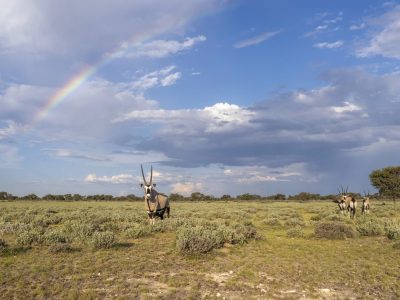
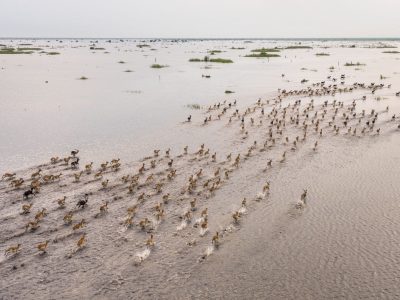
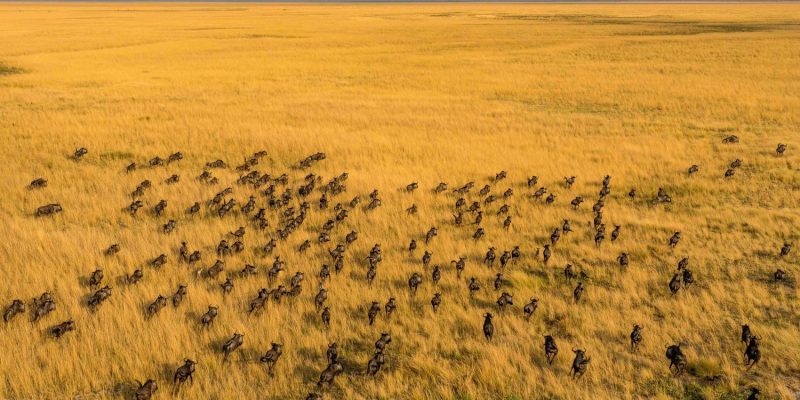
Liuwa covers 336,000 hectares of Western Zambezian grassland and hosts what African Parks describes as the second-largest wildebeest migration in Africa, along with more than 300 bird species. A migration does not respect a park boundary, so a management agreement that stops at one is managing part of an animal. Adding the game management area to the mandate recognizes that the corridor outside the old line is doing as much work as the plain inside it.
It is worth being precise about what is remarkable here, because it is not the animal’s rarity. The blue wildebeest, Connochaetes taurinus, is listed as Least Concern on the IUCN Red List, in an assessment by the IUCN SSC Antelope Specialist Group dated January 7, 2016 and published that year. What is rare is the movement: an intact, large-scale seasonal migration of a common species, which is a far harder thing to keep than a captive population of a scarce one. Liuwa’s recovery has gone far enough that the park now exports animals rather than importing them, with recent translocations of wildebeest and zebra sent to Kafue National Park.
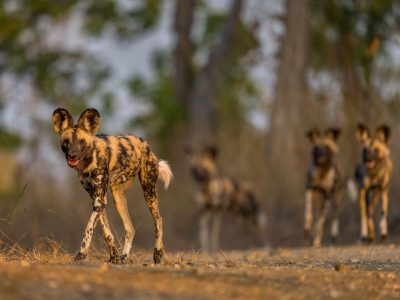
The predators came back with the prey. Liuwa today holds lion, hyena, cheetah and African wild dog, and the wider Zambian picture of how those wild dogs move between parks is the subject of research we covered this month, when a collared male walked 4,126 kilometers across the country looking for a mate.
A conservation history that predates conservation
Liuwa’s protection does not begin with a park authority. In the late 19th century, King Lubosi Lewanika of Barotseland appointed his people custodians of the landscape, and the Lozi have held that role since. Roughly 12,000 people live inside the park today, which in most national parks would be described as a problem and here is described as the arrangement.
That is not a sentimental framing. The partnership’s stated first priority over two decades has been protecting existing rights to natural resources, fishing above all, alongside livelihoods support, education, employment and community enterprises. A park with twelve thousand residents either works for them or does not work.
His Majesty the Litunga Lubosi Imwiko II said the renewal “recognises the role of the Lozi people as custodians of this landscape and reinforces our shared responsibility to ensure that future generations inherit a healthy and thriving Liuwa.” Evans Muhanga, permanent secretary at the Ministry of Tourism, framed it in national terms, as safeguarding one of Zambia’s most important protected areas while keeping conservation contributing to development and community wellbeing. The ministry published its own statement welcoming the renewal.
Peter Fearnhead, African Parks’ chief executive, called it the legacy of two Litungas: “King Lewanika, who proclaimed these plains a wildlife sanctuary in the late 1800s; and His Majesty the Litunga Lubosi Imwiko II, who chose nearly 25 years ago to carry that legacy forward through this partnership.”
We looked for the zoos behind this and did not find any
The funders African Parks names for the wider Liuwa landscape are the Rob Walton Foundation, Stichting Natura Africae, the Postcode Lottery Group, WWF Belgium, WWF Netherlands and WWF Zambia. The parties to the agreement are a traditional authority, a national government and an NGO. No zoological institution appears anywhere in it, and African Parks’ own partners page and strategic funding partners page return no match for zoo, zoological, aquarium, AZA, EAZA or WAZA, checked again today.
We say that plainly because the alternative is implying a link that nobody has claimed. For scale on the other side of the question, the Association of Zoos and Aquariums reports that in 2025 its 235 accredited and certified facilities spent approximately $372.4 million on conservation across 139 countries. No published breakdown isolates how much of that reached Africa, so we will not estimate one. Where a zoo is in the chain we name it, and here there is not one to name.
What a renewal is actually for
Nothing visibly changes at Liuwa this month. The wildebeest were already walking; the rangers were already working. What a 25-year partnership renewal does is remove the question of whether the arrangement survives the next change of minister, the next funding cycle or the next government, and in conservation that question costs more than most line items.
Liuwa is also a proposed IUCN World Heritage Site, and the next phase of the partnership names sustainable financing and the integrity of the wider landscape, including migratory routes beyond the park boundary, as its priorities. Both of those are long-horizon problems. So is a migration.
Quick answers
- What was renewed at Liuwa Plain National Park?
The long-term partnership agreement between the Barotse Royal Establishment, Zambia’s Ministry of Tourism and African Parks, announced on July 15, 2026. The relationship began with a transitional agreement in February 2003 and a formal long-term agreement in 2004.
- Why does this particular park matter to African Parks?
It was the organization’s first management partnership. African Parks now manages 23 protected areas in 12 countries, and all of it started on this floodplain in western Zambia.
- What is new in the renewed agreement?
The mandate now includes a portion of the Upper West Zambezi Game Management Area, which carries part of the migratory movement that sustains the park’s wildebeest. A management agreement that stopped at the old boundary was managing part of an animal.
- How big is the Liuwa wildebeest migration?
African Parks describes it as the second-largest wildebeest migration in Africa. The park covers 336,000 hectares of Western Zambezian grassland and holds more than 300 bird species.
- Is the wildebeest a threatened species?
No. The IUCN Red List lists the blue wildebeest, Connochaetes taurinus, as Least Concern, in an assessment by the IUCN SSC Antelope Specialist Group dated January 7, 2016. What is rare at Liuwa is the intact large-scale migration, not the animal.
- Who lives inside the park?
About 12,000 people. In the late 19th century King Lubosi Lewanika of Barotseland appointed the Lozi custodians of the landscape, and the partnership’s stated first priority has been protecting existing rights to natural resources, fishing above all.
- Which zoos fund Liuwa Plain?
None that we could verify. African Parks names the Rob Walton Foundation, Stichting Natura Africae, the Postcode Lottery Group, WWF Belgium, WWF Netherlands and WWF Zambia as the supporters of the wider Liuwa landscape, and lists no zoo or aquarium on its partners page or its strategic funding partners page.