
Black rhino are back in Matusadona National Park, on the southern shore of Lake Kariba, three decades after poaching gangs emptied the Zimbabwean park of the species. How many came back is not public, and that is deliberate.
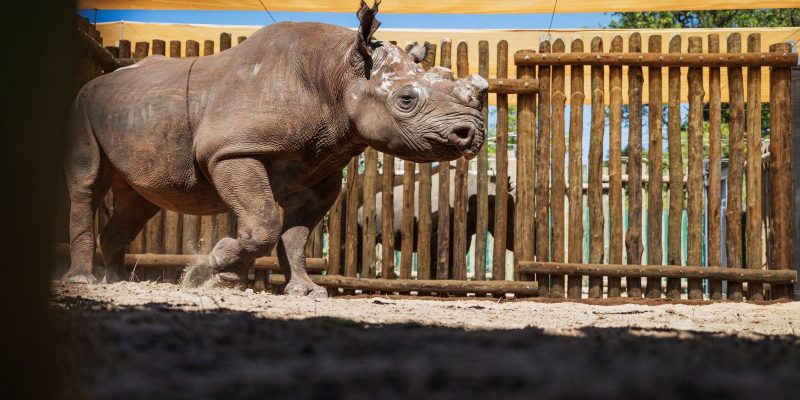
The Zimbabwe Parks and Wildlife Management Authority, the Matusadona Conservation Trust and African Parks announced the reintroduction on June 3, 2026. The animals were crated, airlifted into the park, and put into purpose-built bomas for a period of close monitoring before a phased release into a secure intensive protection zone of 175 square kilometers. Each one carries a tracking device.
Why no one will give a number
African Parks’ own announcement describes “a group of critically endangered black rhino” and never counts them. Reporting on the move the following day, the South African outlet Daily Maverick put it plainly: an undisclosed number of animals had been flown home, and the rhino in the photographs had had their horns removed as a security measure.
That reticence is the whole point of the operation. A founder population of black rhino in a park that lost its last ones to organized poaching is a target, and the precise size of it is information worth money to the people who would come for them. The fundraising side of the project is less coy about the destination: Global Wildlife Fund, one of the contributors, describes the plan as the translocation of 30 to 50 black rhino to Matusadona, with the first animals moved in 2026 and more to follow in 2027.
These are the descendants of animals that were evacuated
The Sebungwe region, with Matusadona at its center, once held Zimbabwe’s largest contiguous black rhino population. When organized poaching reached it in the late 1980s and early 1990s, the parks authority made the decision to pull the survivors out and move them to safer sites elsewhere in the country, an operation carried out under the then chief warden Glen Tatham.
It worked, in the narrow sense that matters: the animals lived, and the genetic line of the region’s rhino was preserved somewhere else. Some of the rhino now standing in bomas at Matusadona are direct descendants of the ones that were taken out of it more than thirty years ago. The founders for this reintroduction came from Imire Rhino and Wildlife Conservancy, from Matobo National Park, and from a third location that has not been named.
African Parks credits the sustained work of Imire, the Dambari Wildlife Trust and Matobo with keeping those animals alive in the interval. The reintroduction is intended to serve Zimbabwe’s National Rhino Strategy by establishing a founder population that should, over roughly fifteen years, seed another metapopulation in the country.
We looked for the zoos behind this and did not find any
Rhino translocations are often paid for in part by accredited zoos, and we go looking every time. On this one the trail does not lead to a zoo.
The funders African Parks names are the European Union, Global Wildlife Fund, and Thomas and Sara de Swardt, with the preliminary preparation funded by the Rhino Recovery Fund. The organizations credited with the animals and the expertise are Imire Rhino and Wildlife Conservancy, the Dambari Wildlife Trust and Matobo National Park. African Parks’ own partners page lists no zoo or aquarium at all. We found no accredited zoological institution in the funding chain for this translocation, and rather than reach for a connection we will say so.
That is not a criticism of anybody. It is a finding, and the honest version of this story is more useful than a forced one. For scale on the other side of the question, the Association of Zoos and Aquariums reports that in 2025 its 235 accredited and certified facilities spent approximately $372.4 million on conservation across 139 countries. No published breakdown isolates how much of that reached Africa, so we are not going to estimate one. Where the chain does run through a zoo we say which one, as we did on Kenya’s Tsavo West rhino sanctuary expansion.
What the assessment actually says
African Parks calls the black rhino critically endangered, and the assessment agrees with it. Diceros bicornis is listed as Critically Endangered under criteria A2abd+4abd on the IUCN Red List, in an assessment by R. Emslie of the IUCN SSC African Rhino Specialist Group that was assessed on January 14, 2020 and published that year.
Two things in that document are worth carrying over, because they complicate the picture in a useful direction. The first is the number: 3,142 mature individuals across 126 subpopulations, the largest of them holding 581 animals. The second is the trend. Black rhino numbers have more than doubled since they bottomed out in the mid 1990s, and the assessment records that they were continuing to increase at a continental level, though at a reduced rate as poaching escalated. A Critically Endangered listing describes how far the species fell, not which way it is currently moving.
The assessment is six years old now, which is worth saying out loud rather than treating the figure as current. The Zimbabwean animals belong to D. b. minor, the south-central black rhino, which historically ranged from southern Tanzania through Zambia and Zimbabwe.
The part that is not finished
The bomas are a holding step, not the end of it. African Parks described the release into the intensive protection zone as phased, and Global Wildlife Fund’s June update said the first animals would be held for up to a month before going out. We searched for a later published confirmation that the release has been completed and did not find one, so this story stops where the public record does.
Nothing adverse has surfaced either. We checked African Parks’ newsroom and the coverage of the move for anything published between June 3 and today, and found no report of a death, a poaching incident or a failed release at Matusadona.
The park covers roughly 147,000 hectares. The traditional leadership of the neighboring Nyaminyami communities, including Chiefs Mola, Masampakaruma, Nebiri and Negande, backed the return publicly through the process, which is not a detail to skip past: an intensive protection zone works because the people living along its boundary want it to.
Quick answers
- What happened at Matusadona National Park?
Black rhino were reintroduced to the park on the southern shore of Lake Kariba in Zimbabwe, announced on June 3, 2026 by the Zimbabwe Parks and Wildlife Management Authority, the Matusadona Conservation Trust and African Parks. The species had been absent from the park for about three decades.
- How many black rhino were moved?
That has not been made public. African Parks describes "a group" without a number, and Daily Maverick reported an undisclosed number of animals. The secrecy is a security measure: a new founder population is a target for poachers. Global Wildlife Fund describes the wider plan as the translocation of 30 to 50 black rhino across 2026 and 2027.
- Where did the animals come from?
From Imire Rhino and Wildlife Conservancy, from Matobo National Park, and from a third location that has not been named. Some of them are direct descendants of rhino evacuated from Matusadona more than thirty years ago, when organized poaching forced the parks authority to move the survivors to safer sites.
- What happens to them now?
They were held in purpose-built bomas for close monitoring, then released in phases into a secure intensive protection zone of 175 square kilometers inside the park. Each animal carries a tracking device so the team can respond quickly to signs of stress or conflict after release.
- Is the black rhino endangered?
The IUCN Red List lists Diceros bicornis as Critically Endangered under criteria A2abd+4abd. The assessment was carried out by R. Emslie of the IUCN SSC African Rhino Specialist Group, assessed on January 14, 2020 and published that year. It records 3,142 mature individuals across 126 subpopulations, and notes that numbers have more than doubled since their mid-1990s low.
- Which zoos funded this translocation?
None that we could verify. The funders named by African Parks are the European Union, Global Wildlife Fund, and Thomas and Sara de Swardt, with preliminary preparation funded by the Rhino Recovery Fund. African Parks lists no zoo or aquarium on its own partners page. We report that as a finding rather than reaching for a connection.
- What is an intensive protection zone?
A defined area inside a larger park where anti-poaching patrols, monitoring and infrastructure are concentrated, so that a small founder population of a high-value species can be guarded at a density that would be impossible across the whole park. Matusadona covers roughly 147,000 hectares; the zone is 175 square kilometers of it.