
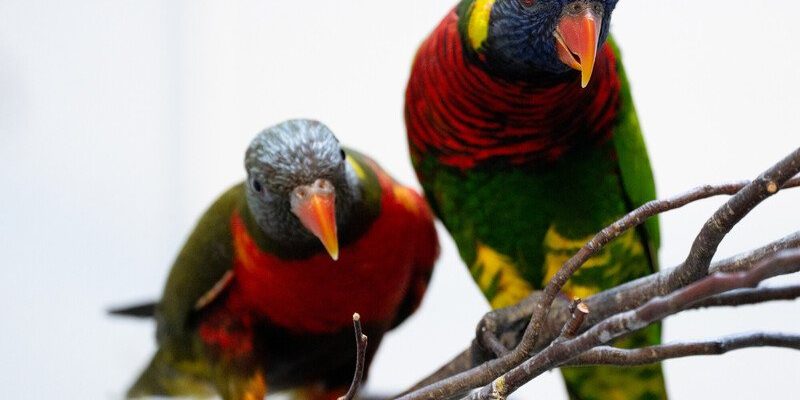
Woodland Park Zoo opened a walk-through lorikeet aviary called Lorikeet Landing on Labor Day, Monday, September 7, 2026. It is the first finished piece of Wild Encounters, a two-phase rebuild of the Seattle zoo’s former Family Farm, and the second phase is still a construction project rather than a place anyone can walk into.
That distinction is the shape of the news. Wild Encounters is not one opening. Phase one is the aviary plus an expanded animal contact area, open now. Phase two, which the zoo now dates to summer 2027, is the part that moves its ambassador animals out of back-of-house support areas and into habitats guests can actually see.
What is it like to walk in?
The aviary is a free-flight space, which means the birds are not behind glass and not in cages inside the room. They move from the ground to the treetops around and above visitors, and they land where they like. Entry is included with zoo admission.
The optional part is the feeding. For an additional fee, guests buy a small cup of nectar and hold it out, and a lorikeet comes down to drink. Cups are sold in person at $7 each, two for $10, or four for $18, with members getting 20 percent off.
Lorikeets and lories are medium-sized arboreal parrots native to tropical Australia and the islands of the southern Pacific, where something is in flower most of the year. Most parrots crack nuts and seeds. These do not. A lorikeet has a brush-tongue, a tongue tipped with fine hair-like projections that work like a mop, and it feeds by dabbing that brush into flowers for pollen and nectar. The nectar cup is not a gimmick layered onto the exhibit. It is how the animal actually eats, which is also why the birds come down to a visitor’s hand instead of having to be coaxed.
The same anatomy makes them useful outside the aviary. Pollen sticks to a feeding lorikeet’s feathers and travels to the next flower, so the birds are pollinators across their range.
Visitors are asked to pick the species apart rather than take in a general blur of color. Signage in the space covers lorikeet body language and identification, and the aviary holds coconut lorikeets (Trichoglossus haematodus), Biak lorikeets and Flores lorikeets among others. Laughing kookaburras and Luzon bleeding-heart doves share the space.
What else opened in phase one?
Two rescued female Aldabra giant tortoises, among the largest land tortoises in the world, joined the zoo in the same phase, through the generosity of a longtime zoo supporter. They are in the expanded contact area alongside the goats most visitors remember from the Family Farm, which have not gone anywhere.
Woodland Park Zoo credits Ash Grove Cement Company, a CRH company, with contributing the cement for the aviary.
What is coming in 2027?
Phase two is the reason the Family Farm is being rebuilt rather than refreshed. The zoo’s ambassador animals, the individuals brought out for programs and close encounters, currently live in support areas closed to the public and are visible only when staff bring them out. The second phase builds flexible, viewable habitats for a rotating cast of them.
The zoo lists capybara, coati, three-banded armadillo, North American porcupine, striped skunk, African crested porcupine, raptors, kookaburra and blue-faced honeyeaters among the species the renovated space is designed to hold. The zoo says it aims to finish raising the money for phase two by December 31, 2026.
The organizing idea the zoo has put on the project is that everyone cares like a keeper, and at this institution that is more than a slogan on a sign. Woodland Park Zoo founded the Advancing Conservation through Empathy for Wildlife Network, which it says now connects more than 1,000 educators, keepers and communicators sharing research on how people form attachments to animals. Phase two is that research pointed at a building.
The zoo has had a steady run of small arrivals lately, including a second sloth earlier this year. Lorikeet Landing is a different kind of addition: not an animal moving into a space that already existed, but a space that did not exist before.
Lorikeet Landing is open year round. The zoo is at 5500 Phinney Avenue North in Seattle, with a south entrance at 750 North 50th Street. Details are in the zoo’s own announcement.
Quick answers
- When did Lorikeet Landing open?
Monday, September 7, 2026, on Labor Day. It is open year round.
- How much does it cost?
The aviary is free to walk through with zoo admission or membership. Nectar feeding cups are an additional charge, sold in person at $7 each, two for $10 or four for $18, with a 20 percent discount for members.
- Why do the lorikeets drink nectar from a cup?
Because that is how they eat. Unlike most parrots, which crack nuts and seeds, a lorikeet has a brush-tongue tipped with fine hair-like projections and feeds by dabbing it into flowers for pollen and nectar. The cup works with the bird rather than training it to do something unusual.
- Which birds are in the aviary?
Coconut lorikeets, Biak lorikeets and Flores lorikeets among others, along with laughing kookaburras and Luzon bleeding-heart doves.
- What is Wild Encounters?
The rebuild of Woodland Park Zoo's former Family Farm. Phase one is Lorikeet Landing plus an expanded animal contact area, which also received two rescued female Aldabra giant tortoises. Phase two is scheduled for 2027.
- What changes in phase two?
The zoo's ambassador animals currently live in support areas closed to the public and are visible only when staff bring them out for programs. Phase two builds flexible, viewable habitats for a rotating group of them.
- Where is it?
Inside Wild Encounters at Woodland Park Zoo, 5500 Phinney Avenue North in Seattle. There is also a south entrance at 750 North 50th Street.