
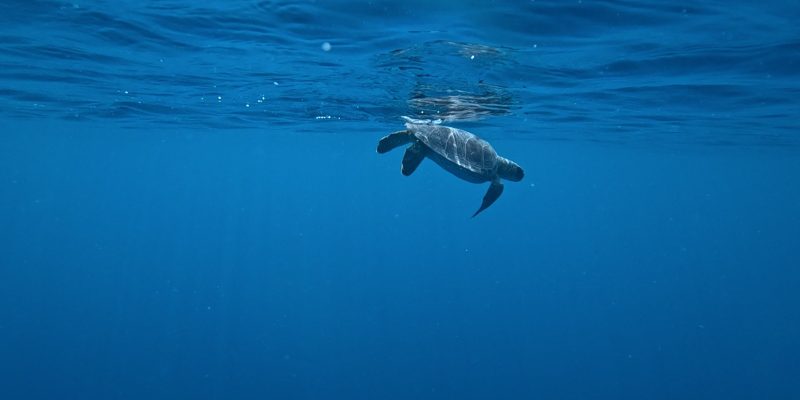
Eight sea turtles that spent the summer tangled in plastic bags on Israel’s beaches have been rehabilitated at the National Sea Turtle Rescue Center at Michmoret and released back into open water over the past few days. The Israel Nature and Parks Authority, which runs the center, published the account on 6 October 2026.
Five of them were young loggerhead sea turtles (Caretta caretta) weighing between 400 and 700 grams: Moshe, Hanoch, Mor, Putzi and Gal. They arrived through the summer from beaches running the length of the coast, from Ashkelon in the south to Netanya in the north, each one caught in a bag.
Why the rescuers left the bag on
Hanoch is the one worth slowing down for. Instructors at the Michmoret Emek Hefer sailing club found him with the cords of a plastic bag wound around his neck and around every one of his limbs. They did not cut him loose. They carried him in exactly as they found him.
That is the correct procedure and it is counterintuitive. The authority’s own guidance for the public says that when a turtle is tangled in debris, pulling the obstruction off is sometimes the thing that kills it, and that the rescue center removes a blockage under controlled conditions instead. The release puts it plainly:
“המדריכים נהגו נכון: הם לא הסירו את השק והביאו את הצב כמות שהוא לטיפול במרכז.”
“The instructors acted correctly: they did not remove the bag, and brought the turtle in as it was for treatment at the center.” Translation by ZooReviews.
The five were released together in open water with the help of the club and its trainees, which the authority says lets a turtle settle back into its own habitat quickly.
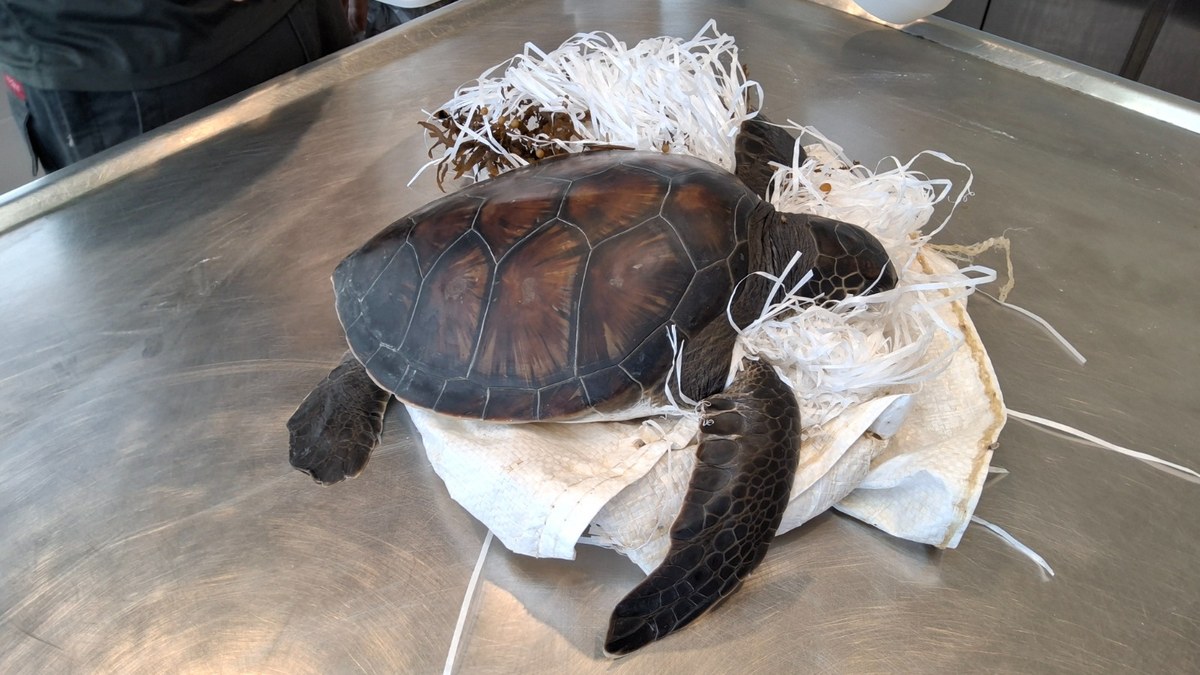
The second group, and a turtle with one front flipper
Three more went back in a second release. Herzl, a subadult loggerhead of about five kilograms, was pulled out at Palmachim in the summer, tangled in a bag. Muriel, a young green sea turtle (Chelonia mydas), was found wrapped in a bag out at sea off Sdot Yam by a stand-up paddleboarder, and was brought to the center still inside it.
Ramon, another young green turtle, was found tangled near Ga’ash. His limb was in bad condition by the time he reached Michmoret and the team had to amputate the left front flipper. He and Muriel shared a rehabilitation pool through the rest of their recovery, and the three were released together in open water with the Frigel sailing club from Sdot Yam. Dozens of second-graders and the children of the Galim kindergarten in Sdot Yam came down to see them off.
What the center at Michmoret actually is
The Israel Nature and Parks Authority set the National Sea Turtle Rescue Center up in 1999. Since then it has treated more than 700 animals, mostly loggerhead and green sea turtles but also softshell turtles, freshwater turtles and five dolphins, and about 70 percent of them have gone back into the open sea. The center also protects nests on the beaches, keeps a breeding nucleus of green turtles, runs surveys and public education, and has opened a visitor center at the turtle hospital. The authority is explicit that day-to-day care of the recovering animals leans heavily on volunteers.
How many sea turtles wash ashore in Israel each year?
More than 200, according to the authority, and roughly a quarter of those come ashore alive and reach treatment at the rescue center. About 150 nests are laid on Israeli beaches in a season, most of them loggerhead and a minority green. The authority estimates about 150 nesting loggerhead females and about 15 nesting green females in Israel, against a Mediterranean-wide estimate of roughly 2,500 and 450 respectively. The injuries it sees come from accidental capture in fishing gear, vessel strikes, infrastructure, waste, and blast injuries from underwater explosions.
Where the Red List puts these two species
The release names no conservation category for either animal, so there is nothing here to correct. For the record, the IUCN Red List assesses the loggerhead sea turtle as Vulnerable globally. The green sea turtle now sits at Least Concern: the Red List moved it down from Endangered in an update published in October 2025, which marine turtle groups including the Olive Ridley Project wrote up at the time as a recovery rather than a reclassification on paper. Mediterranean subpopulations are assessed separately from those global figures and we have not read those assessments.
Is there a zoo behind this rescue center?
We looked, and we did not find one. The authority’s own page for the rescue center credits the Israel Nature and Parks Authority and its volunteers and names no zoological institution. The Israel Nature and Heritage Foundation, which raises money for the center, names no zoo or aquarium either. That is a real finding rather than a gap: this is a government rescue center carried by a national parks authority and by the people who turn up to clean the pools.
For scale on what the accredited sector does spend, the Association of Zoos and Aquariums reports that in 2025 its 235 accredited and certified facilities spent approximately $372.4 million on conservation across 139 countries. No published breakdown isolates what share of that reached any one region, and we are not going to invent one for Israel.
Elsewhere on the same beat the picture is different. A loggerhead named Pearl at the Two Oceans Aquarium in Cape Town came through a rehabilitation that the aquarium reported with its guarded prognosis attached, which is the same plainness this release shows when it says what happened to Ramon’s flipper.
The authority closes with the standard ask, and it is worth repeating because it is what put eight animals back in the water: keep your distance from wild animals, do not touch or feed them, and if you find one injured or in distress, call the authority’s hotline rather than handling it yourself.
Source: Israel Nature and Parks Authority, 6 October 2026.
Quick answers
- How many turtles were released?
Eight: five young loggerheads named Moshe, Hanoch, Mor, Putzi and Gal, and then Herzl, Muriel and Ramon in a second release.
- Why did the rescuers not remove the plastic bag?
Because pulling an obstruction off a tangled turtle can kill it. The Israel Nature and Parks Authority asks finders to leave the blockage in place and bring the animal in, so the rescue center can remove it under controlled conditions.
- What happened to Ramon?
His left front flipper was in bad enough condition on arrival that the team at Michmoret had to amputate it. He was released into open water after rehabilitation.
- How many sea turtles come ashore in Israel each year?
The authority says more than 200, of which roughly a quarter arrive alive and reach treatment at the National Sea Turtle Rescue Center.
- How are these species assessed on the IUCN Red List?
The loggerhead sea turtle is Vulnerable globally. The green sea turtle is Least Concern, having been moved down from Endangered in a Red List update published in October 2025.
- Is there a zoo or aquarium behind the rescue center?
Not one we could verify. The rescue center was set up by the Israel Nature and Parks Authority in 1999 and neither the authority nor the Israel Nature and Heritage Foundation names a zoological institution as a supporter.