
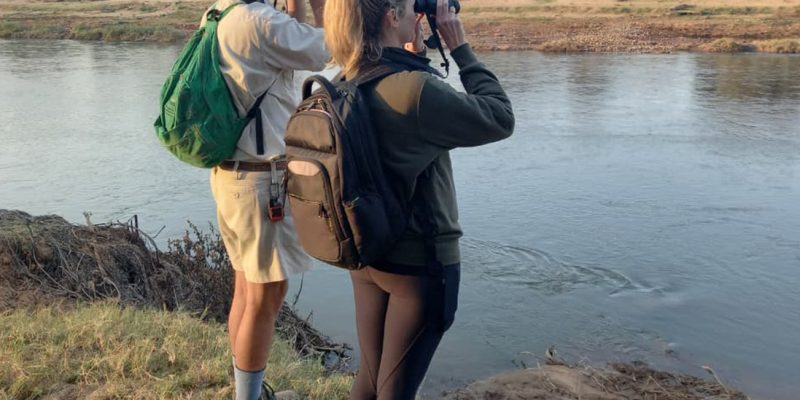
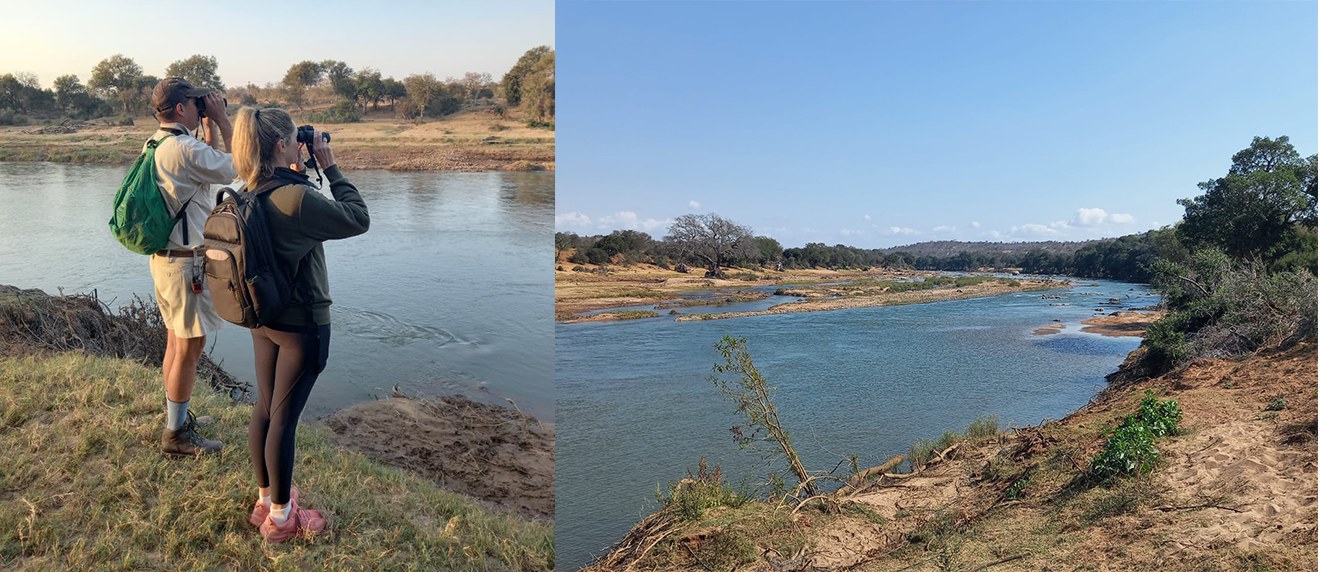
Two teams of researchers walked more than 50 kilometers each, on opposite banks of the same river, and counted every waterbird, crocodile and hippo they saw. That is the whole method, and in a year when the Olifants River has just been through a mega-flood it is the only way to know what the river lost.
The survey covered the stretch of the Olifants inside the Greater Balule Game Reserve, in South Africa’s Lowveld. It was organized by the Endangered Wildlife Trust’s Birds of Prey Unit, and the trust published an account of it on September 29.
Who walked it
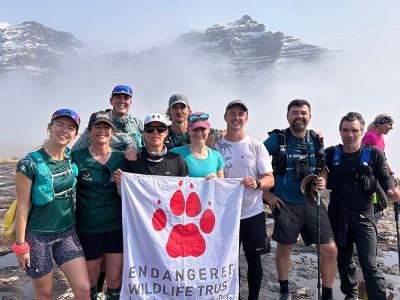
Dr. Lindy Thompson, the unit’s research and monitoring coordinator, put the survey together. The team included the EWT project manager Dr. Darren Pietersen, field officer Liam Taylor, and Dr. Carrie Hickman of the Associated Private Nature Reserves Ground Hornbill Project, together with wardens and rangers from the reserves along the river.
Splitting into two groups on opposite banks is not a convenience. A river count done from one side misses whatever is sitting on the far bank, and the point of repeating a survey year after year is that the method has to stay identical or the numbers stop comparing.
What they were counting in the trees
Alongside the waterbirds, crocodiles and hippos, the teams scanned the riverine trees for White-backed and Hooded Vulture nests, recording incubating birds and chicks. The EWT calls this stretch a major breeding stronghold for both species, and both are assessed as Critically Endangered on the IUCN Red List: Gyps africanus and Necrosyrtes monachus.
The nests found will be monitored until the chicks fledge in October, which is a few weeks away. The team also looked for Pel’s fishing owl, a heavy riverine bird that hunts fish at night and is famously difficult to find. Pel’s fishing owl, Scotopelia peli, is not globally threatened, and the Red List has it at Least Concern. It is worth looking for anyway, because it needs big trees to roost in and enough fish to catch, which makes its presence a plain statement about the condition of the river.
The flood is visible from the bank
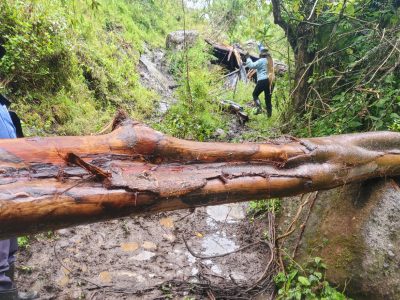
The reason for the survey is written into the landscape. The EWT’s account describes the effect of the January 2026 mega-flood as clear on the ground: many trees gone, whole tracts of habitat removed. Three decades of extensive flooding have reshaped the river’s tree cover, and the trust lists the other pressures alongside it: drought, changes to the flow regime from water abstraction and damming, and chemical and pesticide runoff from mining and agriculture.
Riparian forest, the belt of trees that grows along a watercourse and depends on it, is itself classified as Endangered in South Africa. Losing trees on a river is not only a habitat loss for the animals in them. On this river it is also the loss of the nest sites that two Critically Endangered vultures depend on, which is why a bird unit is counting hippos.
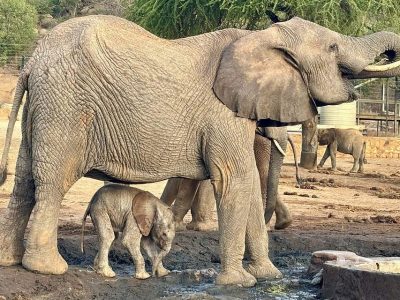
The teams logged other things as they went: elephants browsing riverine trees, Pied Crows interacting with nests, and places where human activity could put breeding success at risk. One pod of hippos came stampeding out of the bush and back into the water through everything in its path. Nobody was hurt.
Which zoo paid for this
The EWT names no funder for this survey, and we are not going to supply one.
What the trust does publish is a funding line for its Vulture Safe Zone program, which is a different project inside the same Birds of Prey Unit. That line names Alu-Cab, the Bio-Bridge Initiative of the Convention on Biological Diversity, Cennergi, the Charl van der Merwe Trust, Cleveland Zoo, the Disney Conservation Fund, Puy du Fou, Rand Merchant Bank, the Roy Mc Alpine Foundation, the Rupert Nature Foundation, SANParks Honorary Rangers and WindLab.
Cleveland Metroparks Zoo is the only accredited zoological institution anywhere in that list, and the money is scoped to the Vulture Safe Zone work rather than to this river count. We name it because it is the honest answer to the question and because readers should be able to check it, not because it belongs to this story. The Association of Zoos and Aquariums reports that in 2025 its 235 accredited and certified facilities spent approximately $372.4 million on conservation across 139 countries, and there is no published breakdown of the African share of that.
Why a walking survey is worth the shoe leather
There is a temptation, in a field that now has satellite tags and carcass-detection software, to treat two people with binoculars as the old way of doing things. The EWT runs both. Its Eye in the Sky poisoning-detection system has almost 180 tagged vultures of five species across roughly two million square kilometers, feeding alerts into the same software the Kruger National Park uses.
Neither one replaces the other. A tagged bird tells you where it went and when it stopped moving. It cannot tell you how many nests are in a stand of trees, whether the chicks in them are alive, or how much of that stand a flood took out in January. For that, somebody walks the bank.
We wrote last week about the same unit’s race to a mass vulture poisoning in Limpopo, which is the emergency end of this work. The river count is the slow end, and it is the half that tells anybody whether the emergencies are adding up to a decline.
Source: the Endangered Wildlife Trust’s “Olifants River Survey Monitors Ecological Threats to the system” by Liam Taylor, published September 29, 2026, and the trust’s published Birds of Prey program page. IUCN categories from the Red List assessments for Gyps africanus, Necrosyrtes monachus and Scotopelia peli.
Quick answers
- What was surveyed?
The stretch of the Olifants River inside the Greater Balule Game Reserve, in South Africa's Lowveld. Two teams each walked more than 50 kilometers along opposite banks, counting every waterbird, crocodile and hippo they saw so the totals can be compared with previous years.
- Who ran it?
The Endangered Wildlife Trust's Birds of Prey Unit. Dr. Lindy Thompson, the unit's research and monitoring coordinator, organized it. The team included EWT project manager Dr. Darren Pietersen, field officer Liam Taylor and Dr. Carrie Hickman of the Associated Private Nature Reserves Ground Hornbill Project, with wardens and rangers from reserves along the river.
- Why count vulture nests on a river?
Because the trees along it are where two Critically Endangered vultures nest. The teams scanned the riverine trees for White-backed and Hooded Vulture nests, recording incubating birds and chicks, and the EWT calls this reach a major breeding stronghold for both. Gyps africanus and Necrosyrtes monachus are both assessed as Critically Endangered on the IUCN Red List.
- What did the January 2026 flood do?
The EWT describes the effects as clear on the ground: many trees gone and whole tracts of habitat removed. Three decades of extensive flooding have reshaped the river's tree cover, alongside drought, flow changes from abstraction and damming, and chemical and pesticide runoff from mining and agriculture. South Africa classifies riparian forest itself as Endangered.
- Did they find Pel's fishing owl?
The EWT's account says the search included it but does not report a sighting. Pel's fishing owl, Scotopelia peli, is a heavy riverine owl that hunts fish at night and is notoriously hard to find. It is Least Concern globally, and it is worth searching for because it needs large trees and a healthy fish population, which makes it a readable signal about the river.
- Which zoo funds this survey?
None that is named. The EWT states no funder for the survey. Its published Birds of Prey program page carries a funding line for the separate Vulture Safe Zone project, and the only accredited zoological institution anywhere on it is Cleveland Zoo, alongside the Disney Conservation Fund, Alu-Cab, Rand Merchant Bank, the Rupert Nature Foundation and others. That money is scoped to the Vulture Safe Zone work rather than to this river count.