
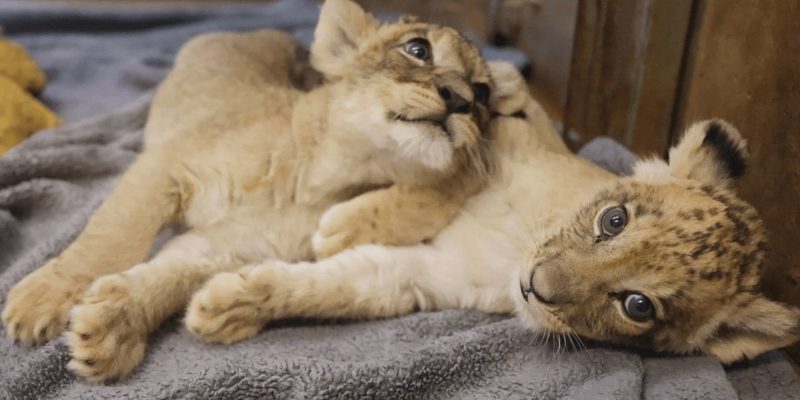
Zoo Knoxville has two new African lion cubs. Sammie and Sika, both males, were born on July 14 to Zahra and Maji, and both are being hand-reared by the zoo’s animal care team. They are the second litter from the same pair this year, which makes three cubs in a single year and brings Zoo Knoxville’s lions to five.
The first, Bisky, was born on February 17. Zahra raised him herself until he was about three weeks old, at which point she stopped producing enough milk to keep him fed and the care team took over, feeding him around the clock. When the same thing happened with Sammie and Sika, the team did not wait to find out how it would go.
“We’re so proud of Zahra and grateful that she has given birth to three healthy cubs this year,” said Terry Canon, curator of carnivores at Zoo Knoxville. “She’s had some challenges producing enough milk for her cubs, but our team was prepared to step in and give them the care they needed. They’re thriving, and it’s exciting to know these three boys are also contributing to the future of a healthy and genetically diverse African lion population.”
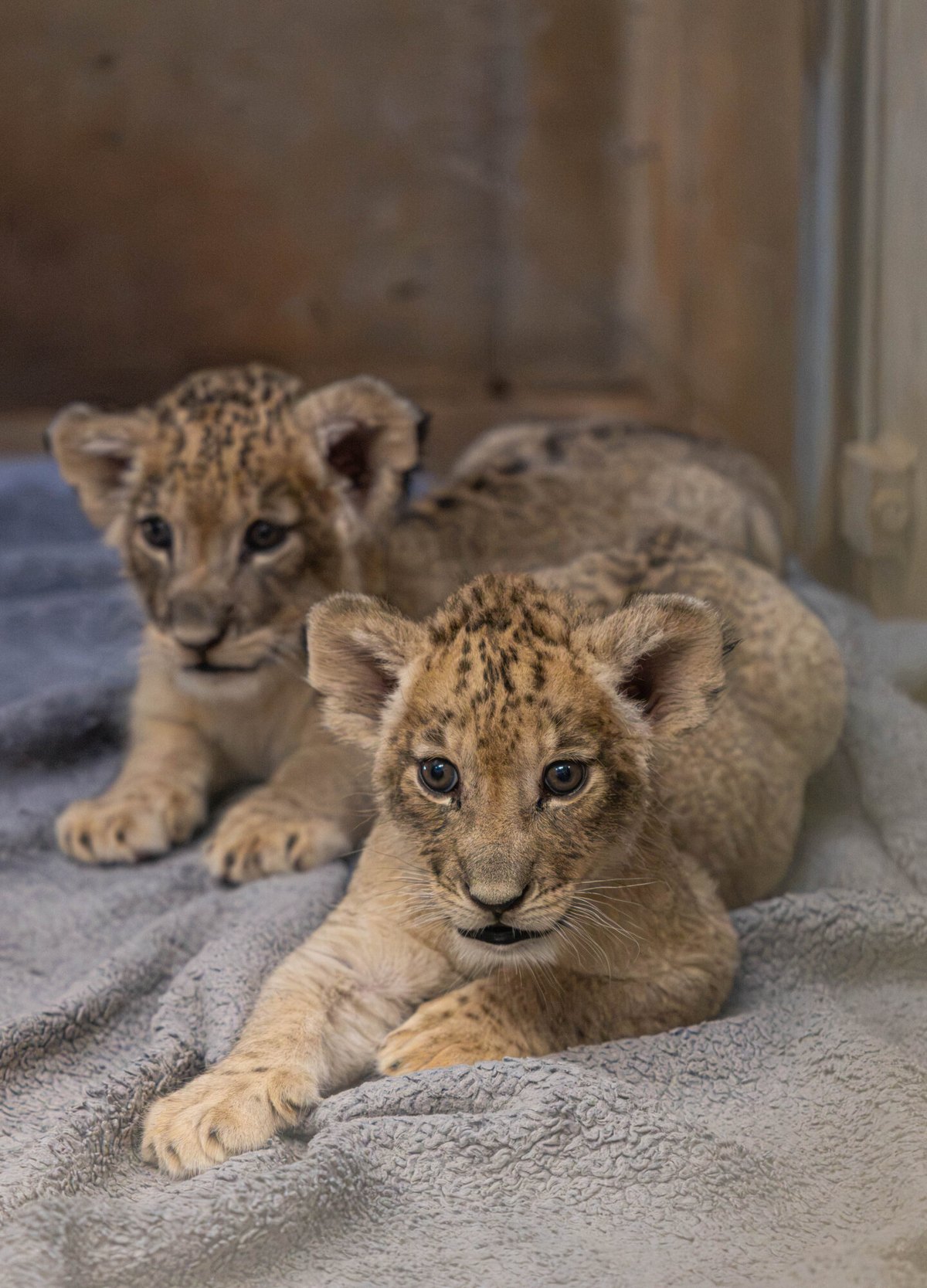
What hand-rearing actually involves
It is not a decision a carnivore team makes lightly, because a cub raised by people is a cub that has not learned to be a lion from a lion. It is made when the alternative is worse. A lion cub takes milk every few hours for weeks, and a lioness who is not producing enough has no way to tell anyone. Keepers have to read it off the cub instead. Once they do, the job becomes round-the-clock feeding.
Knoxville had already done this once this year, with Bisky, and that is the useful part of an awkward situation. The team knew what Zahra’s cubs looked like when they were not getting enough, and they knew what to do about it.
What happens to three hand-reared brothers?
That is the interesting question and the zoo has not answered it yet. One possibility under consideration is introducing Sammie and Sika to Bisky and letting the three young males grow up together. Wild male lions that leave their natal pride often do exactly that, moving as a coalition of brothers, so a trio is not an artificial arrangement. No decision has been made, and any introduction would be planned around the behavior, development, health and safety of all three.
Whether the cubs can eventually be introduced to Zahra and Maji is a separate and harder question, and the zoo is treating it as one. All three cubs were pulled for hand-rearing young, which changes what they know about adult lions and what adult lions make of them.
Where the cubs fit in the wider lion population
Zoo Knoxville takes part in the Association of Zoos and Aquariums’ African Lion Species Survival Plan, the cooperative program that issues breeding and transfer recommendations across accredited zoos using genetic and demographic data on the whole managed population. Three cubs from a single pair in a single year is a significant contribution to a studbook, which is what Canon was getting at.
The species needs the arithmetic. The IUCN Red List assesses the lion as Vulnerable with a decreasing population. Lions have disappeared from most of their historic range across Africa, and the animals in accredited zoos are a reservoir of genetic diversity that is managed deliberately rather than left to chance.
The names carry their own small story. Sammie was named by a longtime supporter of the zoo, and Sika by the keeper staff who look after the lions, which is the zoo’s way of marking who is actually doing the night feeds.
Other zoos have had their own lion year. The Saint Louis Zoo brought African lions back to its historic Lion House this month, and the Pittsburgh Zoo gave its cub Kiazi a public debut in September. Knoxville’s three will take longer to appear together, and when they do it will be worth the trip.
Quick answers
- When were Zoo Knoxville's lion cubs born?
Sammie and Sika, both males, were born on July 14, 2026 to Zahra and Maji. They are the pair's second litter of the year. A first cub, Bisky, was born on February 17.
- Why are the cubs being hand-reared?
Zahra was not producing enough milk. The same happened with Bisky, who was raised by his mother until he was about three weeks old before the animal care team took over with round-the-clock feeding. When Sammie and Sika ran into the same problem, the team stepped in again.
- Will the three cubs live together?
Possibly. One option the zoo is considering is introducing Sammie and Sika to Bisky and letting the three young males grow up together, which is close to what young male lions do in the wild when they leave their natal pride. No decision has been made, and any introduction would be planned around the behavior, development, health and safety of all three.
- Will the cubs be introduced to their parents?
The zoo says it will evaluate whether introductions with Zahra and Maji are appropriate. Because all three cubs were hand-reared from a young age, those introductions need more care than they otherwise would.
- Are African lions endangered?
The IUCN Red List assesses the lion as Vulnerable with a decreasing population. Zoo Knoxville takes part in the Association of Zoos and Aquariums' African Lion Species Survival Plan, which manages breeding and transfers across accredited zoos using genetic and demographic data.