
Conservation spends a great deal of money on doing things and much less on finding out whether they worked. A platform launched on July 7, 2026 by the Wildlife Conservation Society is aimed squarely at that gap.
It is called COMET, for Conservation Monitoring Effectiveness Techniques, and it is a free, open-access library of monitoring methods that have actually been used in the field. It covers species populations, habitats, threats and pressures, and human well-being.
What problem this is solving
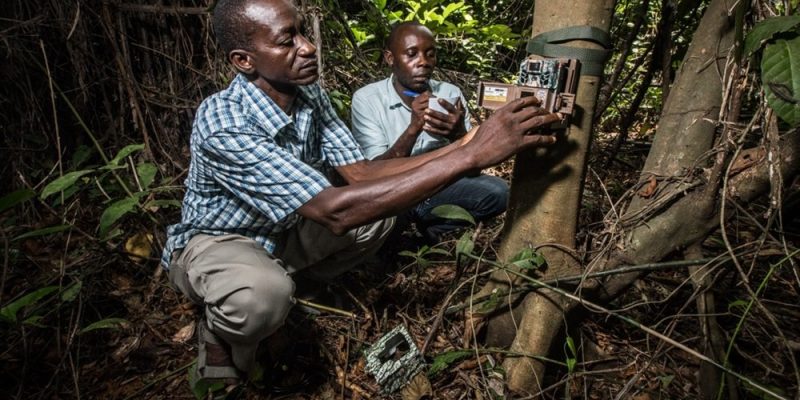
Monitoring is the part of conservation where you go and measure whether the thing you did changed anything. Counting animals, checking whether a forest is still standing, asking a community whether a program improved their lives.
There has never been a shortage of methods. There has been a shortage of guidance on which method to reach for. A team protecting a forest can estimate wildlife populations several different ways, and the choice between them turns on cost, terrain, staff time and what the data will be used for. Until now there was no central, field-tested, freely available guide to any of that, so the choice was usually made from whatever the nearest colleague had done last.
“We have limited resources for conservation, and monitoring can be expensive and time-consuming,” said Dr. Gautam Surya, the WCS conservation planning scientist who led the COMET team. “By enabling the people working on the ground, and in the water, to monitor outcomes cost-effectively, we can ensure that they have the information they need to make conservation more effective and equitable.”
The platform was built through the Conservation Measures Partnership, a coalition founded in 2002 that produces the Conservation Standards used across much of the sector, with support from the Gordon and Betty Moore Foundation. The COMET team consulted practitioners at more than 30 member organizations along with government agencies, universities, companies, and Indigenous Peoples’ and local community organizations.
Traditional Knowledge as a method, not a footnote
The part of COMET that is least like a technical manual is its treatment of Traditional Knowledge. The platform carries dedicated guidance on working with Indigenous Peoples and local communities on monitoring, and that section was led by Dr. Xiaoyue Li, a professor at Southern Methodist University.
“Conservation monitoring, Indigenous Peoples, and local communities have too often been brought in only as data points or data collectors for projects designed elsewhere,” said Li. “But communities are rights holders and knowledge producers, and the evidence is clear that conservation is more effective and more sustainable when it’s done with them rather than on them. COMET gives practitioners concrete and field-tested ways to engage communities as partners and to respect their right to consent and to govern their own knowledge.”
The argument underneath that is practical as much as ethical. Knowledge systems built on generations of place-based observation hold a longer record of a place than any camera trap survey, and a project that ignores them is starting its baseline at zero.
Where it fits alongside what already exists
Two reference works already sit on the sector’s shelf. Conservation Evidence catalogs which interventions work. The Conservation Standards set out how to plan and adapt a project. Neither covers the measurement methods that both of them depend on.
“Conservation practitioners have much to gain from standing on the shoulders of lessons learnt across the field, and from managing adaptively. Both rely on sound data,” said Dave Verkaik, head of business intelligence for African Parks. “Yet while initiatives such as Conservation Evidence and the Conservation Standards catalogue what works and set out how to plan and adapt, there’s been no equivalent resource for the measurement methods both depend on.”
Verkaik added the honest caveat, which is that the library is not finished: he hopes to see it grow and “close gaps for important ecological, social and biocultural indicators that currently lack a tried-and-tested method.” Practitioners can submit their own methods for review and inclusion.
Why does this matter to a zoo visitor?
Because monitoring is what turns a conservation claim into a conservation fact. When an accredited zoo says its field program is working, somebody had to go and measure that, and the quality of the answer depends on the method they chose.
The case is easiest to see where a species has been tracked long enough to change category. The scimitar-horned oryx, extinct in the wild for decades, was downlisted on the IUCN Red List after years of post-release monitoring in Chad, and that downlisting was a measurement result before it was anything else.
COMET is published by WCS and is free to use. The society runs the Bronx Zoo, the New York Aquarium and three other New York City parks alongside its field programs, which is the usual shape of this work: the gate revenue and the fieldwork belong to the same organization.