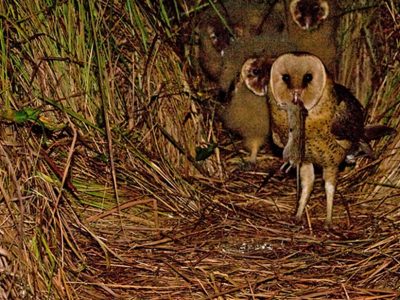

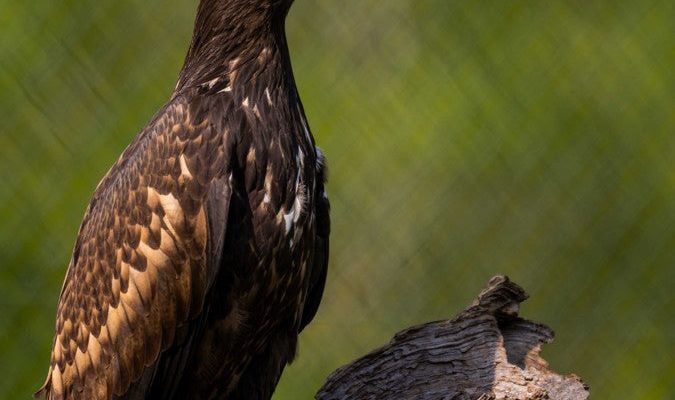
A white-tailed sea eagle chick hatched at Fota Wildlife Park in County Cork on April 13, 2026, and it has since fledged. It is the first sea eagle chick raised at Fota in more than ten years, and only the sixth the park has bred since it joined the Irish recovery program in 1991. The parents are a resident breeding pair, Áine and Tony.
That is the event. The reason it is worth an article is a sentence Fota puts two paragraphs later, which coverage of a single chick tends to leave out: the wild population this program was built to rebuild is now standing on its own.
Ireland lost the species, and then got it back
White-tailed sea eagles were once a common sight along the Irish coastline. They were gone by the 19th century, killed off by human persecution. Fota describes them today as a Red Listed species in Ireland and of high conservation concern.
The route back started in 2007. Since then the National Parks and Wildlife Service, working with the Norwegian Institute for Nature Research and with local farmers and communities, has released more than two hundred white-tailed sea eagles at sites around Ireland. Fota’s own summary of the result is the part worth quoting exactly: “The programme has been so successful that the population is now self-sustaining.”
Self-sustaining is a specific claim, and it is the one that separates a conservation outcome from a conservation project. It means the released birds are breeding in the wild and replacing themselves without a continuing supply of birds from somewhere else. That is the finish line these programs are built for, and most of them never reach it.
What a zoo contributes to a program like that
Fota’s role is the ex-situ half: a small, genetically managed captive population that breeds birds and holds the expertise to rear them. Six chicks in 35 years is not a large number, and the park does not present it as one. Jess Hodnett, Fota Wildlife Park’s Native Species Conservation Officer, said of this one: “This white-tailed sea chick is the first chick to be born here in over a decade, and the mother and father have done a great job of hatching and rearing this fledgling. We hope this chick will take part in an ex-situ European endangered breeding programme for the species.”
So this bird is not headed for an Irish hillside. The expectation is that it joins the European managed breeding population, which is the reservoir the field releases were drawn from in the first place.
The curlews are the larger operation
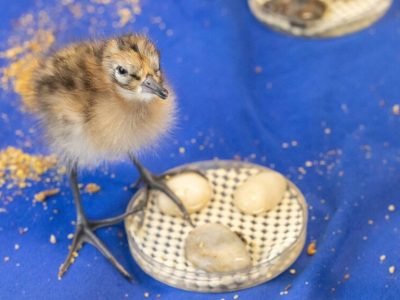
The eagle chick arrived in what Fota calls an important year for native species work, and the curlew program is the biggest piece of it by volume. Fota has been part of the Curlew Headstarting Programme since 2022, inside the Breeding Waders European Innovation Partnership, and has reared more than 90 curlew chicks for release. Sixteen fledged this year and went to Lough Ree and Lough Corrib.
Headstarting works by removing the most dangerous part of a bird’s life. Nest Protection Officers take eggs from nesting sites that are unlikely to survive, and Fota’s conservation team incubates them, hatches them, and rears the chicks until they are strong enough to be released. Aileen Tennant, Director of Fota Wildlife Park, named the partners in that work: the Breeding Waders EIP team, NPWS, Irish Rural Link, Michael Martyn Agri-Environment, Irish Wildlife Services, Dublin Zoo, Atlantic Technological University and University College Dublin.
Hodnett put the reason Fota can do this plainly: “At this stage, we have about 10 years of expertise in headstarting projects, including with the native natterjack toad.” The facilities she credits are an incubation house and purpose-built rearing units. It is unglamorous infrastructure, and it is the actual product a zoo brings to a field program.
Toads and crayfish
The natterjack toad work runs with NPWS and Dingle Oceanworld. Fota collects at-risk spawn from ponds in County Kerry, rears the toadlets, and releases them. Since 2016 more than 13,600 toadlets have gone back to their native habitat, and the park said a further 750 were due for release in August 2026.
The white-clawed crayfish work is a rescue rather than a program. In 2024, with NPWS, Cork County Council, the National Marine Institute and independent ecologists, Fota pulled 150 white-clawed crayfish out of a north Cork river threatened by crayfish plague. It has since bred 120 craylings from them and says it is working to establish new populations at protected, plague-free “ark” sites.
Where the white-tailed eagle actually stands
Fota’s wording, Red Listed in Ireland, is precise, and it is worth keeping precise, because the global picture is different. On the IUCN Red List, version 2026-1, Haliaeetus albicilla is assessed globally as Least Concern, and its population trend is listed as increasing.
The two facts are not in conflict. A national red list measures how a species is doing inside one country, and in Ireland this bird went from absent to a breeding population inside twenty years, which is the situation a national listing exists to flag. The global category, meanwhile, is what decades of reintroduction across Europe produced. Least Concern and increasing is not a reason to stop, it is the scoreboard for work of this kind, and Ireland is one of the places still climbing.
It is also a useful corrective to the instinct that only a Critically Endangered animal counts. The white-tailed eagle is the rarer case where the conservation story has a known ending, and the ending is good.
What the release does not say
Fota did not say whether the chick is male or female, did not name it, and did not say which European collection it might go to. It gave no figure for the current Irish breeding population. We checked Fota’s newsroom and Irish coverage published after July 30 and found nothing that changes the account above: the chick fledged, and no later update contradicts it.
Source: Fota Wildlife Park, July 30, 2026.
Quick answers
- When did the white-tailed sea eagle chick hatch at Fota Wildlife Park?
April 13, 2026, to the park's resident breeding pair, Aine and Tony. Fota announced it on July 30, by which point the chick had fledged. It is the first sea eagle chick raised at Fota in more than ten years and the sixth the park has bred since 1991.
- Are white-tailed sea eagles still extinct in Ireland?
No. They were gone by the 19th century, but since 2007 the National Parks and Wildlife Service, with the Norwegian Institute for Nature Research and local farmers and communities, has released more than two hundred birds at Irish sites. Fota says the population is now self-sustaining, meaning it breeds and replaces itself without further releases.
- How threatened is the white-tailed eagle?
It depends which list you read, and both are right. The IUCN Red List, version 2026-1, assesses Haliaeetus albicilla globally as Least Concern with an increasing population. In Ireland it is Red Listed and of high conservation concern, because a national list measures how a species is doing inside one country.
- What else does Fota Wildlife Park breed for release?
Curlews, natterjack toads and white-clawed crayfish. Fota has reared more than 90 curlew chicks since 2022 in the Breeding Waders European Innovation Partnership, has returned more than 13,600 natterjack toadlets to County Kerry since 2016, and bred 120 craylings from 150 crayfish rescued from a north Cork river in 2024.
- Will the chick be released into the wild?
Fota did not say so. Its Native Species Conservation Officer, Jess Hodnett, said the hope is that the chick takes part in an ex-situ European endangered breeding programme for the species, which means the managed captive population rather than an Irish release site.