
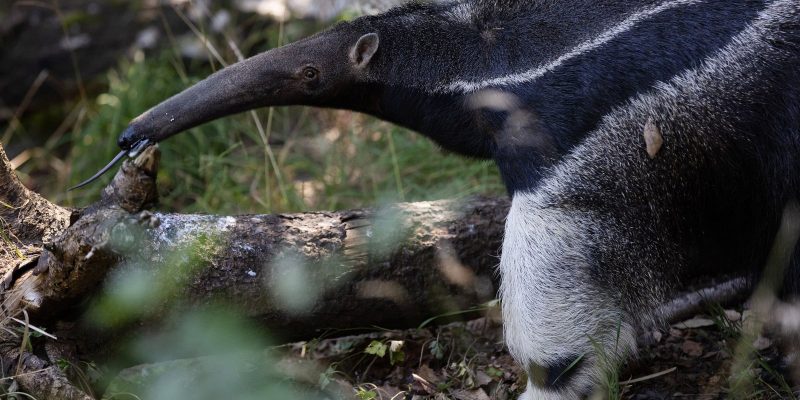
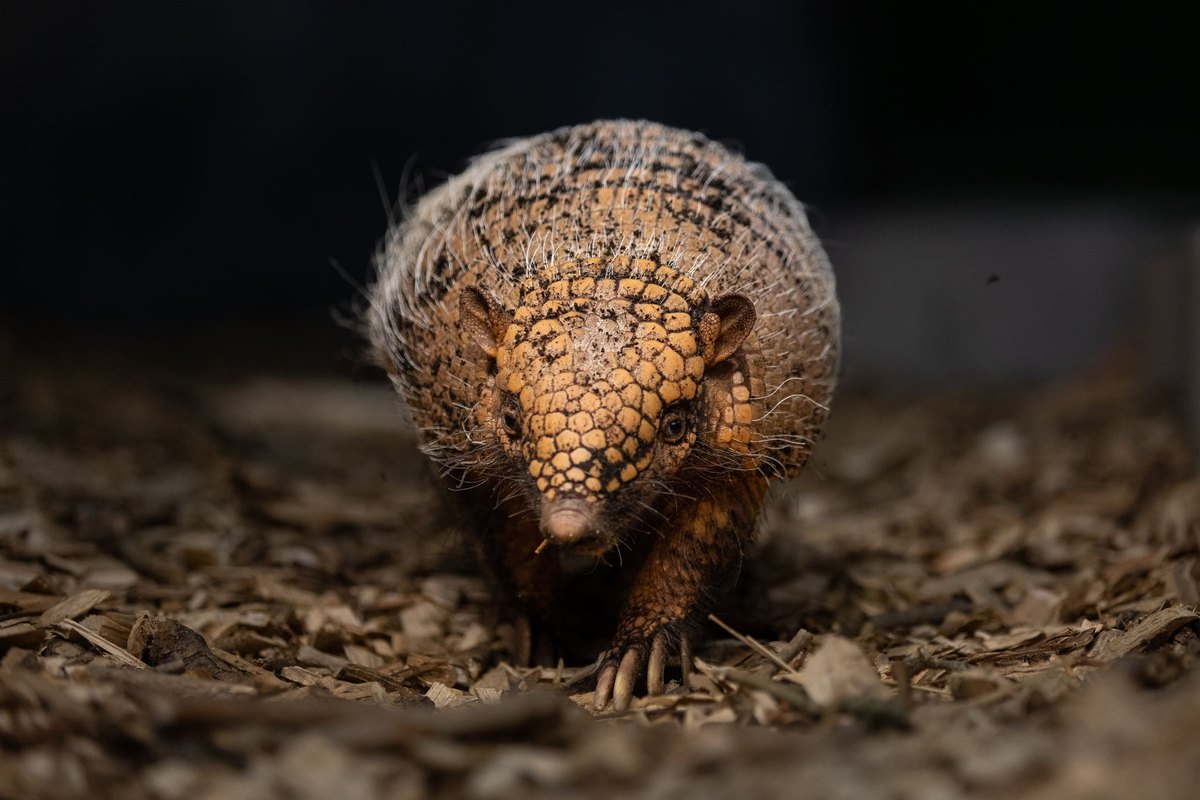
Two species that had never been on show at Dublin Zoo went on view in July 2026. Milo and Junio, a pair of giant anteaters, arrived from Allwetterzoo Muenster in Germany, and Ozzy, a six-banded armadillo, came from Tierpark Hagenbeck in Hamburg. The zoo announced all three on July 22.
The anteaters
Milo is a ten-year-old female and Junio an eight-year-old male. Dublin Zoo describes them as still settling into their new habitat following their reunion, and warned visitors at the time of the announcement that the pair might be off show from time to time while they explored and grew comfortable. That is a more candid line than most arrival notices carry, and it is worth repeating rather than burying: a new exhibit is not a guaranteed sighting.
The giant anteater is the largest of the anteaters. Dublin Zoo says the species can weigh more than 40 kilograms and grow to more than eight feet long, and that the IUCN Red List classifies it as Vulnerable. The zoo also calls it the most threatened mammal in Central America.
The armadillo
Ozzy is a one-year-old male, and he has not been given a habitat of his own. He has moved in with the white-faced saki monkeys in Rainforest House, which is the kind of mixed-species arrangement that reads as a small detail and is in fact a considerable amount of planning.
The six-banded armadillo is native to South America. Its name comes from the six movable bands of armor across its back, formed from plates of bone covered in keratin scales. Dublin Zoo notes that armadillos are the only living mammals with a shell of this type. The species is listed as Least Concern on the IUCN Red List, and the zoo says the threat it faces in the wild comes from hunting.
What the keeper said
“It’s a really exciting time at Dublin Zoo with the arrival of Ozzy the six-banded armadillo and Milo and Junio, our two giant anteaters,” said Eddie O’Brien, Team Leader at Dublin Zoo. “Visitors are going to be enchanted by these wonderfully interesting creatures, and we strongly encourage people to come along to welcome them to their new Dublin Zoo home.” O’Brien has been a keeper for more than 40 years.
Two zoos in Germany, one in Ireland
Both transfers came out of German collections, and neither zoo is otherwise in this story. Allwetterzoo Muenster sent the anteaters and Tierpark Hagenbeck sent the armadillo, and that is the whole of their involvement: the animals are in Dublin’s care now, the habitats are Dublin’s, and nothing in the announcement suggests a shared program beyond the move itself.
Movements like these are the ordinary plumbing of European collections, and they are the reason a single zoo’s species list changes at all. The same mechanism put a new group into the Reserve Africaine de Sigean in France this year, and it is how most European facilities open a habitat on a species they have never held.
A checked detail
The announcement also launched a children’s competition, a Rainforest Ranger trail that ran over the August bank holiday weekend. That weekend has passed, so there is nothing here for a reader to enter, and we have left the details out rather than print an expired entry route. The animals are the part of this that is still true.
Source: Dublin Zoo.
Quick answers
- What new animals are on show at Dublin Zoo?
Two giant anteaters, a ten-year-old female called Milo and an eight-year-old male called Junio, and a one-year-old male six-banded armadillo called Ozzy. Dublin Zoo announced all three on July 22, 2026.
- Where did they come from?
The anteaters came from Allwetterzoo Muenster in Germany and the armadillo from Tierpark Hagenbeck in Hamburg. Neither German zoo has any further role in the story: the animals are in Dublin Zoo's care now.
- Where in the zoo can you see them?
Ozzy has moved in with the white-faced saki monkeys in Rainforest House. The anteaters have their own habitat, and Dublin Zoo warned that they might be off show from time to time while they settled in.
- How threatened are these species?
Dublin Zoo says the IUCN Red List classifies the giant anteater as Vulnerable, and calls it the most threatened mammal in Central America. The six-banded armadillo is listed as Least Concern, and the zoo says the pressure on it in the wild comes from hunting.