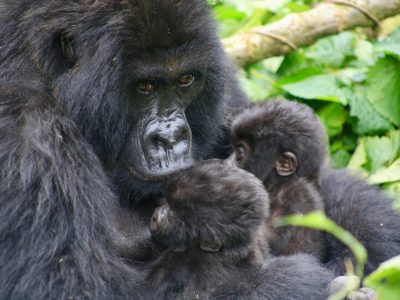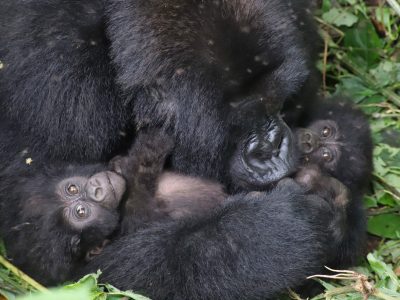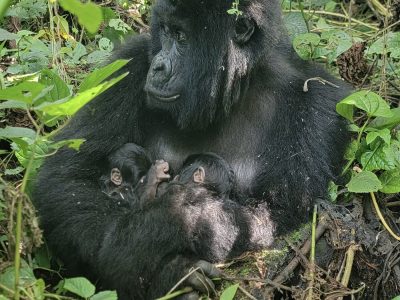

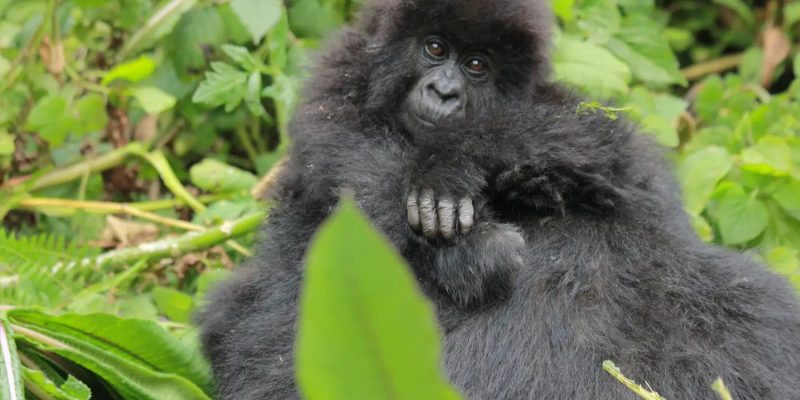
Rwanda named 22 baby mountain gorillas on September 4, 2026. That brings the total named since the ceremony became official in 2005 to 460.
The 21st Kwita Izina was held at Kinigi, at the foot of Volcanoes National Park, under the theme “Conservation is Life: Sustaining the Future.” The guest of honour was Rwanda’s prime minister, Rt. Hon. Justin Nsengiyumva, alongside three former heads of government from Botswana, Ethiopia and Tanzania.
Where the ceremony comes from
The practice is older than the event. The Dian Fossey Gorilla Fund puts it this way:
“During Dian Fossey’s time, she named the individual gorillas they monitored to track their behaviors and family lineages. In 2005, the Rwandan government formalized this long-standing practice into Kwita Izina, modeled after the traditional centuries-old Rwandan ceremony where families name a newborn child in the presence of their community.”
Dian Fossey Gorilla Fund
Naming started as a research protocol. You cannot track family lineages across decades without individual identity, and Fossey needed identity before she needed anything else.
What Rwanda did in 2005 was take a scientist’s filing system and turn it into a national ceremony that brings heads of state to a village at the edge of a national park. It is one of the more effective pieces of conservation communication anywhere, and it costs nothing to run compared to what it returns.
Nine of them were Fossey Fund gorillas
Nine of the infants named came from groups monitored by the Fossey Fund. Two were in Pablo’s group, now 22 animals: an infant born to Isangano on July 31, 2025, and a female born to Teta on November 11, 2025. Teta is the group’s dominant female and appeared in the film A Gorilla Story: Told by David Attenborough.
The Fossey Fund has been a namer at the ceremony before. In 2017 its chief executive bestowed the name Macibiri, a reference to Fossey’s local name Nyiramacibiri.
A number to handle carefully
The Rwanda Development Board’s figure of 460 named since 2005 is the one to use. The Fossey Fund’s own page says over 350, which appears not to have been updated.
On the population itself, the widely quoted 1,063 mountain gorillas comes from the 2018 Bwindi-Sarambwe census combined with the 2015 to 2016 Virunga Massif survey, and a new Bwindi-Sarambwe count is underway. At this year’s ceremony the prime minister said more than 1,000 worldwide including more than 600 in the Virunga Massif.
Whatever the new census returns, the direction has been unusual. The mountain gorilla is one of very few species moved from Critically Endangered to Endangered rather than the other way, which happened in 2018. Across the border, Virunga National Park recorded two sets of twins in three months this year.
Sources: Rwanda Development Board; Dian Fossey Gorilla Fund.