
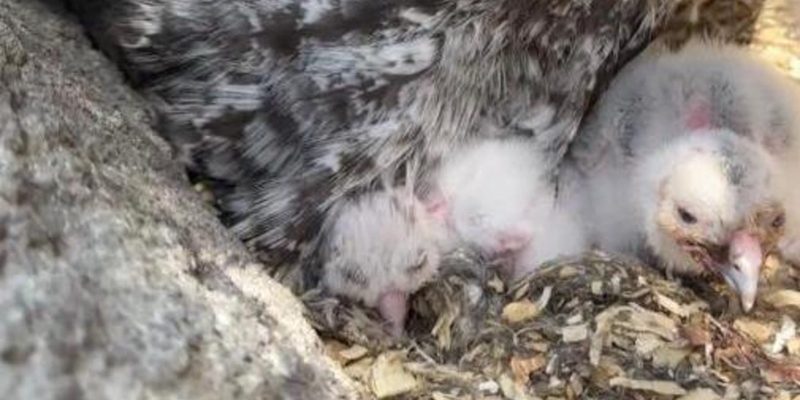
Three great gray owl chicks hatched at the Wilder Institute’s Calgary Zoo between April 26 and May 2, 2026, to a pair named Alysanne and Benjen in the Jihad Shibley Rocky Mountain Aviary.
The zoo closed the aviary to give the family space, and left the chicks with their parents rather than pulling them for hand-rearing.
Closing an exhibit is the decision
That closure is the whole story in miniature. An aviary shut to visitors during the season is lost admissions and a lost attraction, and the zoo took it because owls raising chicks are sensitive to disturbance and the parents were doing the job well.
Great grays are experienced parents’ birds in the sense that the adults do the work: incubation, brooding, feeding, and a long period of dependence after the chicks leave the nest. Intervening early is the safer-looking option and usually the worse one, because an owl raised by owls learns things a keeper cannot teach it.
The bird itself
Great gray owls are the largest owls in the world by length, and almost entirely feathers. Their apparent bulk is insulation for the boreal winter, and underneath it they weigh less than a great horned owl.
The facial disc is the functional part. It works as a parabolic collector, funnelling sound to asymmetrically placed ears so precisely that a great gray can locate and take a vole moving under a foot of snow, by hearing alone, without ever seeing it.
They are a Canadian bird of the boreal forest and mountain west, which is what makes them appropriate residents of a Rocky Mountain aviary, a native species in a zoo in its own range, rather than an import.
Same aviary, a harder month
The aviary was closed again later that month for an unrelated reason. In May 2026 the zoo restricted its bird areas as a precaution against avian influenza detected within 200 kilometers, a reminder that a good breeding season and a biosecurity event can land on the same building in the same spring.