
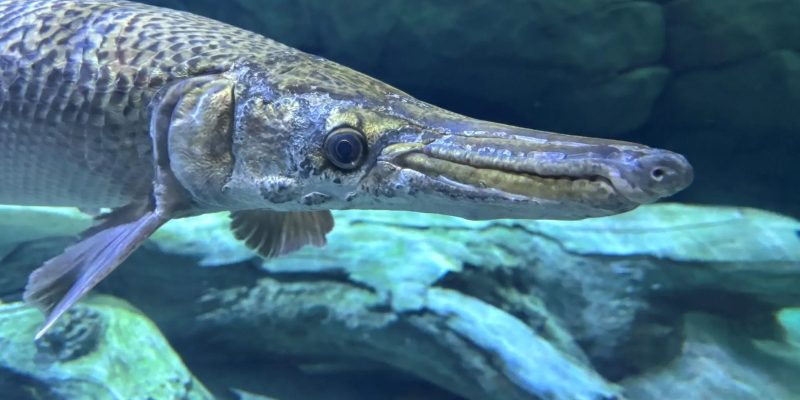
Two alligator gar at the Cincinnati Zoo went through a full veterinary workup this year, including a CT scan, while awake and out of the water. Both are back in the Manatee Springs habitat looking better than they did, and the way the zoo got there is a short course in what good fish care looks like.
What the keepers noticed
Dolly Garton and Busta Slimes arrived at the Cincinnati Zoo in 2024. Earlier this year keepers decided Busta was not acting like himself. The signals they watch in a gar are unglamorous and specific: appetite, whether the fish comes toward food, and how it uses the space in the pool. Any of that can shift with the season, so the change was not proof of anything on its own. The veterinary team ran a full workup on both fish rather than wait and see.
Keepers had also seen something on the animals’ faces: patches where the normal coloring had gone. The term for that is depigmentation, a loss of pigment in the skin, and in fish it is often a signal that something in the environment is wrong rather than a disease in itself.
Why the x-ray was not enough
Gar are armored. Their scales sit against each other like interlocking bony plates, which is a fine defense against a predator and a problem for a radiograph: dense bone absorbs x-rays, and the picture of what lay underneath came back unclear. That left the zoo needing a cross-sectional image, which means computed tomography, a scan that assembles a stack of thin x-ray slices into a three-dimensional view.
The Cincinnati Zoo and Botanical Garden has a CT machine on its own grounds, so Busta did not have to travel for it.
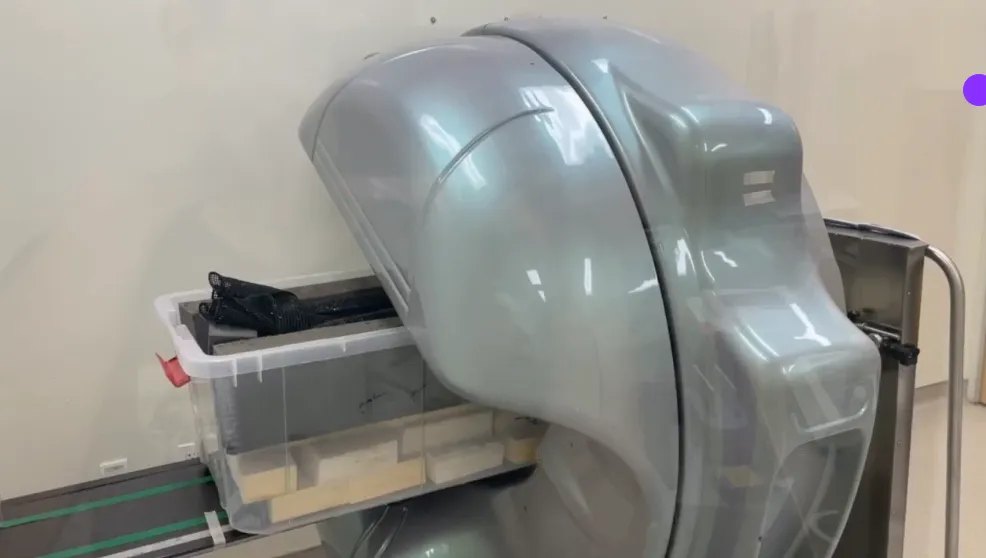
How do you scan a fish that is awake?
This is the part that is unusual, and it rests on an anatomical fact about gar. A gar has a swim bladder that works something like a primitive lung. The fish gulps air at the surface and takes oxygen from it directly, which is why a gar can be out of water for an hour or more as long as it does not dry out.
That window is what let the veterinary team examine both fish and run the CT without anesthesia. The care team used low-stress handling and worked with behaviors the fish already offer, which is possible because keepers have spent the time learning what normal looks like in these two animals and building the trust that lets them be handled at all. Skipping anesthesia in a fish is worth having: it removes the recovery, the dosing uncertainty and the risk that comes with putting an aquatic animal under.
What fixed the faces
Before the exam, the care team went looking for anything in the habitat that could be stressing the two gar. The list they worked through is a good picture of how many variables a modern aquatic habitat has: water quality, sound, minerals, stray electrical current and water flow.
During the exam they applied one treatment of an ointment to the affected skin. Within one to two weeks keepers could see the difference. A second application, together with the continued adjustments to the habitat, brought both fish to significant improvement, which suggests the ointment and the environmental changes were working together rather than either one alone. Busta was also treated for a mild infection.
Both gar are now back on view with the other four gar at Manatee Springs.
The species, and where it stands
The alligator gar (Atractosteus spatula) is the largest of the gars and one of the largest freshwater fish in North America, a long-snouted, heavily scaled predator of rivers and backwaters across the southern United States. The IUCN Red List assesses it as Least Concern, so this is not an endangered animal receiving endangered-animal attention. That is the point worth taking from the story: the level of care did not depend on the species being rare.
A CT scanner, a veterinary team and a keeper staff that knows what an off day looks like were spent on two fish with no conservation emergency attached, because they are animals in the zoo’s care. The zoo put it plainly: every animal there, from an elephant down to a gar, gets the same standard.
Sources: the Cincinnati Zoo’s account of the gar workup, published 16 November 2026, and the IUCN Red List assessment for Atractosteus spatula. The zoo’s reproductive science team features in our report on CREW’s work on iron overload in rhinos.
Quick answers
- Can an alligator gar be out of the water?
Yes. Gar have a swim bladder that works something like a primitive lung, so they gulp air at the surface and can stay out of water for an hour or more as long as they do not dry out. That is what let the Cincinnati Zoo examine and CT-scan both fish without anesthesia.
- Why did the zoo need a CT scan instead of an x-ray?
Gar scales sit together like bony plates, and dense bone absorbs x-rays, so the radiographs did not show the inside of the fish clearly. The zoo has a CT machine on its own grounds.
- What is depigmentation in a fish?
A loss of pigment in the skin, producing pale patches. In fish it often signals a stressor in the environment rather than a disease on its own, which is why the care team reviewed water quality, sound, minerals, stray electrical current and water flow before treating it.
- Are Dolly Garton and Busta Slimes all right now?
Both show significant improvement after one ointment treatment, a second application and continued changes to their habitat. Busta was also treated for a mild infection. Both are back with the other four gar at Manatee Springs.