The Nigerian Conservation Foundation is testing a better fish smoker in Bayelsa State, and the conservation case for it runs through the mangroves that supply the firewood. The organization published details of the platform, which it calls ALTER, on November 3, as part of its Afforestation, Livelihood Enhancement and Carbon Sequestration project.
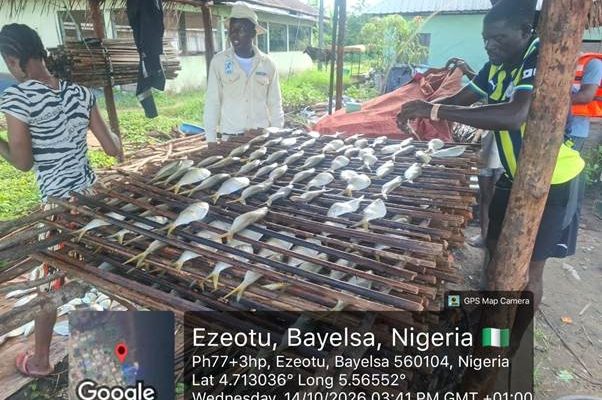
Fish smoking along the Niger Delta coast is a preservation method and a livelihood at once. The traditional platform, known locally as an alter, is an open wooden rack over a wood fire. It works, and it has three costs: it burns a great deal of fuelwood, it takes a long time, and it puts the person tending it inside the smoke for the duration.
Where the mangroves come in
Mangrove forest is the habitat that makes the fishery work in the first place. The root systems are breeding and nursery ground for fish and other aquatic species, they hold the shoreline against erosion, and they store a large amount of carbon for their area. When the fuelwood for smoking the catch is cut from the same forest that produces the catch, the processing method quietly eats its own supply.
That is the loop the NCF is trying to interrupt, and it is why a cooking platform appears in a conservation program at all. The project is working across 11 host communities in Bayelsa State with a five-year commitment to plant 500,000 indigenous trees.
What the assessment found
The redesign began with an Energy Needs Assessment examining how much energy traditional fish smoking uses, where it comes from and how efficiently it is spent. The problems it identified were structural as much as behavioral: poor platform design loses heat, which raises fuelwood consumption, which lengthens processing time.
Long processing has an economic edge to it that is easy to miss. A processor who cannot preserve a catch quickly enough loses part of it, and small-scale operators depending on a fast sale absorb that loss directly. Inefficiency at the rack is lost income, not just lost heat.
The photographs the NCF published with the announcement carry a camera location and timestamp burned into the frame, which is how we can place the fieldwork precisely: Foropa on October 13, 2026 and Ezeotu on October 14, 2026, both in Bayelsa State. The article itself gives no date for the assessment visits.
What ALTER changes
The pilot platform is built and undergoing testing. The NCF describes five intended improvements: controlled smoke emissions to cut processors’ exposure, optimized energy use to reduce fuel consumption, shorter processing time, better hygiene, and reduced occupational health risk from smoke.
Those are design intentions rather than measured results, and the NCF presents them that way. The platform is in testing, and the figures that would show whether it uses less wood per kilogram of fish are not published yet. That is the honest state of this story: a promising redesign at the pilot stage, in a program with a tree-planting target attached.
Which zoos fund this?
None, and in this case the funders are named and are a long way from a zoological institution. The ALEC project is implemented by the NCF in partnership with the Nigerian National Petroleum Company Limited and the FIRST Exploration and Petroleum Development Company joint venture. Both are oil and gas companies operating in the same delta the project is reforesting.
We could not verify support from any accredited zoo or aquarium for this work, which is consistent with what we have found before on this organization. Our earlier trace of zoo funding behind the NCF’s vulture work reached the same place. The Nigerian Conservation Foundation is one of the larger conservation organizations in West Africa and appears to run without accredited zoological funding, which is a finding about the funding landscape rather than about the organization.
It is worth saying what this project is and is not. It is not a species program, and no animal in it is being rescued, bred or released. It is an attempt to reduce the pressure that one everyday economic activity puts on a habitat, which is the less photogenic half of conservation work and the half that tends to determine whether the photogenic half survives.
Quick answers
- What is the ALTER fish-smoking platform?
A pilot platform developed by the Nigerian Conservation Foundation under its Afforestation, Livelihood Enhancement and Carbon Sequestration project. It is built and in testing, and is intended to control smoke emissions, cut fuel use, shorten processing time, improve hygiene and reduce health risk.
- How does a fish smoker become a conservation project?
Fuelwood for traditional smoking racks is often cut from the same coastal mangrove forest that provides breeding and nursery habitat for the fish being smoked. Burning less wood per catch reduces that pressure.
- Why do mangroves matter to the fishery?
Mangrove root systems are breeding and nursery habitat for fish and other aquatic species. They also hold shorelines against erosion and store substantial amounts of carbon.
- How large is the ALEC project?
It works across 11 host communities in Bayelsa State and carries a five-year commitment to plant 500,000 indigenous trees.
- Has the new platform been shown to use less wood?
Not yet publicly. The NCF describes five design improvements and says the platform is undergoing testing. Figures on fuel use per kilogram of fish have not been published, so the benefits are stated intentions rather than measured results.
- Which zoos fund the ALEC project?
None that we could verify. The project is implemented by the NCF with the Nigerian National Petroleum Company Limited and the FIRST Exploration and Petroleum Development Company joint venture, both oil and gas companies. We reached the same negative result tracing zoo funding behind the foundation's vulture work.