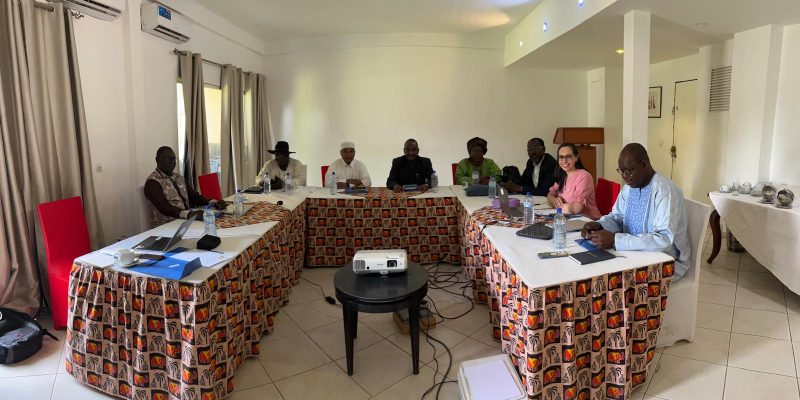
On Friday 27 March 2026 a small group sat around tables in a meeting room in N’Djamena and formally took charge of an area of desert and semi-desert nearly three times the size of Rwanda. It was the first meeting of the board of directors of the Ouadi Rime-Ouadi Achim Faunal Reserve, and it is the least dramatic and most consequential thing to happen to that reserve in some years.
The reserve covers 77,950 square kilometers. Sahara Conservation, which co-manages it, describes it as the largest protected area in Chad and one of the largest in Africa, and the Rwanda comparison is its own. It was established in 1969. For most of the intervening time it existed more firmly on paper than on the ground.
What a first board meeting actually settles
The meeting was chaired by Julien Koularambaye Koundja, secretary general of Chad’s Ministry of Environment, Fisheries and Sustainable Development, representing the minister. The board approved the reserve’s legal and operational framework, agreed the composition of an Interprovincial Advisory Council, and discussed strategic priorities for the years ahead.
Read quickly that is committee business. Read properly it is the part that decides whether anything else holds. A protected area without an agreed legal framework is a line on a map that each new administration can reinterpret; one with a board, a constituted advisory council and a signed management agreement is a thing with a defined owner and a defined process. Chad’s environment ministry and Sahara Conservation have signed a renewable ten-year agreement for the reserve’s management, and this board is the machinery that agreement runs on.
The advisory council is the detail worth watching. The reserve is not empty: it is used by pastoralists moving herds across it, and the pressures Sahara Conservation lists are climate change, desertification, human pressure and the depletion of natural resources. An interprovincial council is an attempt to put the people who use the land inside the governance rather than outside it.
What lives there
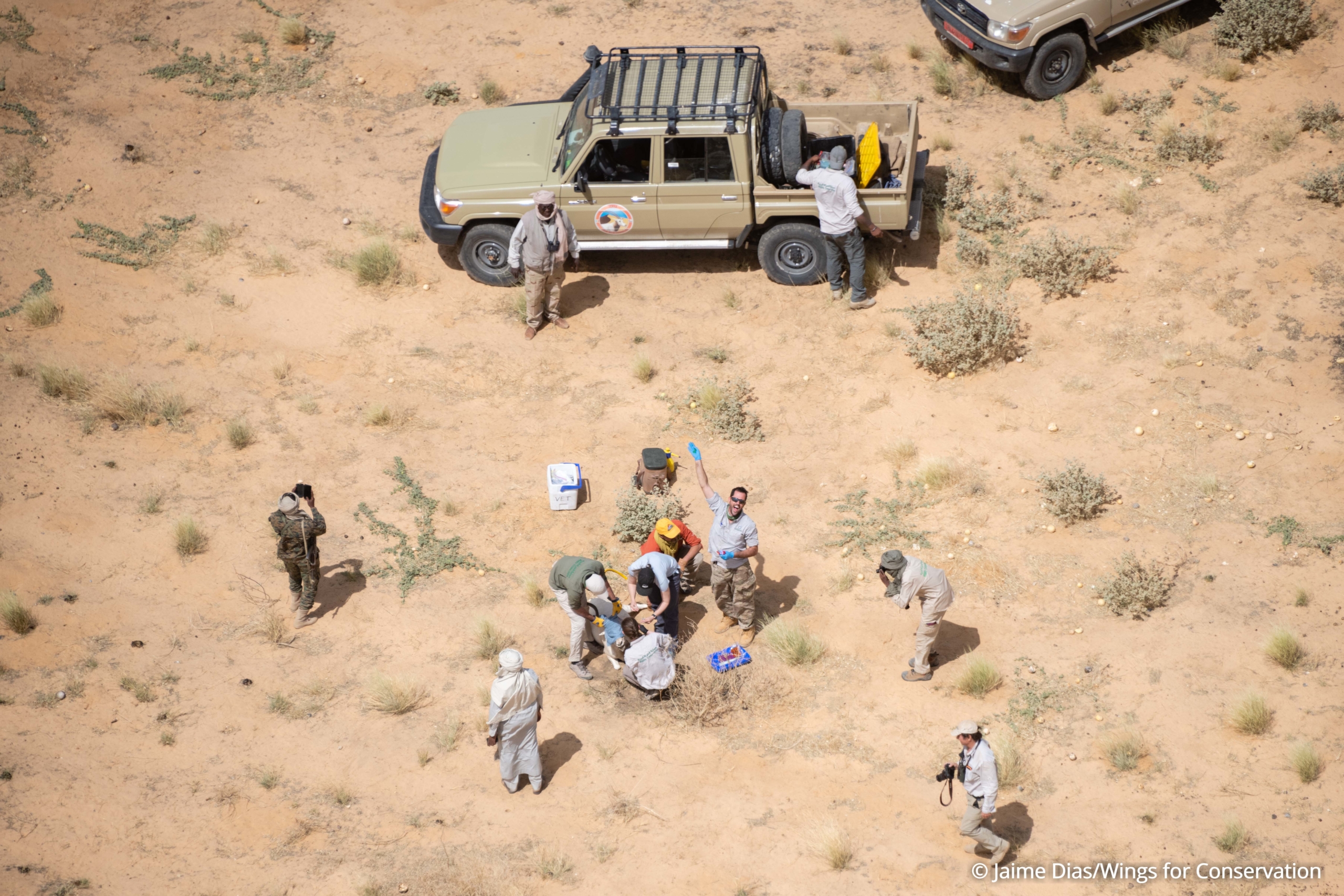
The reserve holds three of the Sahel’s most pressured large mammals: the addax, the dama gazelle and the scimitar-horned oryx.
The oryx is the reason this reserve is known outside Chad. Oryx dammah was listed as Extinct in the Wild, and the animals now living in Ouadi Rime-Ouadi Achim are there because a captive population was bred up and flown back. The current IUCN Red List assessment, made on 1 November 2022 and published in 2023, lists it as Endangered under criterion D, with 140 to 160 mature individuals and a trend recorded as increasing. We covered that change when the assessment moved. It is a statement about this reserve specifically, because this reserve is where the reintroduced herd lives.
The other two are in worse shape, and the numbers are small enough to be worth printing in full. The addax, Addax nasomaculatus, is Critically Endangered on an assessment made in April 2016, with 30 to 90 mature individuals and a decreasing trend. The Red List records it as extant in two countries: Chad and Niger. The dama gazelle, Nanger dama, is Critically Endangered on an assessment made on 31 July 2025 and published in 2026, with 45 to 78 mature individuals, also decreasing.
Put those three together and the arithmetic of this board meeting changes. A legal framework for the largest protected area in Chad is a legal framework for a substantial share of what is left of all three species, in one of only two countries where the addax still exists.
A note on the dama gazelle figure
If you look the dama gazelle up and find 100 to 200 mature individuals, that number is from the 2015 assessment, which the Red List now marks as superseded. The current global assessment, from July 2025, gives 45 to 78. We default to the current assessment. The older figure is still in wide circulation, including in material written before the update, and reproducing it is an easy mistake rather than a careless one.
Which zoos are paying for this?
Here the chain holds, and it holds unusually well.
Sahara Conservation’s own account of the oryx reintroduction names its international partners as the Smithsonian’s National Zoo and Conservation Biology Institute, the Zoological Society of London and Saint Louis Zoo, and states that the released animals went into the Ouadi Rime-Ouadi Achim Faunal Reserve after acclimatization in pre-release pens. These are not adjacent institutions in the same country. They are named partners in putting the oryx into the specific reserve this board now governs.
Behind that sits something rarer still. Saint Louis Zoo did not fund Sahara Conservation. It paid the organization’s start-up costs and hosted its United States headquarters, which makes this the clearest example in our files of a zoo creating a field organization rather than writing it a check. The body now sitting on the other side of a ten-year management agreement with the government of Chad exists because a zoo in Missouri decided it should.
The Association of Zoos and Aquariums reports that in 2025 its 235 accredited and certified facilities spent approximately $372.4 million on conservation across 139 countries. No published breakdown isolates the African share, so we are not going to estimate one. What this particular trace shows is narrower and firmer: without zoo-held herds there would be no oryx in Ouadi Rime-Ouadi Achim for a board to govern.
Why it took until 2026
The honest answer is that we do not know, and Sahara Conservation does not say. The reserve dates from 1969, the oryx came back from 2016 onward, the ten-year management agreement was signed before this meeting, and the first board sat in March 2026. Governance usually lags the fieldwork, and in this case it lagged it by decades. The useful thing is that it has now caught up.
Quick answers
- How big is the Ouadi Rime-Ouadi Achim Faunal Reserve?
It covers 77,950 square kilometers. Sahara Conservation describes it as the largest protected area in Chad and one of the largest in Africa, nearly three times the size of Rwanda.
- What happened at the first board meeting?
The board met in N’Djamena on 27 March 2026, chaired by Julien Koularambaye Koundja of Chad’s environment ministry. It approved the reserve’s legal and operational framework, agreed the composition of an Interprovincial Advisory Council and set strategic priorities.
- Which species does the reserve protect?
The addax, the dama gazelle and the scimitar-horned oryx, along with the wider Sahelian ecosystem.
- What is the scimitar-horned oryx listed as now?
Endangered under criterion D, on an assessment made on 1 November 2022 and published in 2023, with 140 to 160 mature individuals and an increasing trend. It was previously listed as Extinct in the Wild.
- How many dama gazelles are left?
The current global IUCN assessment, made on 31 July 2025 and published in 2026, gives 45 to 78 mature individuals and a decreasing trend. An older and still widely repeated figure of 100 to 200 comes from the superseded 2015 assessment.
- Which zoos are behind the oryx in this reserve?
Sahara Conservation names the Smithsonian’s National Zoo and Conservation Biology Institute, the Zoological Society of London and Saint Louis Zoo as the international partners in the reintroduction. Saint Louis Zoo also paid Sahara Conservation’s start-up costs and hosted its United States headquarters.