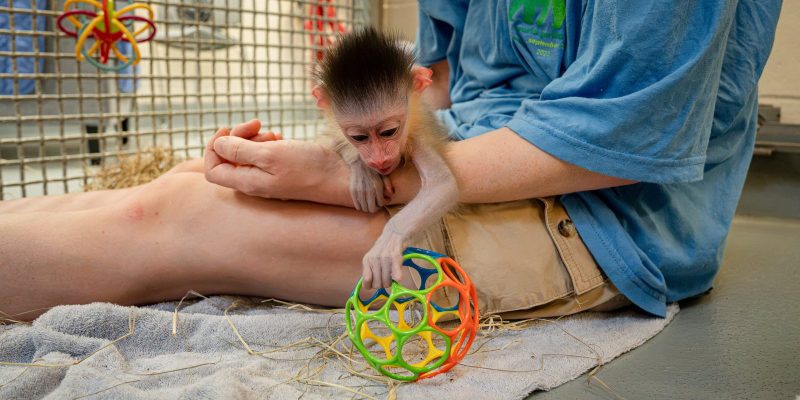
Memphis Zoo has kept mandrills for close to a decade without ever having one born there. That ended on Sunday, August 16, when Kamani gave birth to a daughter the zoo has named Millie. Two weeks later Millie was back with her mother and the rest of the troop, and the route between those two sentences is the story.
Kamani is a first-time mother. She delivered naturally and without difficulty, and then was unsure what to do with the infant. That is a common outcome with a first birth in any primate, and it is the moment that decides whether a newborn lives.
Why step in at all?
Because the alternative was worse, and only just. The zoo’s standing position is the one every accredited institution holds: a mother raises her own infant whenever that is possible, because she is the better teacher and because an animal raised by its own species learns to be one. Memphis says so directly. The veterinary and primate teams judged that temporary intervention was the way to give both animals a chance, and the operative word in that sentence is temporary.
For roughly the first two weeks, keepers fed Millie by bottle around the clock. What they did not do is take her out of the building. She stayed in the mandrill nighthouse the entire time, where Kamani, her father Babu and her aunt Gertie could see her and interact with her throughout. Keeping an infant inside the sightlines of the troop it has to rejoin is not sentiment. It is the thing that makes rejoining possible.
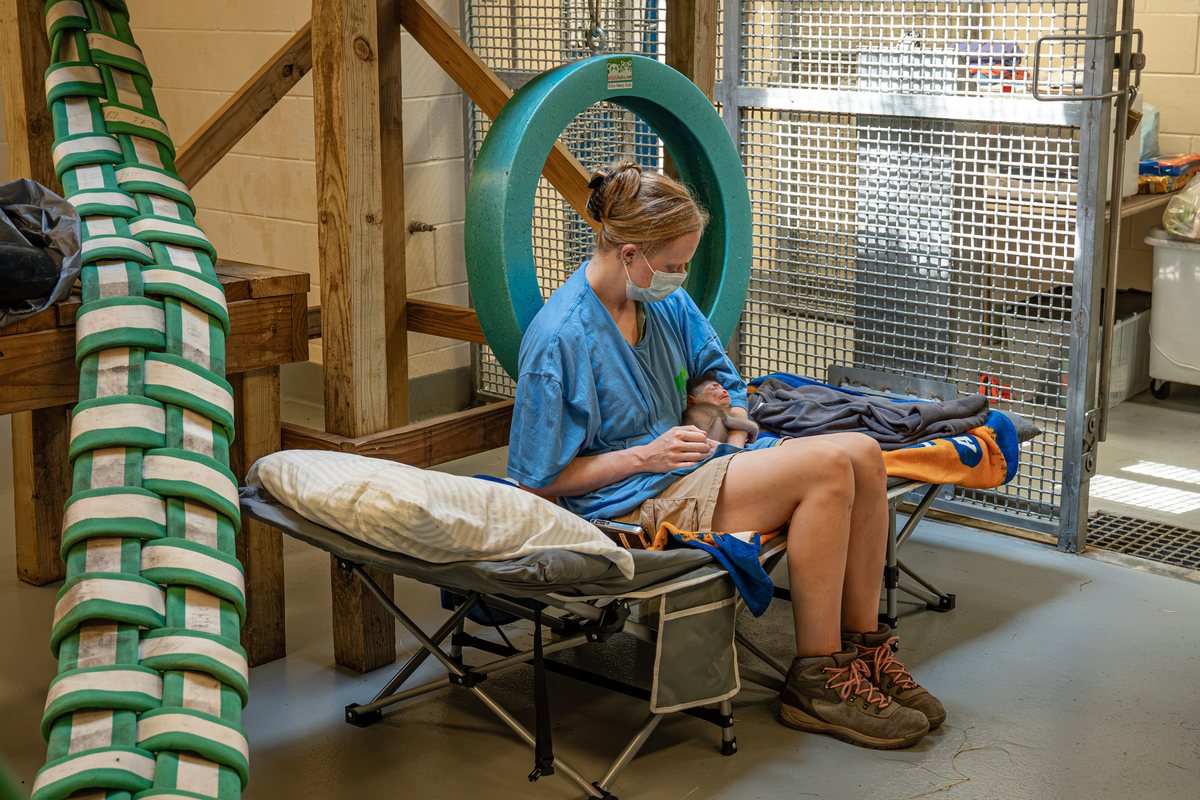
Why are the keepers not wearing gloves?
Because they were told not to. Memphis Zoo runs strict personal protective equipment and hygiene protocols on any hand-rearing, both to keep disease from moving between people and animals and to keep it from moving between animals across the zoo. In Millie’s case the team was advised against latex gloves specifically, because the skin of an infant mandrill is sensitive enough that gloves would dry it out and irritate it. The substitute was frequent handwashing and a mask on anyone handling her, which is what the photograph above shows.
It is a small detail and a useful one, because it is the shape most animal care decisions take: a general rule, and then an exception argued from the animal in front of you.
What does precocial mean here?
It means she was in a hurry. A precocial animal is born relatively developed and becomes independent quickly, as against an altricial one, which is born helpless and stays that way for a long stretch. Great apes sit at the slow end, developing at something closer to a human pace, which is why a hand-reared gorilla infant is a project measured in months. Monkeys move faster, and the zoo describes mandrills as highly precocial even among monkeys.
That is why a two-week intervention was realistic rather than optimistic. At a few days old Millie was already learning to come to her keepers on her own to take a bottle, which sounds minor and was the milestone the whole plan turned on. If Kamani could not nurse her, or needed time to work it out, Millie had to be able to get food from a person without being pulled away from her family to do it. She also learned to climb up and down the mesh of her habitat safely, with toys and play to build the strength and confidence she needed.
Who else worked on this?
People at other zoos, which is the part that does not show up in the photographs. Because Memphis had never hand reared a mandrill, its veterinary and primate teams went to institutions that had. The zoo credits Disney and the Columbus Zoo and Aquarium as particularly valuable, sharing their experience and their recommendations throughout.
Mandrills are managed under an AZA Species Survival Plan, the cooperative program that maintains genetically diverse populations across accredited zoos, and the zoo notes that Millie’s genetics are valuable to that population and that as a female she may contribute to future generations.
Where is she now?
With her family, and outdoors. The reintegration happened over several days and the zoo reported the troop together and doing well. The mandrill family has access to its yard, so a visitor walking through Zambezi River Hippo Camp has a reasonable chance of seeing a very small mandrill working out what the rest of them are doing.
Memphis Zoo’s own account of the hand-rearing, which is unusually detailed about the parts that could have gone wrong, is here. We wrote about a mandrill pregnancy at Audubon Zoo earlier this autumn here.
Quick answers
- Who is Millie?
A female mandrill born at Memphis Zoo on Sunday, August 16, 2026. She is the first mandrill ever born at the zoo, which has kept the species for close to a decade.
- Why was she hand reared?
Her mother Kamani is a first-time mother. She gave birth naturally but was initially unsure what to do with the infant, so the veterinary and primate teams stepped in temporarily rather than permanently.
- Why did keepers not wear gloves?
An infant mandrill’s skin is sensitive enough that latex gloves would dry it out and irritate it, so the team was advised against them. They washed their hands frequently and wore masks when handling her instead.
- What does precocial mean?
Born relatively developed and becoming independent quickly, as opposed to altricial, meaning born helpless. Mandrills are highly precocial even among monkeys, which is why a two-week intervention was realistic.
- Did she go back to her family?
Yes. She never left the mandrill nighthouse, where her mother, her father Babu and her aunt Gertie could see and interact with her throughout, and she was reintegrated with the troop over several days.
- Where can visitors see her?
The mandrill family has access to its yard at Zambezi River Hippo Camp.