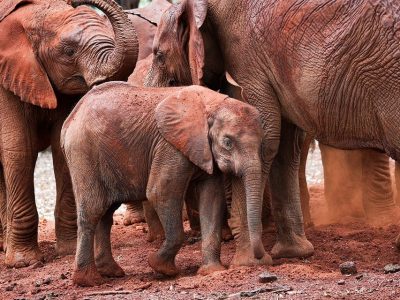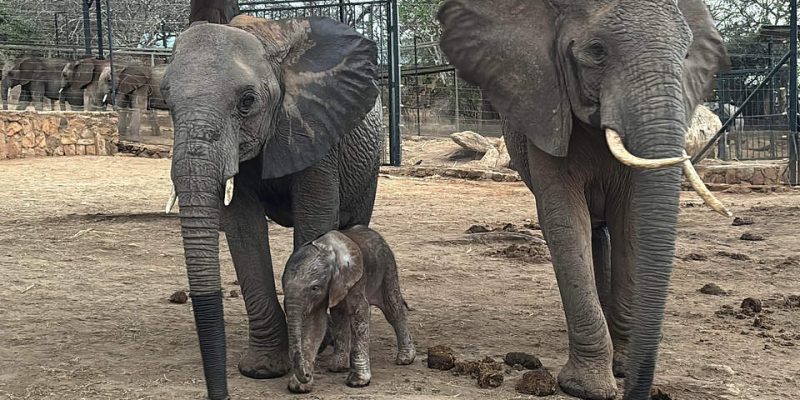
An elephant named Chyulu walked out of the bush at Ithumba on the morning of October 21 with a newborn calf at her side and an eight-year-old escort named Lulu. The Sheldrick Wildlife Trust named the calf Chili. Eight years ago, when Lulu was the newborn, it was Chyulu who stood guard over her.
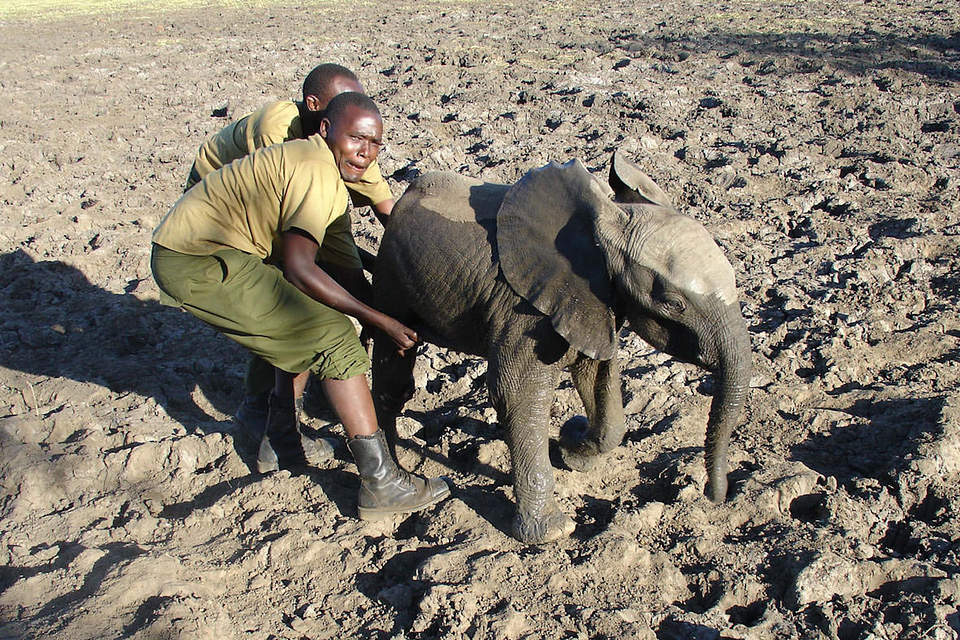
Chyulu is an ex-orphan. She was rescued in 2006, in the Kibwezi Forest, after a Sheldrick Wildlife Trust and Kenya Wildlife Service anti-poaching patrol found an infant elephant stuck in a drying waterhole. A female elephant believed to have been her mother had been killed by poachers in the same area days earlier. The waterhole was a poaching hotspot precisely because elephants came to it in the dry season.
What is a nanny elephant, and why does it matter here?
In elephant society a nanny, or allomother, is a female other than the mother who takes on the day-to-day work of minding a calf: walking beside it, blocking other animals from crowding it, steering it back when it strays. The role is not decoration. Calves with attentive allomothers are better protected and better taught, and young females who serve as nannies arrive at their own first calf already knowing the job.
That is the shape of this particular morning. Chyulu was Lulu’s top nanny when Lulu was born in 2018 to Lualeni, another Sheldrick ex-orphan and a long-standing friend of Chyulu’s. Lulu is now returning the favor for Chyulu’s calf. Two generations of elephants raised through a rescue program are now minding each other’s babies in the wild, without any human arrangement at all.
The Keepers at Ithumba saw the group at first light, heading for the stockades. After a long drink, Chyulu walked Chili through the lucerne feeding area and settled in for breakfast among the dependent orphans. Mutara, Suguta, Kainuk, Turkwel and Sana Sana came over to inspect the calf. Olorien tried to get closer and was blocked by Sana Sana and Lulu, which is nanny work done exactly as described.
Chyulu’s third calf, and her first daughter
Chili is Chyulu’s third calf and her first female. Cheka was born in 2020 and Charli in 2023, both bulls. African elephants carry a calf for about 22 months, the longest gestation of any land mammal, and Chyulu has now produced one roughly every three years. The Trust says it did not know she was expecting Charli at all until she turned up with him, and that this time it knew a calf was coming but not how soon.
It had been close to a month since Chyulu’s last visit to the stockades. Ex-orphans living wild in Tsavo come and go on their own terms, which is the entire point of the reintegration units at Ithumba: an animal that chooses to return is an animal that was genuinely released rather than merely relocated. Bringing a day-old calf back to show the Keepers is about as clear a signal of that as the program gets.
Which zoo or aquarium is behind this work?
We looked, and we did not find one. The Sheldrick Wildlife Trust publishes its conservation partners, and the list is government agencies, Kenyan conservancies and trusts, and European elephant charities: the Kenya Wildlife Service, the Kenya Forest Service, Big Life Foundation, the Mara Elephant Project, the Mara Conservancy, the Mount Kenya Trust, the Lamu Conservation Trust, Galana Wildlife Conservancy, Wildlife Works, the Kenya Agricultural and Livestock Research Organisation, the Agricultural Development Corporation, Eden Reforestation Projects, the Serengeti Foundation, Aktionsgemeinschaft Artenschutz, Rettet die Elefanten Afrikas and Vrienden van de Olifant. No accredited zoo or aquarium appears anywhere on it.
That is a real answer rather than a gap. We check it on every conservation story we run, because the money behind African fieldwork very often does lead back to a zoo, and when it does, readers deserve to know which one. The Association of Zoos and Aquariums reports that 235 accredited and certified facilities spent roughly 372.4 million dollars on conservation across 139 countries in 2025. No published breakdown separates out what any one region received, so we are not going to put a number on Africa’s share. On this story, the honest finding is that the trail does not lead to a zoo at all.
Where the species stands
The African elephants of Tsavo are savanna elephants, Loxodonta africana, which the IUCN Red List has assessed as Endangered since 2021, when African elephants were split into two species. The same assessment found savanna elephant numbers had fallen by at least 60 percent over the preceding 50 years, and listed the African forest elephant separately as Critically Endangered. The Sheldrick Wildlife Trust does not put a conservation category on its own update, so there is nothing here to correct, but the context is worth having: a single wild-born calf matters more in a population moving in that direction.
The Trust has been counting these births for years. In early October it marked the 95th calf born to its ex-orphans in Tsavo, a daughter named Comet, and the Ithumba herd has supplied a steady run of them. Chili is the newest. An orphan pulled out of a mud hole in 2006 is now a mother of three living free in a national park, with a nanny at her shoulder whom she once nannied herself.
The Sheldrick Wildlife Trust published its account of Chili’s arrival on October 24, and the IUCN’s 2021 reassessment of African elephants sets out the listing change. We have followed the Ithumba ex-orphans before, in Chaimu’s calf Comet and Tsavo’s 95th grandcalf, and the rescue end of the same program in the story of Sibu.
Quick answers
- What happened at Ithumba on October 21?
Keepers at the Sheldrick Wildlife Trust’s Ithumba reintegration unit in Tsavo East National Park saw an ex-orphan elephant named Chyulu walking in at first light with a newborn calf and an escort. The calf is a female and was named Chili. The Trust published the account on October 24.
- What is a nanny elephant?
A nanny, or allomother, is a female elephant other than the mother who helps mind a calf: walking beside it, keeping other animals from crowding it and steering it back when it strays. Young females who do the job arrive at their own first calf already practised at it.
- Why is the nanny part of this story notable?
Chili’s nanny is Lulu, born in 2018 to another Sheldrick ex-orphan called Lualeni. Chyulu was Lulu’s own top nanny when Lulu was born. Two generations of elephants that came through the same rescue program are now minding each other’s calves in the wild, with no human arrangement involved.
- How was Chyulu orphaned?
In 2006 a Sheldrick Wildlife Trust and Kenya Wildlife Service anti-poaching patrol in the Kibwezi Forest found an infant elephant stuck in a drying waterhole. A female elephant believed to have been her mother had been killed by poachers nearby days earlier. The waterhole was a poaching hotspot because elephants used it in the dry season.
- How many calves has Chyulu had?
Three. Cheka was born in 2020 and Charli in 2023, both bulls. Chili, born in October 2026, is her first daughter. African elephants carry a calf for about 22 months, the longest gestation of any land mammal.
- Which zoo or aquarium funds this work?
We looked and did not find one. The Sheldrick Wildlife Trust’s published conservation partners are Kenyan government agencies, conservancies and trusts, and European elephant charities, with no accredited zoo or aquarium among them. The Association of Zoos and Aquariums reports that 235 accredited and certified facilities spent roughly 372.4 million dollars on conservation across 139 countries in 2025, but no published breakdown separates out any one region’s share.
- What is the conservation status of these elephants?
The elephants of Tsavo are African savanna elephants, Loxodonta africana, which the IUCN Red List has assessed as Endangered since 2021. That assessment split African elephants into two species and found savanna elephant numbers had fallen by at least 60 percent over the preceding 50 years. The African forest elephant was listed separately as Critically Endangered.