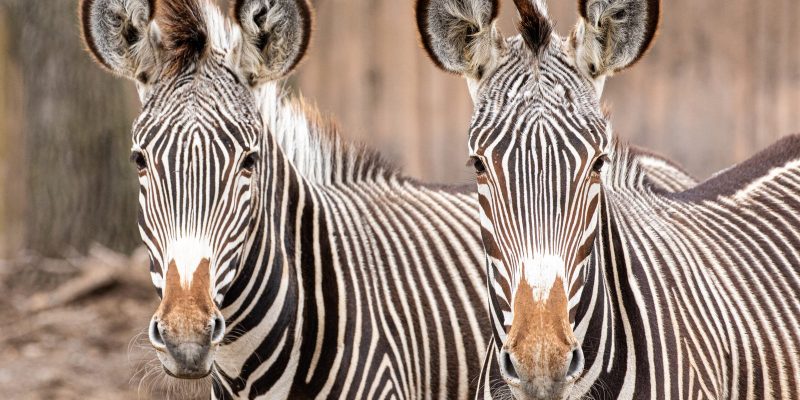
Honey and Louise, the two Grevy’s zebras at the Sedgwick County Zoo in Wichita, are leaving for another accredited zoo before the end of October, and the zoo asked its visitors on October 1 to come and say goodbye first. When they go, Sedgwick County will no longer hold the species at all.
That is the part worth reading twice. This is not an animal swap. The half-sisters are moving on a breeding recommendation from the Association of Zoos and Aquariums Species Survival Plan, the program that treats every animal of a species across accredited North American facilities as one managed population and decides which individuals should be paired with which, and where. A recommendation of that kind is not a suggestion a zoo weighs against its own exhibit plans. It is how the gene pool stays wide enough to be worth having.
Six years in Wichita
The two arrived on Halloween weekend in 2020 from Zoo Miami, where they were born three days apart to different mothers. Both are now seven. Keepers tell them apart by the brown markings above the nostrils: Honey’s is a fairly symmetrical M, while Louise’s rises higher and runs thinner on her left side.
They have shared a mixed-species yard with blue cranes and marabou storks, and that yard is not going empty. The zoo says it plans to bring in a different mammal species better suited to sharing the space, with details to follow.
Is the zoo done with Grevy’s zebra conservation?
No, and it said so in the same breath. Sedgwick County will continue to support the Grevy’s Zebra Trust as a conservation partner even with no zebras on the grounds. That distinction is becoming more common: funding field work and holding the animal are two different commitments, and a zoo can keep the first after giving up the second.
Grevy’s zebra is the most endangered of the three living zebra species, and it is worth being exact about the scale. The zoo gives a wild population of around 3,000. Kenya, which holds the large majority of them, counted fewer than that by itself. The country’s second national wildlife census, published by its Ministry of Tourism and Wildlife with the Wildlife Research and Training Institute and the Kenya Wildlife Service, recorded 2,465 Grevy’s zebra nationally, down from 2,649 in the previous count. The same report estimates that northern Kenya alone holds about 90 percent of the world population.
The two figures are not measuring the same thing, a global round number against a national count, and the Red List assessment the census itself cites dates from 2016. But the census is four years newer than the round number and somebody went and counted, so that is the number we will use. It does not change the point the zoo was making. There are not many of these animals, and the ones in accredited care are managed as a single population for that reason.
Which is what Honey and Louise are about to become part of somewhere else. The zoo has not said where. Until they load, they are still in the yard with the cranes, and the foals that come of moves like this one are the reason they are going.
Quick answers
- Why are the zebras leaving Sedgwick County Zoo?
They are moving on a breeding recommendation from the Association of Zoos and Aquariums Species Survival Plan, which manages every animal of a species across accredited North American facilities as one population and decides which individuals should be paired and where.
- Where are Honey and Louise going?
To another AZA-accredited zoo. Sedgwick County Zoo has not said which one.
- Will Sedgwick County Zoo keep any Grevy zebras?
No. The zoo said it will no longer hold the species once the two leave, though it will continue to support the Grevy’s Zebra Trust as a conservation partner.
- How do you tell Honey and Louise apart?
By the brown marking above the nostrils. Honey’s is a fairly symmetrical M shape, while Louise’s rises higher and runs thinner on her left side.
- How many Grevy zebras are left in the wild?
Kenya holds the large majority of them. Its second national wildlife census, published by the Ministry of Tourism and Wildlife with the Wildlife Research and Training Institute and the Kenya Wildlife Service, recorded 2,465 nationally, down from 2,649 in the previous count, and estimates that northern Kenya alone holds about 90 percent of the world population. The zoo gives a round figure of about 3,000.
- What happens to their habitat?
The mixed-species yard also holds blue cranes and marabou storks and is not going empty. The zoo says it plans to bring in a different mammal species better suited to sharing the space.