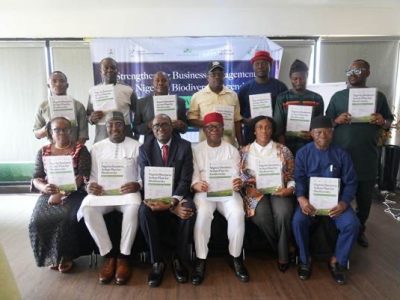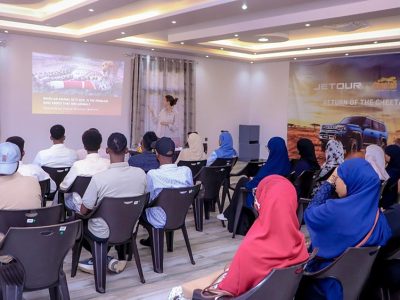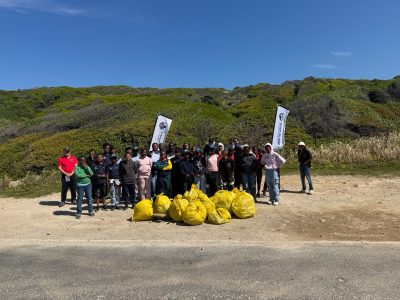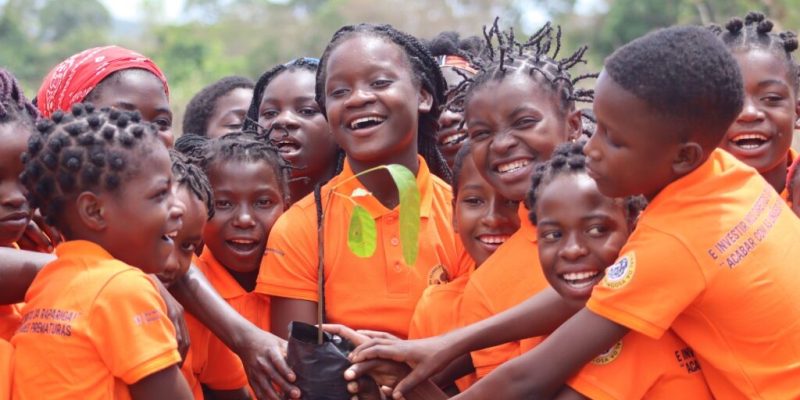
On 11 October 2026 Gorongosa National Park marked the International Day of the Girl in Vunduzi, an administrative post in Gorongosa District in central Mozambique, and used the occasion to mark something of its own: the park’s Girls’ Clubs have been running for ten years.
The program now reaches more than 2,000 girls through 100 clubs across six districts, Gorongosa, Nhamatanda, Dondo, Muanza, Marínguè and Cheringoma, all of them inside the park’s Sustainable Development Zone. It began in 2016 with a narrow aim: keep girls in school.
Why is a national park running girls’ clubs?
Because Gorongosa’s restoration model treats the people living around the park as part of the park’s future rather than as a problem next to it, and because the numbers on girls’ education in rural Mozambique are what they are. The park’s own program page, citing USAID figures from 2019, says 94 percent of Mozambican girls enroll in primary school and only 11 percent go on to secondary. It cites UNICEF for the finding that 66 percent of students finish primary school without adequate reading, writing and math. It puts the share of girls who marry before 18 at 30 to 40 percent.
Mozambique made marriage under the age of 18 illegal in 2019. Whether that law changes anything in a particular village depends on families and on community leaders, which is why the park’s account of the Vunduzi celebration makes a point of saying who was in the room: girls, community leaders and local government representatives, under the theme “End Child Marriage and Invest in Girls’ Rights.”
What does a club actually do?
Members meet on weekdays to study. The program supplies school materials and uniforms, which removes two of the ordinary reasons a family stops sending a daughter. Mentors, called madrinhas locally, work alongside youth leaders on career counseling, health education and awareness work on child marriage and gender-based violence. Girls take excursions to see what jobs exist. Eligible members and mentors can receive scholarships for secondary school or technical training.
Gorongosa builds the rooms the clubs meet in, cement-brick activity rooms furnished for the purpose, and its program page says eight have been built so far against a plan for 92 more. The park has set itself a target of helping 20,000 girls complete secondary school by 2035.
The Vunduzi event itself was traditional dances, theater, poetry, a football match against a team from Gondola, which Gorongosa won, and a tree planting, which the park frames as tying the girls’ own prospects to the land around them.
Which zoo is paying for this?
Zoo Boise. Gorongosa lists the Zoo Boise Conservation Fund by name on its published partners and donors page, and the fund is paid for out of admission to a city zoo in Idaho rather than out of a foundation grant.
The size of it is unusual for a zoo conservation fund. In December 2021 the City of Boise published Zoo Boise’s grant accounting for that year: of $296,500 granted, $200,000 went to Gorongosa National Park. That is two thirds of the zoo’s conservation giving in a single year going to one park. The same release notes that visits to Zoo Boise had by then generated more than $3 million for conservation since the fund began in 2007.
We have covered where the rest of that money goes. Our piece on the fund passing $4 million lists the full partner roster, and it names the Gorongosa Girls Clubs among the programs the fund supports directly rather than as part of a general park contribution.
One correction to our own file, since it is the kind of thing that matters more than it looks. That earlier piece describes the Girls Clubs as supported by Zoo Boise since 2008. Gorongosa’s own program page and its October 2026 release both date the clubs to 2016. Zoo Boise’s relationship with the park is the older of the two; the clubs are not.
What else is in the list, and what is not?
Gorongosa’s partner page is long, and most of it is governmental and academic: the Government of Mozambique, the Howard Hughes Medical Institute, the governments of the United States and Portugal, UK Aid Direct, Global Affairs Canada, Kruger National Park, and a Mozambican business club of two dozen companies. Among universities and museums it lists Boise State University, Harvard, the Field Museum of Natural History in Chicago and others.
Zoo Boise Conservation Fund is the only accredited zoological institution on that page. We looked for other zoo or aquarium funders behind the Girls’ Clubs and did not find any, and that is the finding rather than a gap in it.
The figures above come from Gorongosa’s own account of the Vunduzi celebration, published 13 October 2026, and from its Girls Clubs program page. Those two do not fully agree: the program page still says 50 clubs serving 2,000 girls, while the October release says 100 clubs and more than 2,000. We have used the newer number and noted the older one, because a program page that has not been updated is a common thing and not a contradiction worth more than a sentence.
Quick answers
- What are the Gorongosa Girls' Clubs?
A program run by Gorongosa National Park in central Mozambique to keep girls in school. Members meet on weekdays to study and are supplied with school materials and uniforms. Mentors, called madrinhas locally, work with youth leaders on career counseling, health education and awareness work on child marriage and gender-based violence.
- How big is the program now?
The park’s October 2026 release puts it at more than 2,000 girls in 100 clubs across six districts: Gorongosa, Nhamatanda, Dondo, Muanza, Marínguè and Cheringoma. The program’s own page still says 50 clubs, which appears to be out of date.
- When did the clubs start?
In 2016. The park marked the tenth anniversary at its International Day of the Girl celebration in Vunduzi on 11 October 2026.
- Why does a national park run a schools program?
Gorongosa’s restoration model treats the communities in the park’s Sustainable Development Zone as part of the park’s future. The park cites USAID 2019 figures that 94 percent of Mozambican girls enroll in primary school and 11 percent continue to secondary, and puts the share who marry before 18 at 30 to 40 percent.
- Which zoo pays for it?
Zoo Boise. Gorongosa lists the Zoo Boise Conservation Fund by name on its published partners and donors page, and it is the only accredited zoological institution there. The fund is paid for out of admission to the city zoo in Boise, Idaho.
- How much does Zoo Boise give?
The City of Boise published the zoo’s 2021 grant accounting: of $296,500 granted that year, $200,000 went to Gorongosa National Park. The same release notes that visits to Zoo Boise had generated more than $3 million for conservation since the fund began in 2007.
- What is the program aiming for?
Helping 20,000 girls complete secondary school by 2035. The park has built and furnished eight cement-brick activity rooms for the clubs so far and has plans for a further 92.