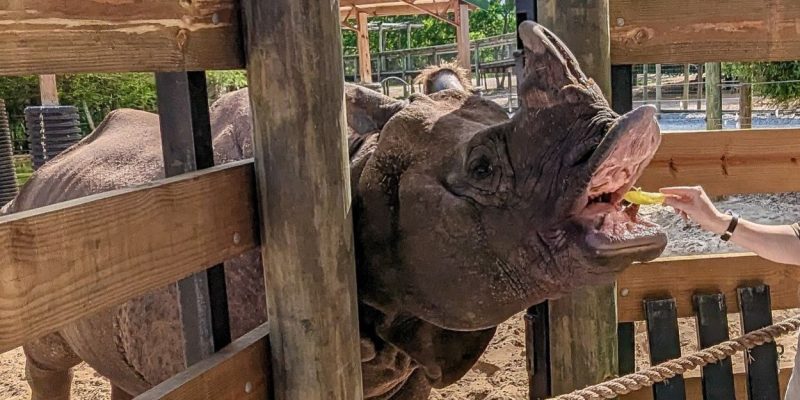
Gulf Breeze Zoo put a greater one-horned rhino on its daily schedule. From May 5, 2023, ten people at a time could book twenty minutes beside Soman, the Florida zoo’s male Indian rhino, with one of his keepers doing the talking.
The zoo launched it on Cinco de Mayo and called it Cinco de Rhino, which tells you the register. The structure underneath the joke is the part worth reporting: a hard cap of ten participants, a minimum age of eight, children between eight and twelve accompanied by an adult, 3 p.m. daily when the weather allows, and $40 a person at launch. Reservations online, not at the gate.
What twenty minutes actually buys
Not a ride and not a hand on the animal. Participants stand alongside Soman’s habitat with a keeper, hear how the zoo manages a rhino day to day, get close enough to look properly at him, and take a photograph.
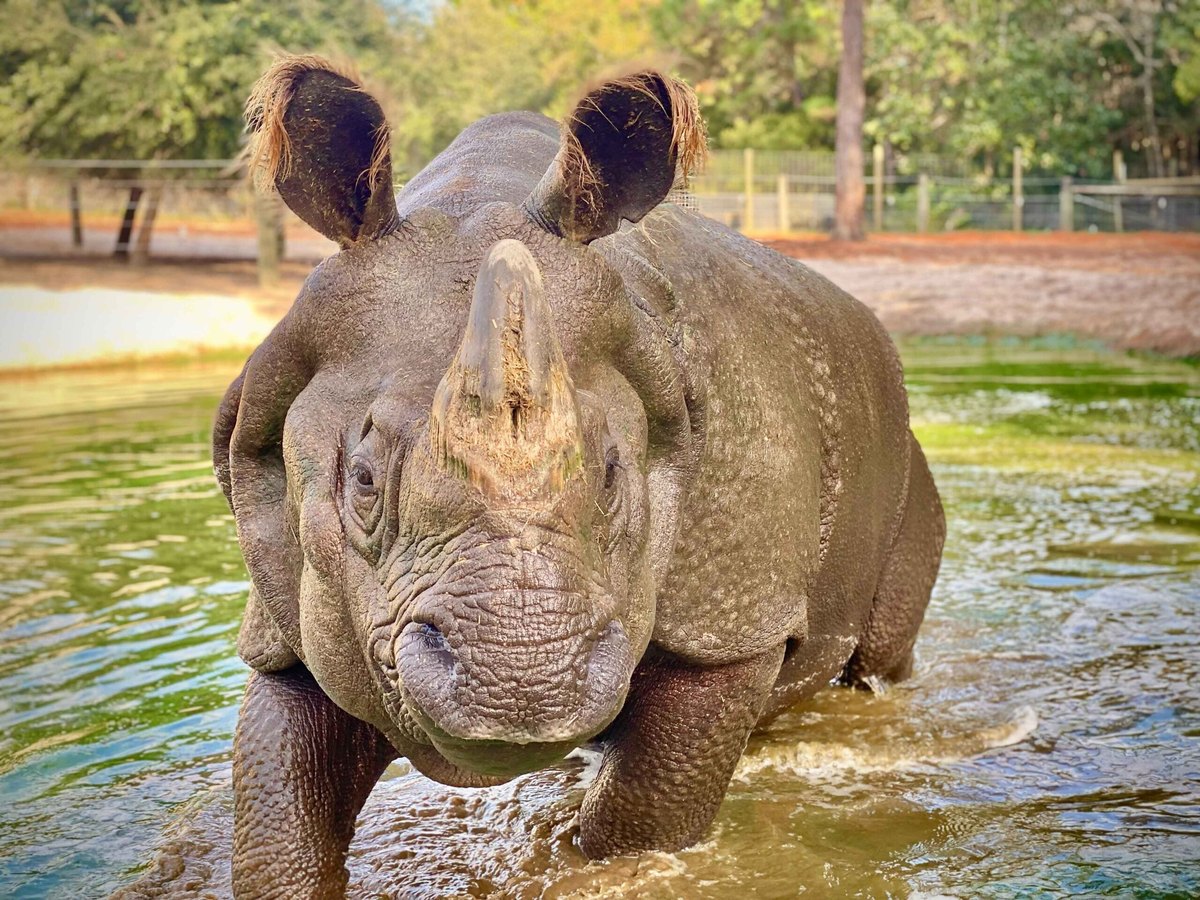
Close enough to look properly is the whole offer, and with this species it is a better offer than it sounds. A greater one-horned rhino is the one that looks armor-plated, and the armor is not a metaphor the marketing department reached for. The hide gathers into thick slabs divided by deep folds at the shoulder and the hindquarters, so the animal appears to be wearing overlapping sections of plate that shift as it walks, and the skin is studded with round bumps that read like rivets. From a photograph it looks like a design decision. From ten feet away it looks like an animal.
The one horn is the clue to the rest
The name does the taxonomy for you. Africa’s white and black rhinos carry two horns, one behind the other. The three Asian species carry one, or in the Sumatran rhino’s case a second that is barely there, and the greater one-horned is the big one of that group. Soman had recently turned eighteen when the encounter opened.
The species is listed as Vulnerable, and it got there from a worse place. The population fell below 200 animals in the last century and now runs at roughly 4,000 in the wild, which makes it one of the few rhino recoveries anybody can point at. Poaching remains the pressure, for a horn that is made of keratin and worth nothing to anyone who has ever cut their fingernails.
Gulf Breeze Zoo keeps rhinos of two species and has bred them: in 2025 the collection produced its first second-generation rhino calf. The zoo is privately owned, takes no state or federal tax support, and says the money from admissions and animal encounters goes back into its conservation programs. At the time it was one of four parks run by Zoofari Parks alongside the Virginia Safari Park, the Alabama Safari Park and the Texas Zoofari Park.
Twenty minutes and a keeper is a modest piece of programming. It is also, for most of the ten people who book it, the closest they will ever stand to a rhinoceros, and the first time anyone has explained one to them.
Sources: Gulf Breeze Zoo, announcement of May 5, 2023; Navarre Press, May 4, 2023.
Quick answers
- What is the Gulf Breeze Zoo rhino encounter?
A roughly twenty-minute session alongside the habitat of Soman, the zoo’s male greater one-horned rhino, led by one of his keepers. Participants hear how the zoo manages a rhino day to day, get a close look at him and take a photograph. There is no riding and no touching the animal.
- What were the booking terms when it opened?
A maximum of ten participants, daily at 3 p.m. when the weather allowed, a minimum age of eight, children aged eight to twelve accompanied by an adult, and $40 per person at launch. Reservations were taken online rather than at the gate.
- Who is Soman?
A male greater one-horned rhinoceros, also called an Indian rhino, at Gulf Breeze Zoo in Florida. He had recently turned eighteen when the encounter opened in May 2023.
- Why is a greater one-horned rhino described as armor-plated?
Its hide gathers into thick slabs divided by deep folds at the shoulder and the hindquarters, so the animal looks like it is wearing overlapping sections of plate that shift as it walks, and the skin is studded with round bumps that read like rivets.
- How many greater one-horned rhinos are there?
Roughly 4,000 in the wild. The species is listed as Vulnerable, and the population fell below 200 animals in the last century, which makes it one of the few rhino recoveries anybody can point at. Poaching remains the pressure.
- How is it different from an African rhino?
The horn count. Africa’s white and black rhinos carry two horns, one behind the other. The three Asian species carry one, apart from the Sumatran rhino’s barely-there second, and the greater one-horned is the largest of that group.