
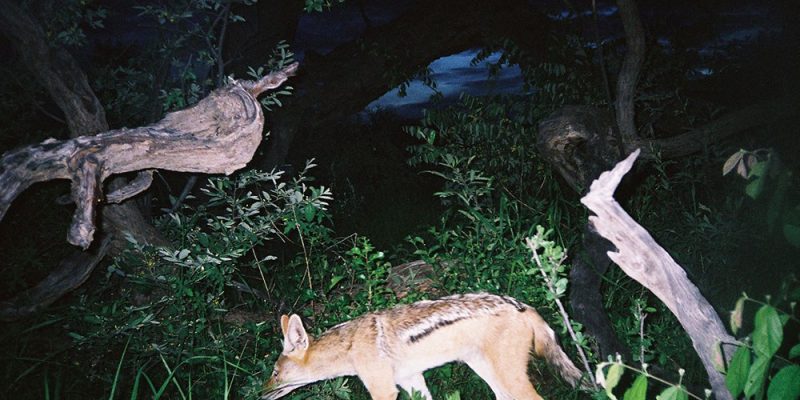
Farmers in the Okakarara District Communal Area of central-eastern Namibia blame black-backed jackals for as much as 73 percent of the sheep and goats they lose. A new diet study led by Cheetah Conservation Fund researchers went and looked at what the jackals had actually eaten, and the answer is mostly wild antelope.
Wild ungulates contributed 48.8 percent of the biomass in the jackal diet. Sheep and goats contributed 15.9 percent.
What the study did
The work is published in Wildlife Research, volume 53, issue 7, under the title “Mesocarnivore diet in a human-dominated landscape with abundant livestock and low large carnivore occurrence.” The authors are Emma Munyandi, Bogdan Cristescu, Stijn Verschueren, Meed Mbidzo, Nadja le Roux, Laurie Marker and Anne Schmidt-Kuntzel, and it is adapted from Munyandi’s master’s thesis. She worked at CCF from 2019 to 2023.
The sample is 86 genetically confirmed jackal scats, collected between 2019 and 2022 across four communal conservancies. Mesocarnivore is the term of art in the title and it is worth a sentence: it means a middle-sized meat eater, the tier between the big cats and the truly small predators, and the whole argument of the paper turns on what animals in that tier eat when nobody is watching.
A fifth of the samples were the wrong animal
The finding inside the finding is about method. Telling one carnivore’s droppings from another’s in the field is genuinely hard, and this study measured how hard. Nearly 19 percent of the samples field-identified as jackal turned out, under genetic testing, to be some other species. About 28 percent of the samples that genetics confirmed as jackal had originally been written down as something else.
Both error rates point the same way. Without the laboratory step, roughly a fifth of this dataset would have been another animal’s dinner attributed to a jackal, and a comparable number of real jackal meals would have been thrown away.
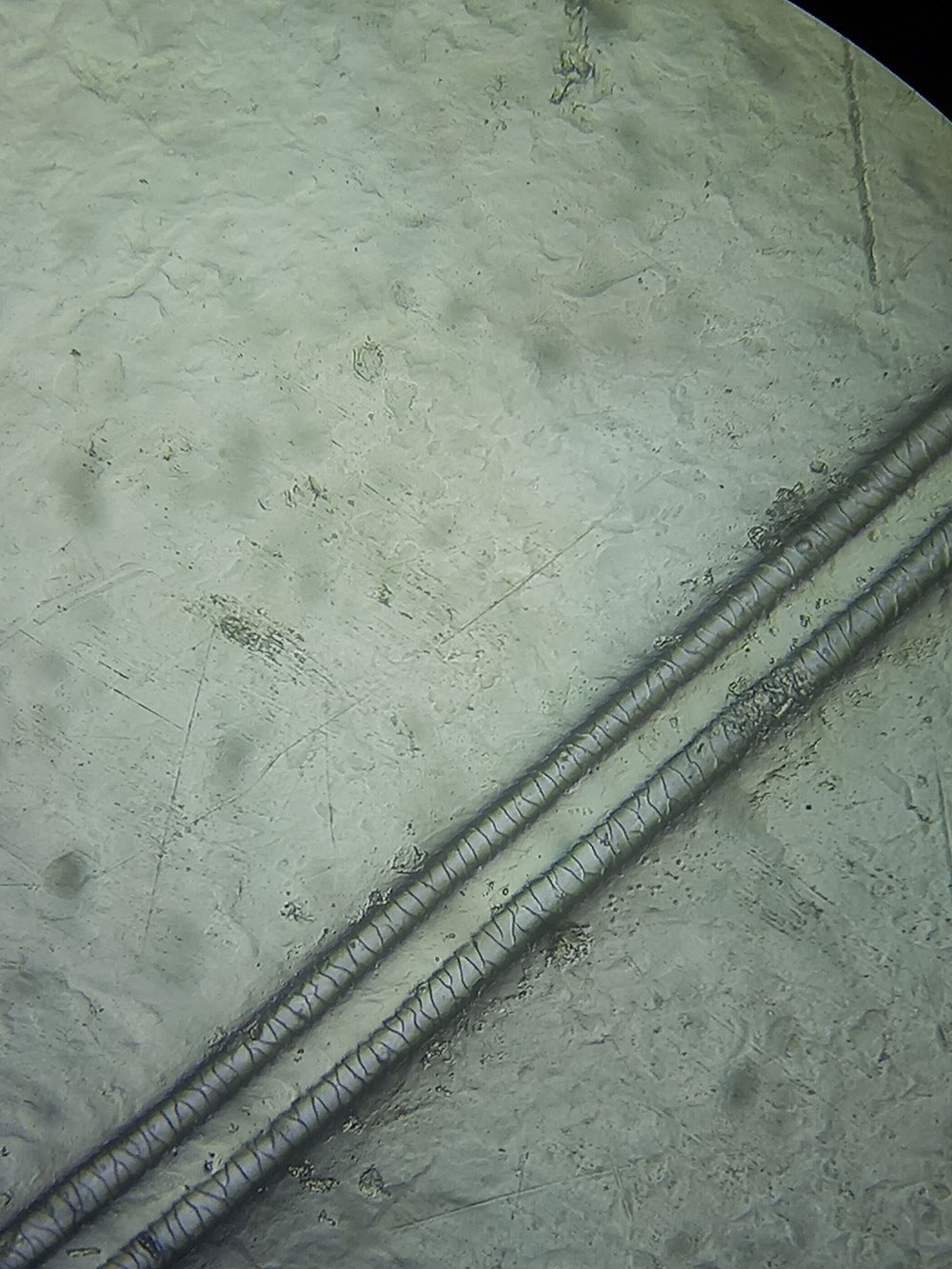
Once species identity was settled, the team read the prey out of the hair. Every mammal’s hair carries a cuticular scale pattern, the microscopic shingling on the outside of the shaft, and the pattern differs between species closely enough to identify what the animal ate under a microscope.
Twenty food items
The jackals turned out to be comprehensively omnivorous. Twenty distinct food items appeared across the samples:
- Wild ungulates, chiefly duiker, steenbok, kudu and warthog, at 48.8 percent of biomass. Kudu and warthog showed up more often than their numbers on the landscape would predict, most likely scavenged rather than hunted.
- Grewia flava berries in more than two thirds of samples, a dry-season staple.
- Small mammals, mostly rodents, at roughly 9 percent of biomass and among the most frequently occurring items at 10.5 percent.
- Beetles, at 10.4 percent frequency, among the most frequently consumed items of all.
- Sheep and goats at 15.9 percent of biomass.
- Birds, lizards and invertebrates together under 5 percent.
The published abstract adds a point the summary version leaves out: on intensity-of-use estimates, smallstock appeared to be actively avoided, given how widely available they were. The jackals were not simply failing to catch sheep. They were walking past them.
The wild dogs that were not there
The study also tested whether African wild dogs were doing jackals a favor by leaving kills behind. The team compared scat collected within 10 kilometers of known wild dog denning areas against scat collected farther out, and found no difference at all.
That null result is the paper’s bleakest line, and the authors treat it as one. The wild dog population in this landscape is small and heavily persecuted, and the simplest reading is that it is no longer dense enough to function as a top predator in the system. The African wild dog, Lycaon pictus, is assessed as Endangered on the IUCN Red List. The black-backed jackal is Least Concern, which is part of why nobody had bothered to check its diet here before.
Which zoos pay for this
The paper carries no funder in its deposited record, and CCF’s write-up names no backer for this particular study. What CCF does publish is a current list of the institutions in its Conservation Circle, and it is thick with zoos.
Read this morning, the AZA-accredited institutions on it include the Columbus Zoo and Aquarium, the Dallas Zoo, the Indianapolis Zoo and the Little Rock Zoo, and they are four of roughly twenty zoological institutions on a single page. The list is published in full and is worth a look, because that density of zoo support behind one field organization is unusual, and it is the reason CCF can run a genetics laboratory in Otjiwarongo at all.
The honest limit: those institutions fund the organization, not this paper. We are telling you who pays for the laboratory, not who paid for the scat. The Association of Zoos and Aquariums reports that in 2025 its 235 accredited and certified facilities spent approximately $372.4 million on conservation across 139 countries; no published breakdown isolates the African share, and we will not estimate one.
Why it matters past the jackals
CCF’s own framing is that this connects to cheetahs, and the logic holds. If jackals prefer wild prey and take livestock mainly when wild prey thins out, then rebuilding antelope numbers reduces livestock losses and feeds the recovery of the larger carnivores at the same time. Cheetahs, assessed as Vulnerable, eat many of the same species.
The practical recommendations are unglamorous and cheap: kraaling, livestock guarding and calving management, concentrated in the dry season when young smallstock are most abundant and jackals are raising pups.
We covered the same laboratory’s cheetah paternity work two days ago. It is the same building, the same four conservancies and, in this case, the same answer: the genetics is what turns field observation into something you can argue with.
Sources: Munyandi et al., “Mesocarnivore diet in a human-dominated landscape with abundant livestock and low large carnivore occurrence,” Wildlife Research 53(7), published July 15, 2026, doi:10.1071/WR26008, abstract and author list read from the publisher’s deposited Crossref record; and the Cheetah Conservation Fund’s own account of the study, published October 2, 2026. IUCN categories from the Red List assessments for Lycaon pictus, Acinonyx jubatus and Canis mesomelas.
Quick answers
- What did the study find?
That black-backed jackals in four communal conservancies of central-eastern Namibia eat mostly wild antelope. Wild ungulates made up 48.8 percent of the biomass in the diet and sheep and goats 15.9 percent, in a district where farmers attribute up to 73 percent of their smallstock losses to jackals.
- How was the diet measured?
From 86 genetically confirmed jackal scats collected between 2019 and 2022. Once the species of the depositor was settled by genetics, prey was identified by hair reading: every mammal's hair carries a cuticular scale pattern on the outside of the shaft, and the pattern is species-specific enough to read under a microscope.
- Why does the genetic step matter?
Because field identification of carnivore scat is unreliable and this study put a number on it. Nearly 19 percent of samples field-identified as jackal were another species, and about 28 percent of the genetically confirmed jackal samples had been written down as something else. Without the laboratory step, roughly a fifth of the dataset would have been the wrong animal's dinner.
- What else is in a jackal's diet?
Twenty distinct food items. Grewia flava berries appeared in more than two thirds of samples as a dry-season staple. Beetles were among the most frequently consumed items at 10.4 percent frequency and small mammals at 10.5 percent, contributing about 9 percent of biomass. Birds, lizards and invertebrates together came to under 5 percent of biomass.
- What happened with the African wild dogs?
Nothing, and that is the finding. The team expected wild dog kills might give jackals extra scavenging, so they compared scat collected within 10 kilometers of known denning areas against scat from farther out. There was no difference. The authors read that as a sign the small, heavily persecuted local wild dog population is no longer dense enough to act as a top predator. Lycaon pictus is Endangered on the IUCN Red List.
- Which zoos pay for this work?
Not this paper specifically: it carries no funder in its deposited record and CCF names no backer for the study. CCF's published Conservation Circle list, read on October 3, 2026, names roughly twenty zoological institutions, including the Columbus Zoo and Aquarium, the Dallas Zoo, the Indianapolis Zoo and the Little Rock Zoo. They fund the organization, which is how the genetics laboratory in Otjiwarongo exists at all.