
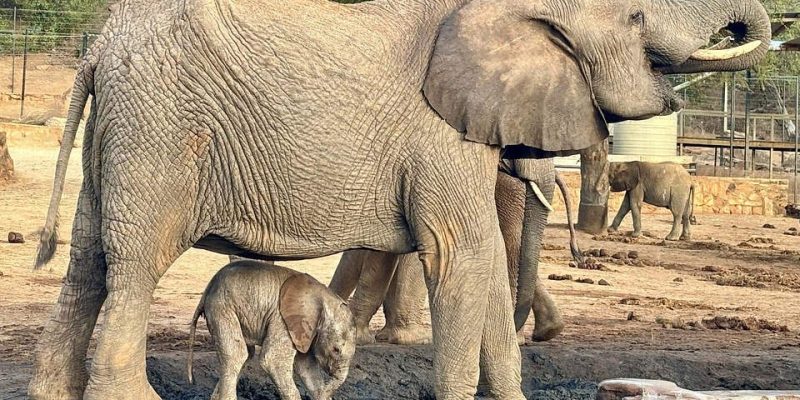
At dawn on October 2, a wild elephant walked out of Tsavo East and into the Ithumba stockades with a newborn daughter at her heel. The mother’s name is Chaimu, and the Sheldrick Wildlife Trust has known her for seventeen years, because she arrived there in 2009 as an orphan who could barely see.
The calf has been named Comet. She is the 95th known grandcalf of the Trust’s Orphans’ Project: a wild-born animal whose mother was herself rescued, hand-raised and returned to the wild.
What a grandcalf actually counts
The word is the Trust’s own, and it is doing precise work. A grandcalf is not an elephant the project raised. It is an elephant born in the wild, to a wild-living mother, who happens to be a former orphan. Nobody fed Comet a bottle and nobody will. The only reason the Trust knows she exists is that her mother chose to walk back to the place where she grew up and show her off.
That number, 95, is the measurement that matters most for an orphan-rearing program, and it is the one that takes longest to produce. A rescue can be counted the day it happens. A reintegration takes years. A second generation takes most of two decades.
Seventeen years
Chaimu was first spotted by rangers in the Chyulu Hills and evaded them. She turned up again outside a lodge 22 kilometers away, where the tourists who saw her included the actor Kristin Davis, who has supported the Trust ever since. How an infant elephant covered that ground alone is not known.
She was rescued on June 4, 2009, at about eleven months old. The Trust’s account of her arrival is unsparing: frightened of people, passing blood, blind in one eye and with the other clouding over. Working with an eye specialist, the keepers got her sight back. She graduated to the Ithumba Reintegration Unit, which is the halfway house in this system, a stockade in the middle of Tsavo East where ex-orphans come and go on their own schedule until they stop coming.
In September 2024 she had her first calf, a son named Chapa, born just outside those stockades. Before Christmas she reappeared without him, after an absence of more than a month, and the Trust says plainly that it does not know what happened. It also records that she showed no sign of distress, which is its own small observation about what elephants process, and when.
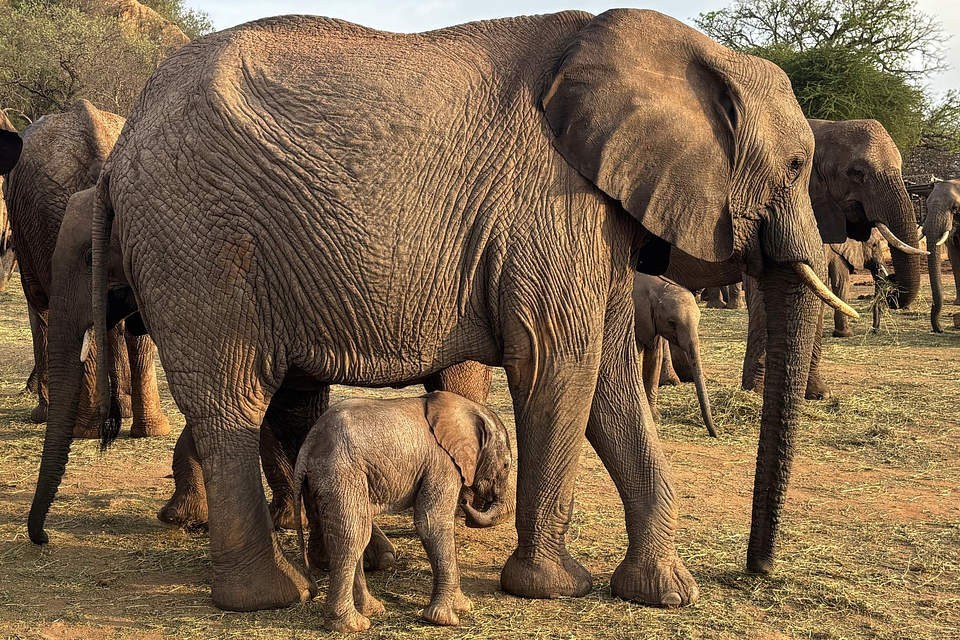
Comet has arrived in a good year. Ithumba took unseasonably early rain, the country is green, and two of Chaimu’s long-standing companions, Tumaren and Mutara, are in the area. An ex-orphan raising a calf inside a loose herd of other ex-orphans is the whole design of the thing working as intended.
Which zoo paid for this
None that we can find, and we looked properly.
The Sheldrick Wildlife Trust’s published partners list, read this morning, names the Kenya Wildlife Service, the Kenya Forest Service, the Kenya Agricultural and Livestock Research Organisation, the Agricultural Development Corporation, Big Life Foundation, the Mara Conservancy, the Mara Elephant Project, the Mount Kenya Trust, the Lamu Conservation Trust, Galana Wildlife Conservancy, Wildlife Works, Eden Reforestation Projects, the Serengeti Foundation, and three European conservation societies: Aktionsgemeinschaft Artenschutz, Rettet die Elefanten Afrikas and Vrienden van de Olifant. Not one zoo, aquarium or zoological society appears anywhere on it.
That is a finding rather than a gap. The Association of Zoos and Aquariums reports that in 2025 its 235 accredited and certified facilities spent approximately $372.4 million on conservation across 139 countries, and a great deal of African field work runs on exactly that money. This program does not. It runs on adoptions, individual donors and the Trust’s own partnerships, and saying so is more useful than inventing a connection.
There is also a real disagreement here, and it would be dishonest to route around it. The Trust has published an affidavit by its late founder, Dr. Dame Daphne Sheldrick, arguing against the capture of infant elephants for export to captive facilities, on the grounds of what she observed about separation trauma in the calves she raised. A reader who follows both this site and this organization should know the position exists, and that it is argued from the same decades of hand-rearing that produced Chaimu.
One category, gently
The Trust assigns Comet’s species no conservation status at all, which is the commoner and more forgivable failure. For the record: since the 2021 split there is no single African elephant on the IUCN Red List. The African savanna elephant, Loxodonta africana, is assessed as Endangered, and the African forest elephant, Loxodonta cyclotis, as Critically Endangered. Tsavo’s elephants are savanna elephants, so Endangered is the category that applies to Comet.
We have written before about the Voi orphans four years after the drought that created them, and about African wild dogs returning to northern Tsavo. Ithumba keeps turning up in both, which is not a coincidence: it is where the long-run numbers come from.
Source: the Sheldrick Wildlife Trust’s “Precious Comet, A Baby Girl for Chaimu”, published October 2, 2026, together with the Trust’s partners page and its published affidavit on the capture of infant elephants in Zimbabwe. IUCN categories from the Red List assessments for Loxodonta africana and Loxodonta cyclotis.
Quick answers
- What is a grandcalf?
The Sheldrick Wildlife Trust's word for a wild-born elephant whose mother was itself an orphan the Trust rescued, hand-raised and reintegrated into the wild. Nobody raises a grandcalf. It is born wild to a wild-living mother, and the Trust only knows it exists because ex-orphans keep visiting the stockades they grew up around. Comet is the 95th the project knows of.
- Who is Chaimu?
An orphaned elephant rescued on June 4, 2009, at about eleven months old. Rangers first saw her in the Chyulu Hills and she evaded them, then turned up outside a lodge 22 kilometers away. She arrived at the Nairobi Nursery frightened of people, passing blood, blind in one eye and with the other clouding over. Work with an eye specialist restored her sight.
- Has she had a calf before?
Yes. A son named Chapa, born just outside the Ithumba stockades in September 2024. She reappeared without him before Christmas after an absence of more than a month, and the Trust says plainly that it does not know what happened to him.
- Where is Ithumba?
In Tsavo East National Park, Kenya. It is one of the Trust's reintegration units, which is the stage between the Nairobi Nursery and a fully wild life: a stockade and water point that ex-orphans use on their own terms, visiting less and less often as they join wild herds. Chaimu has been using it for years.
- How threatened are Tsavo's elephants?
Since the IUCN split the African elephant into two species in 2021 there is no single category covering both. The African savanna elephant, Loxodonta africana, is assessed as Endangered and the African forest elephant, Loxodonta cyclotis, as Critically Endangered. Tsavo's elephants are savanna elephants, so Endangered is the category that applies to Comet.
- Which zoo funds the Sheldrick Wildlife Trust?
None that we could verify. The Trust's published partners page names sixteen organizations, among them the Kenya Wildlife Service, the Kenya Forest Service, Big Life Foundation, the Mara Elephant Project and three European conservation societies, and not one zoo, aquarium or zoological society appears on it. The Trust has also published an affidavit by its founder opposing the capture of infant elephants for captive facilities, which is a real disagreement rather than an absence of contact.