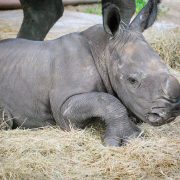

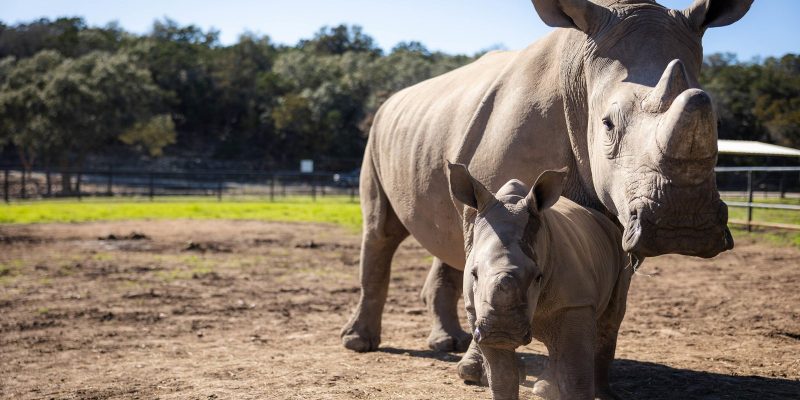
A southern white rhinoceros calf was born on a drive-through safari ranch outside San Antonio on November 17, 2023. She weighed about 125 pounds, she was named Truda, and she was the first rhino ever born at Natural Bridge Wildlife Ranch. By the ranch’s count, fewer than 30 of some 300 accredited zoological facilities in the United States have bred a southern white rhino at all.
The ranch had been working toward it for more than twenty years.
Why so few facilities breed this animal
The southern white rhino is not a rare animal in the sense that it is hard to find. There are roughly 16,800 in the wild by the ranch’s count, across eleven African countries, with the largest populations in South Africa, including Kruger National Park and Hluhluwe-iMfolozi Park as well as state-protected areas and private reserves.
It is a hard animal to breed. Managed breeding programs for rhinos exist in numbers, and most of them do not produce calves.
“Rhino numbers have been declining in the wild in the last decade at an alarming rate and while intensive and extensively kept rhino breeding programs exist, most of them fail due to behavioral capabilities and low infertility. The birth of Truda at Natural Bridge Wildlife Ranch is significant for conservation efforts, as it not only increases the population of rhinos but hopefully one day will help in addressing the demographic imbalances in their home ranges.” Dr. Stephen Momberg, wildlife veterinarian, quoted in the ranch’s announcement
Momberg is based in Mid Wales in the United Kingdom and studies rhino habitat in his native South Africa. He has since taken a role with Save the Giraffes, the Texas nonprofit founded by the team behind Natural Bridge Wildlife Ranch, which is worth stating alongside the quote.
Truda is the first offspring of a female named Helga and a male named Kutu. The ranch had built its reputation on a different animal entirely: a reticulated giraffe breeding program that produced twins in 2013, which almost never happens in that species.
“Truda’s birth is a first for the ranch, and it was simply amazing to witness due to the species peril in the wild. It’s an incredible honor to contribute to the southern white rhinoceros conservation efforts worldwide. We have been working towards this for over 20 years.” Tiffany Soechting, Animal Husbandry Director, Natural Bridge Wildlife Ranch
The number that makes the poaching figure land
In the early 1900s there were fewer than 100 southern white rhinos alive. Everything above that line is the product of a century of deliberate work, which is the strongest single argument in the species’ file: the southern white rhino is the one rhino that has already been brought back from the edge once.
Then it started going the other way. From 2012 the population fell by around 25 percent under poaching pressure, despite ranger patrols and private facilities spending millions on protection. A rhino is killed every eight hours in South Africa.
The ranch is a zoo partner of the International Rhino Foundation, which supports all five rhino species, the three Asian species along with the black and white rhinos in Africa.
“We’re thrilled to learn of Truda’s birth. With all five rhino species imperiled, every rhino birth is important and conservation breeding programs like that at Natural Bridge Wildlife Ranch complement the hard work being conducted to conserve them in the wild.” Nina Fascione, Executive Director, International Rhino Foundation
What does the IUCN actually say about white rhinos?
The ranch’s announcement describes the southern white rhino as near threatened, and that matches the assessment. The IUCN Red List, version 2026-1, lists the white rhinoceros, Ceratotherium simum, as Near Threatened with a decreasing population.
The population figure needs one clarification, because the two numbers in circulation count different things. The Red List records 10,080 mature individuals. The ranch’s roughly 16,800 is a total population count including animals too young to breed, and it comes from more recent field counts than the assessment, which was published in 2020. Both can be accurate. Where we cite a single number we use the assessment, and it is worth knowing that the smaller figure is the one describing breeding animals.
Soechting put the reason for the work in the plainest available terms, and it is a comparison with the other subspecies rather than a slogan.
“We are committed to NEVER seeing the southern white population dwindle like the northern whites. There are only two surviving females of that sub-species.” Tiffany Soechting
What happened next
The program did it again. On September 2, 2024, less than ten months after Truda, a male calf named Rudy was born at the ranch to a female named Gertie and the same sire, Kutu. Announcing him that November, Soechting called him “a symbol of hope for the preservation of white rhinos,” and noted that Truda was by then turning one.
Two calves inside a year, from two different females, is the point at which a first birth stops being luck and starts being a program. The wider American picture is of institutions moving rhinos around to build exactly that: the Sedgwick County Zoo in Wichita, to take a 2026 example, brought in an eastern black rhino named Dalia from Cleveland. Placing the right animals together is most of the work, and at Natural Bridge it took two decades to come off.
Sources: Natural Bridge Wildlife Ranch, Natural Bridge Wildlife Ranch welcomes rare, first birth of southern white rhinoceros, January 3, 2024, and Natural Bridge Wildlife Ranch’s southern white rhino breeding program spawns second birth within one year, November 26, 2024. Red List category and population from the IUCN Red List of Threatened Species, version 2026-1.
Quick answers
- What was the first rhino born at Natural Bridge Wildlife Ranch?
A female southern white rhinoceros calf named Truda, born November 17, 2023, weighing about 125 pounds. Her parents are a female named Helga and a male named Kutu. The ranch had worked toward a rhino birth for more than twenty years.
- Has the ranch bred another rhino since?
Yes. A male calf named Rudy was born on September 2, 2024, to a female named Gertie and the same sire, Kutu. That is two calves from two different females inside ten months.
- How threatened is the southern white rhino?
The IUCN Red List assesses the white rhinoceros as Near Threatened with a decreasing population, and records 10,080 mature individuals. The ranch cites roughly 16,800 in the wild, which is a total count including animals too young to breed.
- How many US facilities have bred southern white rhinos?
Fewer than 30 of some 300 accredited zoological facilities in the United States, by the ranch's own count. Most managed rhino breeding programs do not produce calves.