
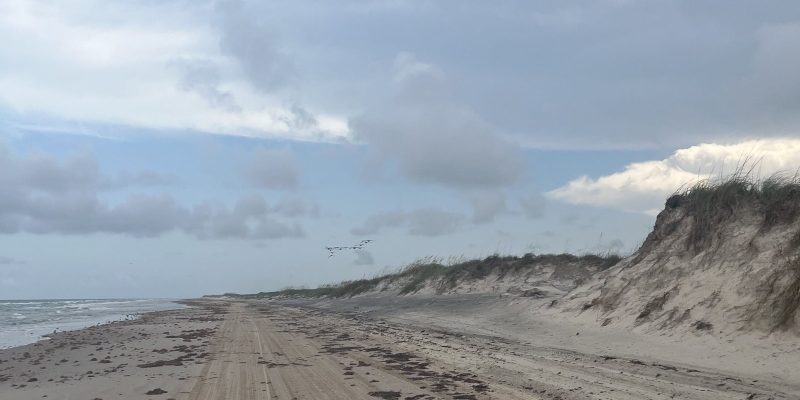
Two biologists from the New England Aquarium’s Sea Turtle Hospital spent a week on South Padre Island, Texas, working nesting beaches with Sea Turtle Inc. They went to see the other end of a life they normally meet in its worst hour: the same species they pull half-frozen off Cape Cod every fall, coming ashore in Texas to lay eggs.
Linda Lory, who manages the hospital in Quincy, Massachusetts, and biologist Charlotte Clark made the trip earlier this year. “Our goal was to see the operation, as far as their nesting work and rehab care goes,” Lory said. “Plus, not many of us here have seen these turtles come out of the water and nest.”
Why a Massachusetts aquarium ends up in south Texas
Because it is one animal with a very long commute. Juvenile Kemp’s ridleys feed along the New England coast through the summer. When the water turns over in late fall, some of them fail to leave in time and go into cold-stunning, a hypothermic shutdown that washes them onto Cape Cod beaches. As many as 500 of those patients come through the aquarium’s hospital doors in a year, and Kemp’s ridleys are the majority of them.
The females that survive to adulthood return to nest on the beaches where they hatched, which for this species means the western Gulf of Mexico. So the turtle that a Quincy technician warms up in December is, if everything goes right, a turtle that digs a nest in Texas two decades later. That is the full-circle Clark was describing when she said that giving a cold-stunned animal a second chance is really about letting it reach the next generation.
Fifty miles of beach, and a badger
Kemp’s ridleys nest in an arribada, a Spanish word for arrival that describes the species’ habit of coming ashore in large synchronized groups rather than one at a time. Lory and Clark arrived just after one. There was still plenty to do.
Sea Turtle Inc. volunteers patrol 50 miles of south Texas shoreline during the season looking for nesting activity. Found nests are excavated, and the eggs are moved to a fenced stretch of beach called the turtle corral and reburied to incubate, which puts them beyond the reach of predators and beach traffic. Hatchlings are released at night, away from artificial light, so they orient to the sea instead of to a parking lot.
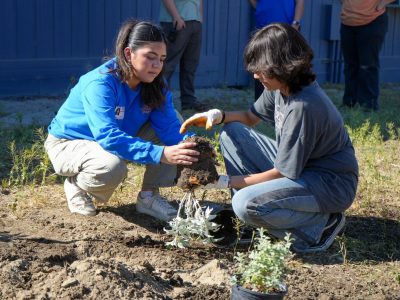
“We were able to go out with the sea turtle patrollers, and we got to observe and help with excavating nests,” Clark said. The work is more delicate than it sounds. Each egg has to be reburied in the exact position it was found in, which the team takes care over even on mature nests where the shells have hardened. Clark also had to physically defend one. “I fought off a badger,” she said. The animal had been working at a mature nest whose eggs had hardened enough to survive the attempt.
Sea Turtle Inc. protected more than 200 nests this season, a record for the organization.
What surprised them was the garbage
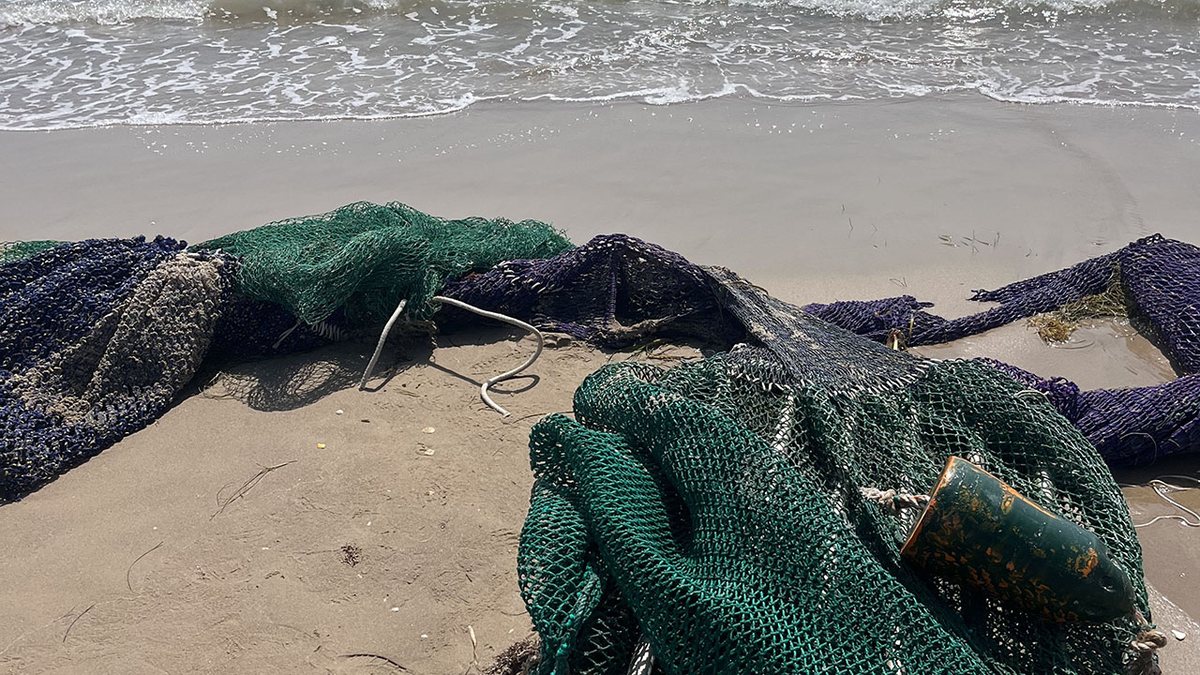
Both biologists came back talking about the beach itself rather than the turtles on it. “Another thing that was super eye-opening was the amount of pollution on the beach,” Lory said. “There’s so much of it, and all of it has these little marks on it that are confirmed turtle bites. So, these turtles are growing up and they’re eating that plastic.”
That changes the clinical job as well as the conservation one. Clearing a turtle’s digestive tract of plastic becomes part of getting it fit for release, and tracking what washes up becomes part of the monitoring. Sea Turtle Inc. collects and logs debris including illegal fishing gear. “It was just a different thing to see that’s not something we typically deal with here in Massachusetts,” Clark said.
Where the species stands
NOAA Fisheries lists the Kemp’s ridley as Endangered throughout its range under the U.S. Endangered Species Act, and the species is on Appendix I of the Convention on International Trade in Endangered Species and Annex II of the SPAW Protocol across the wider Caribbean. NOAA also calls it the smallest sea turtle in the world, which is part of why a record nesting season along 50 miles of Texas sand is worth a headline.
The aquarium’s turtle work has run through our pages before, from a record leatherback tagging season in Puerto Rico to the survey flights behind its right whale research. On the receiving end of the same species, the New York Aquarium returned a rehabilitated Kemp’s ridley named Pancake to the Atlantic this month.
Nobody can say whether any specific turtle nesting at South Padre once came through the hospital in Quincy. That is not really the point. “Every turtle we see would die if they weren’t collected off the beach from cold-stunning,” Clark said. The nests in the Texas corral are what the rescue is for.
Source: New England Aquarium, Protecting Kemp’s Ridley Sea Turtles from New England to Texas, published September 10, 2026. Listing status from NOAA Fisheries.
Quick answers
- Why does a Boston aquarium work on Texas beaches?
Because it is the same population. Juvenile Kemp's ridleys feed off New England in summer and strand on Cape Cod when the water cools, while adult females nest on the western Gulf of Mexico shoreline, including South Padre Island.
- What is cold-stunning?
A hypothermic shutdown that happens when a sea turtle stays in water that turns too cold. Affected turtles wash ashore unable to swim. The New England Aquarium's Sea Turtle Hospital treats as many as 500 of them a year, most of them Kemp's ridleys.
- What is an arribada?
Spanish for arrival. It describes the Kemp's ridley habit of coming ashore to nest in large synchronized groups rather than individually.
- How endangered is the Kemp's ridley?
NOAA Fisheries lists it as Endangered throughout its range under the U.S. Endangered Species Act. It is also on CITES Appendix I and Annex II of the SPAW Protocol, and NOAA calls it the smallest sea turtle in the world.