
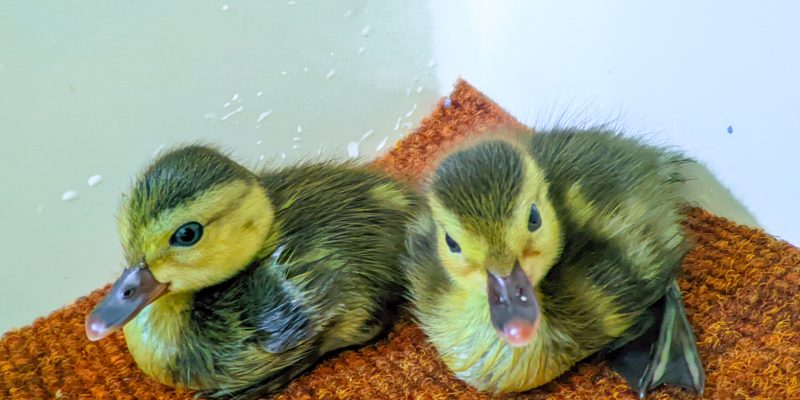
Conservationists working for the Durrell Wildlife Conservation Trust collected 15 fertile eggs from the only known wild nesting site of the Madagascar pochard, carried them 44 kilometers on foot, and reared six of the resulting ducklings to adulthood. Durrell announced the result on August 21, 2026.
The Madagascar pochard is usually described as the rarest duck in the world. It was thought extinct for most of the 1990s and early 2000s, and the IUCN Red List lists it as Critically Endangered. Roughly 180 birds exist, counting every one in Madagascar and in human care.
Why anyone carried eggs 44 kilometers
The species nests at a single known wild site, Lake Matsaborimena. A population that breeds in one place can lose a season to one bad week of weather, one predator, one change in water level. The eggs were taken to Durrell’s specialist breeding center at Antsohihy, incubated there and reared.
There is no road for most of that distance, which is why the eggs walked.
Roland Digby, a conservation biologist at Durrell, set out what the exercise was actually testing.
This is an important milestone for the Madagascar pochard. We’ve shown that, when conditions demand it, we can safely collect eggs from the wild, transport them on foot and successfully incubate and rear healthy birds. That gives us another valuable conservation tool to help secure the future of this remarkable species. Every breeding season matters when a species survives at just one wild site, so having another proven conservation tool could make a real difference.
The word doing the work is tool. Six ducks is a small number on its own. A demonstrated method for moving a clutch out of a threatened nest and turning it into adult birds is something the recovery program can use again, in a season when the lake goes wrong.
The numbers behind the species
Durrell gives three figures. There are 51 birds at the Antsohihy breeding center, 82 wild birds at Bemanevika, and 74 at Lake Sofia, the site where reintroduced pochards were released. That is about 180 in total.
Rebecca Brewer, chief executive of the Durrell Wildlife Conservation Trust, put the scale of it plainly.
For many people, this is a story about six ducks. For us, it’s about what long-term conservation can achieve.
Which zoos paid for it
Durrell names its partners in the release, and two of them are accredited zoological institutions: Indianapolis Zoo and Fota Wildlife Park in Ireland. The rest are The Peregrine Fund, Madagascar National Parks, Madagascar’s Ministry of the Environment and Sustainable Development, the Mohamed bin Zayed Species Conservation Fund, the Ernest Kleinwort Charitable Trust and Synchronicity Earth.
That is a clean funding trace, which is not always the case. A field program in northern Madagascar is a long way from a zoo gate in Indiana or County Cork, and the connection between the two is usually invisible unless somebody prints it. Here Durrell printed it.
Fota Wildlife Park is a regular subject on this site for its own breeding work, including Sumatran tiger cubs born this year and a third-generation Nubian giraffe calf. Its name on a Madagascar pochard release is the same institution spending money somewhere a visitor will never see it.
What Durrell did not say
The release does not say how many of the 15 eggs hatched, which means the gap between 15 eggs and six adults is unexplained. It does not break down what each partner contributed, does not give a cost, and does not say whether the six birds will be released, held for breeding, or both.
It also does not say when the collection took place, only that it happened. We are not going to guess at any of it.
A trust that does this repeatedly
Durrell runs Jersey Zoo and has spent decades on species that are down to their last sites. In July it reported a second translocation of lesser night geckos to Mauritius, where ants attacked 142 eggs and the method had to change. The pochard work is the same institutional habit applied to a duck: try it, watch what fails, write down what worked.
Source: Durrell Wildlife Conservation Trust, August 21, 2026. Red List category from the IUCN Red List assessment of Aythya innotata.
Quick answers
- What did Durrell actually do?
Collected 15 fertile eggs from Lake Matsaborimena, the Madagascar pochard's only known wild nesting site, carried them 44 kilometers on foot to its breeding center at Antsohihy, and reared six ducklings to adulthood. Announced August 21, 2026.
- How many Madagascar pochards are left?
About 180. Durrell counts 51 at its Antsohihy breeding center, 82 wild birds at Bemanevika and 74 at Lake Sofia. The IUCN Red List lists the species as Critically Endangered.
- Why does carrying eggs on foot matter?
Because the species nests at one wild site, where a single bad season can cost an entire year of breeding. Durrell says it now has a proven method for moving a clutch out of a threatened nest and rearing the birds.
- Which zoos fund this work?
Durrell names Indianapolis Zoo and Fota Wildlife Park among its partners, alongside The Peregrine Fund, Madagascar National Parks, Madagascar's environment ministry, the Mohamed bin Zayed Species Conservation Fund, the Ernest Kleinwort Charitable Trust and Synchronicity Earth.