
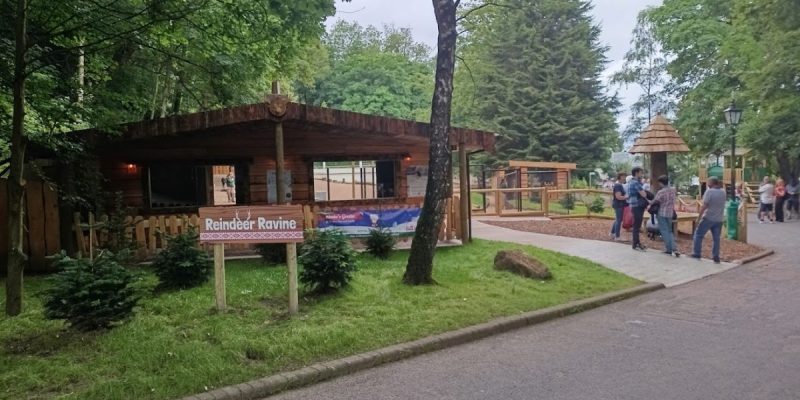
Dudley Zoo and Castle has won the Habitats category at the 2026 BIAZA Awards for turning a disused bear enclosure into Reindeer Ravine. The British and Irish Association of Zoos and Aquariums gave the award for a habitat the zoo designed and built with its own staff, on the site of the former Bear Ravine.
The zoo announced the win on July 8, 2026. The herd moved into the rebuilt ravine in 2024.
What was built
The habitat sits on the lower zoo site and is laid out on Nordic lines: timber animal dens, a graveled outdoor paddock, hardstand areas and outdoor shelters. Dudley says the design was aimed at improving reindeer welfare and allowing natural behavior while keeping the cost down, which is why the work was done in house rather than contracted out.
It also folds in the grassed space around one of the zoo’s Tecton structures, which gives visitors raised vantage points to watch the herd from.
“We’re incredibly proud to be recognized by the zoo community for the innovative work of our team here at DZC in the design and construction of Reindeer Ravine. Since relocating the herd two years ago, we’ve seen significant positives in animal welfare and species management as well as visitor engagement, which all reinforce the improved suitability of the new habitat for the species.”
Matt Lewis, Zoo Director at Dudley Zoo and Castle
The Tecton connection
The reference to a Tecton structure is worth stopping on, because it is the thing that makes Dudley architecturally unusual among zoos anywhere.
When the zoo opened in 1937 it was fitted out with a set of reinforced concrete animal houses designed by the Tecton group, the practice led by the Russian-born modernist Berthold Lubetkin. They are curving, cantilevered, deliberately strange buildings, and Dudley holds the largest single collection of them in the world. Several are listed, and they have spent years on heritage at-risk registers because concrete of that era is expensive to keep standing.
Reusing the ground around one of them for a working reindeer habitat is a neat solution to a problem most zoos do not have: what to do with a listed modernist monument that was built for animals nobody keeps that way anymore.
What the award recognizes
BIAZA is the professional body for zoos and aquariums in Britain and Ireland, and its annual awards are judged by the sector rather than by the public.
“This is an incredible achievement reflecting the very best in the zoo and aquarium community. We are at the very forefront of the fightback for nature, which needs all our help.”
Dr Jo Judge, Chief Executive of BIAZA
Dudley took a second recognition at the same awards: Jack Williams, the zoo’s Conservation and Development Coordinator, was runner-up for BIAZA’s Rising Star.
The zoo did not state a construction cost or the area of the new habitat.
Why an American reader might care
Converting an obsolete enclosure rather than building new is the quiet version of the zoo expansion story, and it is the version most facilities can actually afford. A bear ravine built for a kind of exhibit that has fallen out of practice is dead space with a fence around it. Getting a working habitat out of it, with in-house labor, is the sort of project that rarely gets written up and that other zoos with aging infrastructure have every reason to look at.
European zoos are working through the same question of what to do with inherited structures. Tiergarten Schonbrunn restored and reopened its historic Engelstor this year, and Zoo Zurich is running a much larger version of the exercise under its development plan to 2050.
Source: Dudley Zoo and Castle, July 8, 2026.
Quick answers
- What did Dudley Zoo win at the 2026 BIAZA Awards?
The Habitats category, for converting the former Bear Ravine into Reindeer Ravine. The zoo announced the win on July 8, 2026.
- What is Reindeer Ravine?
A Nordic-styled habitat on the lower zoo site with timber animal dens, a graveled paddock, hardstand areas and outdoor shelters, built in house. The herd moved in during 2024.
- What is a Tecton structure?
One of the reinforced concrete animal houses designed for the zoo's 1937 opening by the Tecton group under Berthold Lubetkin. Dudley holds the largest single collection of them in the world, and the grassed space around one is folded into Reindeer Ravine as a visitor vantage point.
- What did it cost?
Dudley did not state a construction cost or the area of the habitat.