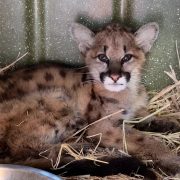

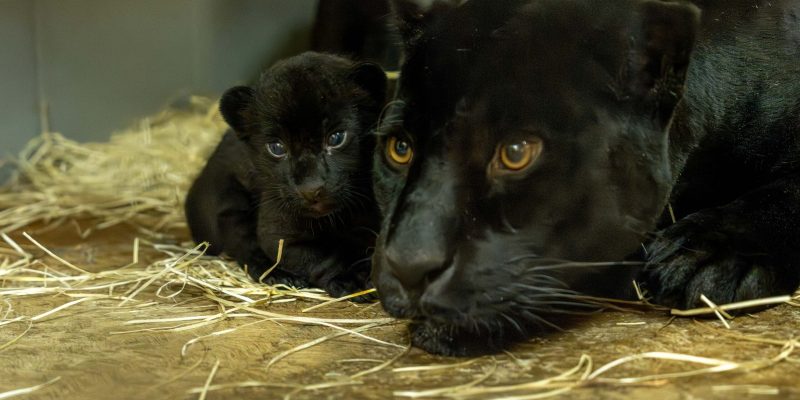
The unusual thing about the jaguar cub born at Loro Parque in February 2026 is not the cub. It is that the father was there.
For the first time, the park kept the male present through pregnancy, birth and the early rearing period rather than separating him, which is standard practice at most institutions holding big cats.
The pairing
The male is Tito, born December 2013 in St Petersburg and arrived from Hodonín Zoo in the Czech Republic in October 2025. The female is Naya, born January 2017 at the zoo in Martinique.
Two cubs were born. One survived. The family was reunited on February 23, 2026, after keepers had observed the natural behaviors that told them it was safe.
“Desde el primer dia supimos que estabamos ante una combinacion genetica y comportamental extraordinaria. Tito es un jaguar de gran relevancia genetica, y Naya, ademas de ser una madre ejemplar, posee tambien un altisimo valor genetico.”
From day one we knew we were looking at an extraordinary genetic and behavioral combination. Tito is a jaguar of great genetic relevance, and Naya, as well as being an exemplary mother, also has extremely high genetic value.
Daniel Rodriguez, head of terrestrial mammals, Loro Parque, in a statement translated from Spanish
Why keeping the male in is a real decision
Male big cats are usually separated around a birth, and the reason is not superstition. Infanticide by males occurs in several felid species, and a zoo that loses a genetically valuable cub has lost something irreplaceable.
Leaving Tito in was therefore a calculated risk taken on the strength of what the keepers were seeing rather than what the manual says. It also produces knowledge the European jaguar program did not have.
“Mediante la observacion cuidadosa de los comportamientos naturales de los animales hemos podido reunir de nuevo a Tito y Naya lo antes posible, priorizando su bienestar y, al mismo tiempo, aportando conocimiento a la comunidad cientifica y a la red europea de conservacion”
Through careful observation of the animals’ natural behaviors we were able to reunite Tito and Naya as soon as possible, prioritizing their welfare while also contributing knowledge to the scientific community and the European conservation network
Mike Jordan, director of Loro Parque, in a statement translated from Spanish
The instinct to manage a birth by removing animals from each other is being questioned in more than one taxon. ZOO Antwerpen made the same call with a gorilla birth, delivering inside the family group.
The species
Wild jaguar numbers have fallen roughly 25 percent over the past twenty years. The species is already extinct in El Salvador and Uruguay.
The birth supports the EAZA jaguar breeding program, which Loro Parque joined formally alongside the European Endangered Species Programme in October 2025.
Source: Loro Parque. Quotations translated from the Spanish.