
In spring, Tiergarten Schoenbrunn collected moor frog spawn in Carinthia and drove it to Vienna. Ten weeks later it drove back roughly 8,000 tadpoles.
The zoo announced the release on July 2, 2026.
What head-starting actually involves
“Im Fruehjahr brachten wir mit den erforderlichen Genehmigungen Moorfrosch-Laich aus Kaernten in den Tiergarten. Die geschluepften Kaulquappen konnten wir hier rund zehn Wochen unter optimalen Bedingungen aufziehen.”
In spring, with the necessary permits, we brought moor frog spawn from Carinthia to the zoo. We were able to raise the hatched tadpoles here for around ten weeks under optimal conditions.
Dr. Stephan Hering-Hagenbeck, director of Tiergarten Schoenbrunn, in a statement translated from German
The principle is simple and the payoff is large. In a wild pond, the overwhelming majority of a frog’s eggs and early tadpoles are eaten, stranded or killed by disease. Raising them past that stage under controlled conditions and returning them when they are big enough to have a chance converts a survival rate measured in fractions of a percent into something usable.
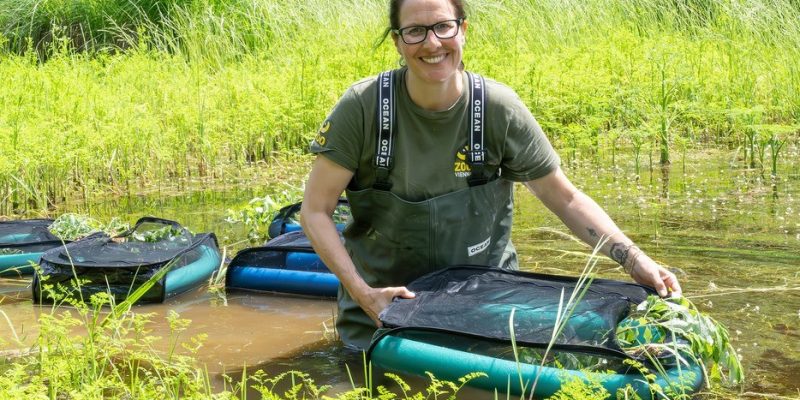
The tadpoles went back once their hind legs had developed. Floating mesh cages protected them at the release site while they finished the transition.
“Dank des grossen Einsatzes unseres Pflegeteams konnten wir rund 8.000 Kaulquappen erfolgreich aufziehen. Mit der Wiederansiedlung wollen wir die bestehende Population staerken und dem Rueckgang der Art entgegenwirken.”
Thanks to the great effort of our care team we were able to successfully raise around 8,000 tadpoles. With this reintroduction we want to strengthen the existing population and counteract the species’ decline.
Dr. Doris Preininger, scientific staff member, Tiergarten Schoenbrunn, in a statement translated from German
The species and the project
The moor frog, Rana arvalis, is described by the zoo as endangered in Austria. That is a national assessment rather than a global IUCN category, and it is worth being precise about the difference: a species can be common across its range and still be disappearing from one country’s wetlands.
The work sits inside a project called Vernaessen und Vertiefen, rewetting and deepening, funded through an Austrian biodiversity fund. The name describes the other half of the job. Raising tadpoles is pointless if there is no wet ground to put them back into, so the project restores the ponds as well as stocking them.
Source: Tiergarten Schoenbrunn. Quotations translated from the German.