

A homeless services agency in Bond Hill is about to stop paying for electricity, and the reason is a zoo.
The Cincinnati Zoo and Botanical Garden runs something called the Community Solar Resiliency Program. It works by a mechanism most visitors have never heard of: the zoo’s own solar arrays generate Solar Renewable Energy Credits, the credits are sold, and the revenue pays to put solar panels on buildings that belong to somebody else.
Since the program was formalized in 2023 it has facilitated nine installations totaling more than 222 kilowatts.
What an SREC is, because the whole thing runs on it
A Solar Renewable Energy Credit is a tradable certificate representing the environmental benefit of one megawatt-hour of solar electricity. It is separate from the electricity itself. A solar owner sells the power to the grid and can sell the credit to somebody else, usually a utility that has a renewable requirement to meet.
Most solar owners treat SREC revenue as a rebate on their own installation. Cincinnati treats it as a fund for other people’s.
Where the panels are going
- Bethany House Services, Bond Hill: 425 panels, 200 kilowatts, projected to save the agency $3 million in operating expenses. Bethany House serves families experiencing homelessness, so that is $3 million redirected from a utility bill to families.
- Valley Interfaith, Wyoming, Ohio: 153 panels, 90 kilowatts, installing in 2026.
- Talbert House Hamilton County Crisis Center: 110 panels, 50 kilowatts, installing this fall. The zoo’s horticulture team had already put in a wellness garden there in 2025.
- Washington United Church of Christ: 26 panels, 14.82 kilowatts, with equipment funding, in partnership with Faith Communities Go Green and a Seeds of Change grant from the City of Cincinnati.
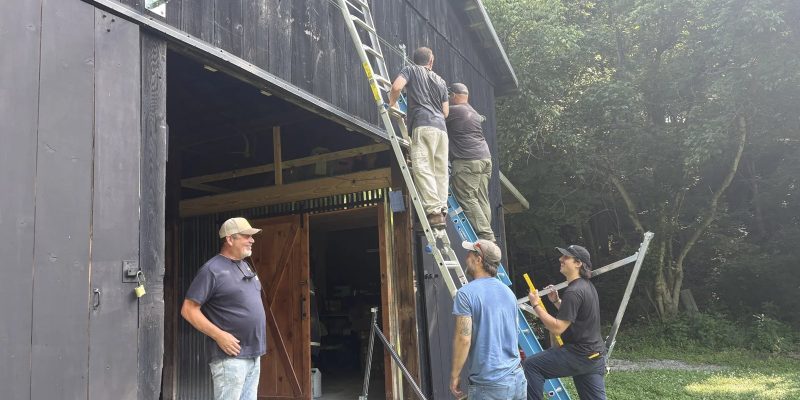
- Boone County Conservation District, Kentucky: an off-grid system with battery backup for an educational barn, with awning-style panels on the south end, running lights and equipment charging.
- Tool Bank Cincy: a small off-grid power source for a pop-up shed in Bond Hill.
“BCCDKY is thankful to be working with Cincinnati Zoo staff on this project. In the short term, this will give us access to electricity; in the long term, we look forward to partnering with the Zoo on more projects that help conserve our local natural resources.”
Mark Jacobs, director of conservation programs, Boone County Conservation District
The same idea, 8,000 miles away
In 2025 the program went international. Cincinnati began training staff at SORALO, a conservation organization in southern Kenya. Forty wildlife rangers have been trained, and six ranger stations have been upgraded with solar charging systems.
The detail that says the most about how this actually works: troubleshooting happens in real time over WhatsApp. A ranger station in Kenya with a solar problem messages Cincinnati and gets an answer.
Why this is a zoo story
The usual answer to “what is a zoo for” is animals, education and conservation, in that order, and the conservation part is usually somewhere far away.
This is conservation work that also lowers a crisis center’s electric bill in Hamilton County. It uses the zoo’s own infrastructure as the funding source rather than asking donors for more, and it hands over hardware rather than a report. A zoo is one of the few institutions in a city with enough roof, enough sun and enough technical staff to make that arithmetic work, and Cincinnati is one of the few that has noticed.
The zoo also points nonprofits toward Solarize Nonprofits, a Southwest Ohio cooperative offering technical help and bulk-purchase discounts, alongside federal solar tax credits available through the end of 2027.
Quick answers
- What is the Community Solar Resiliency Program?
A Cincinnati Zoo and Botanical Garden program in which the zoo's own solar arrays generate Solar Renewable Energy Credits, the credits are sold, and the revenue pays to put solar panels on buildings that belong to somebody else. Since it was formalized in 2023 it has facilitated nine installations totaling more than 222 kilowatts.
- What is an SREC?
A Solar Renewable Energy Credit is a tradable certificate representing the environmental benefit of one megawatt-hour of solar electricity. It is separate from the electricity itself, so a solar owner can sell the power to the grid and sell the credit to somebody else, usually a utility with a renewable requirement to meet.
- What makes Cincinnati's approach unusual?
Most solar owners treat SREC revenue as a rebate on their own installation. Cincinnati treats it as a fund for other people's.