
A Florida black bear cub named Avocado is being raised for release at Brevard Zoo‘s behind-the-scenes Black Bear Rehabilitation Center, run by the East Coast Zoological Foundation. She is roughly six months old, was found without her mother in the Oklawaha area, and she is the fifth cub in this year’s group.
What the exam found
Avocado got a full veterinary check-up on arrival. At 16 pounds she was underweight and covered in ticks, and otherwise healthy, which is about the best result available for a cub found alone.
She joined Palmer, Sammy, Scruffy and Grape at the center. The zoo describes her as feisty and says she took her time warming to her habitat-mates, though Sammy won her over.
The hardest part is staying away
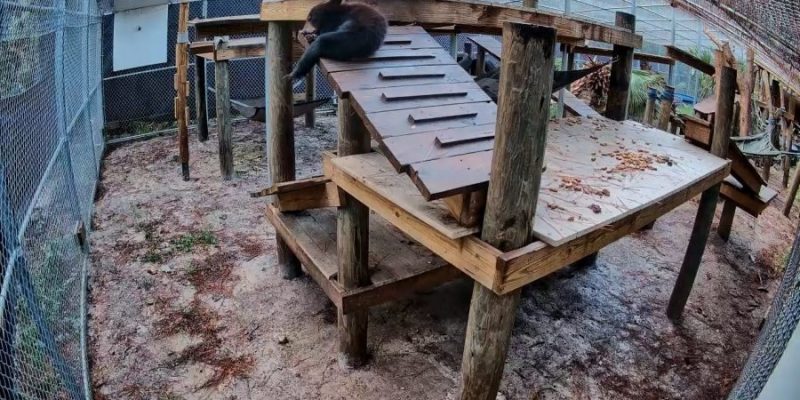
Every one of these cubs is being raised to go back out, which sets a strict rule: they must never learn to associate people with food. The animal care team works around that by watching them through a camera system rather than being present in the habitat, which is why the photograph on this story is a timestamped still from that camera feed rather than a portrait. That distance is the whole point.
What the cubs do instead is learn how to be bears. They spend their days interacting with each other, foraging, and working out how to handle different terrain, including the ponds, which is a skill nobody can teach them from outside a fence.
Brevard has been busy this year: the same zoo just hatched an endangered West African crowned crane chick. Orphaned-cub work like Avocado’s runs at zoos across the country, from a Florida panther kitten at Naples Zoo to two grizzly cubs in Colorado.
Where they end up
The Florida Fish and Wildlife Conservation Commission’s Bear Management Program works with Brevard Zoo and other partners on orphaned cubs not yet able to survive alone. When a cub hits its milestones, the FWC aims to release it on public conservation land with high-quality bear habitat and a low density of both bears and people, the conditions that give a young bear the best odds.
Bears earn their place in that habitat. They disperse seeds across their territories and break up decomposing matter while hunting for insects, which is unglamorous work that a forest cannot do without.
If you find a bear cub
Call the FWC’s 24-hour Wildlife Alert Hotline at 888-404-FWCC (3922) if you find an orphaned, sick or injured Florida black bear. That call is the first step in the chain that put Avocado in a pond in Melbourne learning to be a bear, and it is the part of the process that belongs to the public.